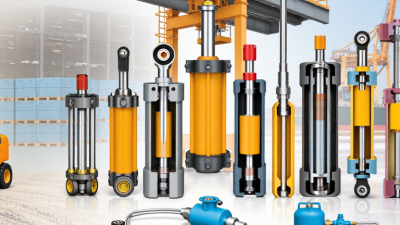
Hydraulic Cylinder Types are not merely catalog labels; they describe how a cylinder fits a machine’s load, space, and working cycle. A compact tie-rod cylinder may suit a production line, while a telescopic model can extend beneath a dump body where retracted length is limited. Welded-body, mill-duty, plunger, and tandem designs answer different demands. The distinctions matter.
Andrew Parr, author of Hydraulics and Pneumatics, is a useful fluid-power reference. The following line is an editorial summary, not a verified verbatim quotation: “Choose a cylinder by its load, stroke, available space, and duty—not by pressure alone.” That principle helps frame this guide to the top 10 types. It also keeps selection grounded in real operating conditions, such as side loading, mounting constraints, cycle frequency, and maintenance access.
Some categories overlap. A cylinder can be classified by construction, action, or application, so any “top 10” list involves judgment. That deserves a second look. A single-acting cylinder and a double-acting cylinder describe motion and force behavior; tie-rod and welded designs describe construction. Treating them as identical categories can confuse buyers. This overview separates the common designs and explains where each one is typically used, what details to check, and where a choice may involve trade-offs. Real machines are less tidy than diagrams.
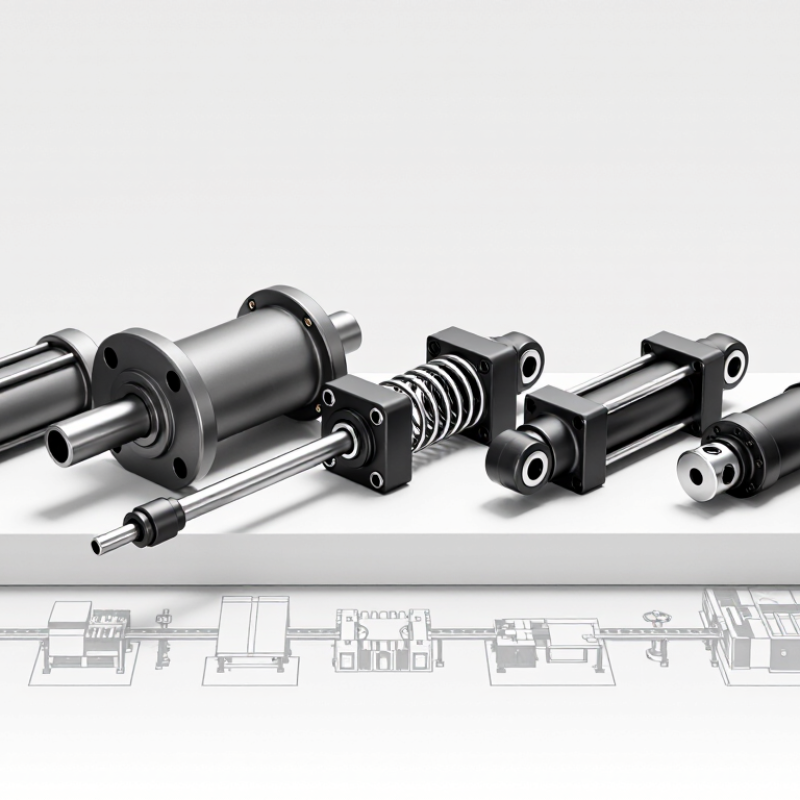
Hydraulic cylinders are best classified by how they move, how they are built, and how they mount. Single-acting cylinders push in one direction; double-acting cylinders use fluid pressure in both directions. Tie-rod and welded-body cylinders differ in how their barrels and end caps are secured. Ram cylinders deliver a strong push, while telescopic cylinders extend through nested stages. Compact when retracted.
Other useful designs include differential cylinders, tandem cylinders, cushioned cylinders, mill-duty cylinders, and servo-hydraulic cylinders. These labels can overlap: a welded cylinder may also be double-acting and cushioned. Mounting styles such as clevis, trunnion, and flange affect alignment. Poor alignment can push the rod sideways and wear seals. Cushioning slows the piston near stroke ends, but it cannot correct a poorly sized cylinder. ISO 6020-2 specifies a 160-bar series, while ISO 6022 specifies a 250-bar series. These ISO pressure values are design benchmarks, not universal operating limits. The distinctions are useful, but a type name alone rarely settles a selection. Bore, rod diameter, stroke, load, speed, fluid, and duty cycle matter too. A real machine can make textbook categories messy.
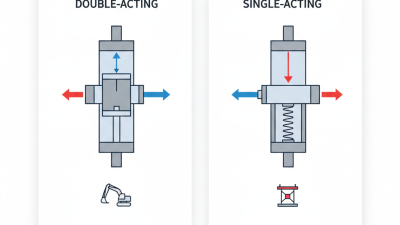
Single-acting cylinders use hydraulic pressure to move the piston in one direction. A spring, gravity, or an external load provides the return stroke. Their simpler layout can suit lifting platforms or basic clamps, where the return force is predictable. The return path matters. If the load changes or the cylinder must retract against resistance, movement may become slow or unreliable.
Double-acting cylinders use pressure on both sides of the piston, allowing controlled extension and retraction. Two hydraulic connections direct fluid to the selected chamber while the other side returns oil. This gives better control for equipment that must push and pull, such as a machine tool slide. More control comes with more components: seals, hoses, and valves all need proper sizing and maintenance.
A differential cylinder has unequal piston areas because its rod occupies space on one side. In a typical single-rod cylinder, that area difference changes the available force and speed between extension and retraction. Some circuits use this difference to speed extension by redirecting return oil, but the faster stroke produces less force. It is easy to focus only on cycle time and miss that trade-off. Check the load, pressure, stroke speed, and return conditions together before choosing a configuration.
Telescopic cylinders suit machines needing long reach from a short retracted package. Nested stages extend one after another, like a metal antenna lifting a dump body. Stage overlap and oil flow affect stability and extension speed. Side loads are a common design concern. They can cause uneven wear or binding, so guides and mounting alignment matter.
Plunger cylinders use a ram-style member and are often single-acting, with gravity or the load providing return force. They fit lifting duties where the cylinder can sit beneath the load. But that return method depends on installation angle and load conditions. A design that works on paper may return slowly in cold oil.
Tandem cylinders place two piston areas in line, adding force without increasing the bore diameter. The trade-off is a longer assembly and more demanding plumbing. ISO 6020-1:2018 specifies mounting dimensions for 16 MPa (160 bar) medium-series cylinders; that figure is not a universal rating for every design. Grand View Research estimated the global hydraulic-cylinder market at USD 14.7 billion in 2023 and projected 4.8% annual growth for 2024–2030. That market estimate describes demand, not which cylinder type performs best. For selection, compare required force, stroke, retracted length, return method, and side-load exposure. The awkward detail? Installation space is often underestimated.
Tie-rod, welded-body, and mill-duty cylinders suit different operating demands. MarketsandMarkets’ 2023 Hydraulic Cylinder Market report projected growth from USD 14.5 billion in 2023 to USD 18.1 billion by 2028. This market-wide forecast signals broad demand, not that one cylinder style fits every machine.
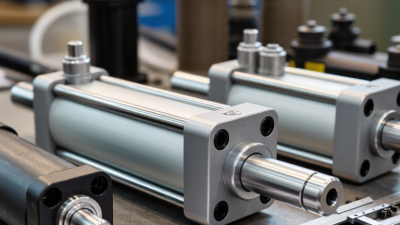
Tie-rod cylinders use external threaded rods and are often practical where components need routine servicing. Welded-body cylinders have a compact, rigid construction, making them common in mobile equipment exposed to vibration. They can be less convenient to dismantle. A small detail, but it matters during repairs.
Mill-duty cylinders are built for demanding industrial cycles, such as those found in steel processing and heavy presses. Their robust construction can suit high loads and harsh environments, but weight, mounting, and service access still deserve careful review. “Heavy-duty” alone is not a specification. Match bore, stroke, pressure rating, mounting, and expected side load to the machine. Real operating conditions can be messier than a drawing suggests.
Tips: Check the machine’s pressure and load data before selecting a cylinder. Inspect available space and service access, too. If side loading is likely, get the application reviewed by a qualified hydraulic engineer.
What Are the Top 10 Types of Hydraulic Cylinders?
Rotary Hydraulic Cylinders and Their Operating Principles
Rotary hydraulic cylinders, often called rotary actuators, turn hydraulic pressure into controlled shaft rotation. Unlike a standard cylinder, they produce torque rather than a straight push or pull. Their rotation is usually limited to a set angle, making them useful for opening gates, positioning fixtures, or turning heavy machine parts.
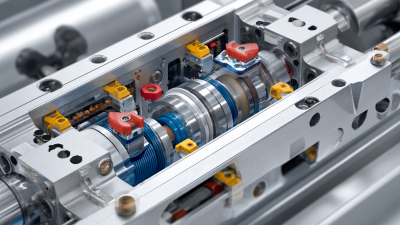
In a vane design, pressurized oil pushes against a vane connected to the output shaft. The shaft turns as oil enters one chamber and leaves another. Rack-and-pinion designs work differently: a hydraulic piston moves a rack, which rotates a meshing pinion. Both designs need suitable seals to limit leakage and maintain steady movement. A common point of confusion is treating these devices like hydraulic motors. Many rotary actuators provide limited-angle motion, while motors are generally designed for continuous rotation.
Tips: Check the required turning angle, torque, and operating pressure before selecting an actuator. Keep the oil clean, and inspect connections for leaks. Small leaks matter. Also consider the load’s momentum; a heavy gate may keep moving after pressure changes. Real installations can behave differently than calculations suggest, so verify performance under the actual load.
This chart classifies common hydraulic designs by their output motion. Linear cylinders use hydraulic pressure to move a piston and rod in a straight line. Rotary actuators convert hydraulic pressure into rotation—for example, with a vane, rack-and-pinion, or helical-spline mechanism. The chart is a classification, not a performance ranking.