
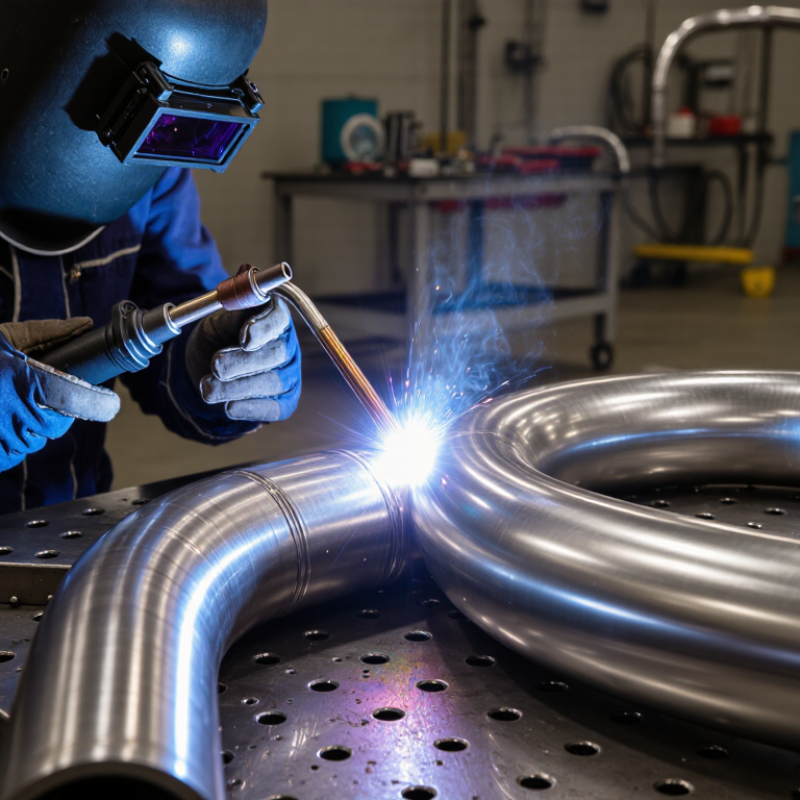
Titanium welding involves controlled heat, absolute cleanliness, and protection from atmospheric gases. Most industrial joints use gas tungsten arc welding, commonly called TIG. The arc melts the joint edges, while high-purity argon shields the molten pool. A trailing shield protects the cooling weld behind the torch. Without that protection, oxygen and nitrogen can embrittle the weld.
Preparation is precise. Operators remove oil, fingerprints, and oxide films with dedicated tools. They also purge the pipe or chamber interior before striking the arc. Heat input must remain low and travel speed steady. A bright silver weld usually indicates sound shielding. Blue, purple, or gray discoloration requires investigation, not acceptance. ISO 15614-5 provides qualification guidance for welding titanium and its alloys. AWS D1.9 also addresses structural titanium welding procedures and inspection practices.
The material’s industrial relevance is substantial. The U.S. Geological Survey’s Mineral Commodity Summaries 2024 reported global titanium sponge production at roughly 210,000 metric tons in 2023. That supply supports aerospace, chemical processing, medical, and marine equipment. Industry reports also identify corrosion resistance as a major driver of titanium demand. Yet welding quality depends more on execution than material reputation. A small shop-floor shortcut can defeat expensive alloy performance. In practice, I would verify shielding-gas coverage with test coupons and inspect each weld visually before advanced testing. Even experienced teams can overlook contamination around a seemingly clean joint.