
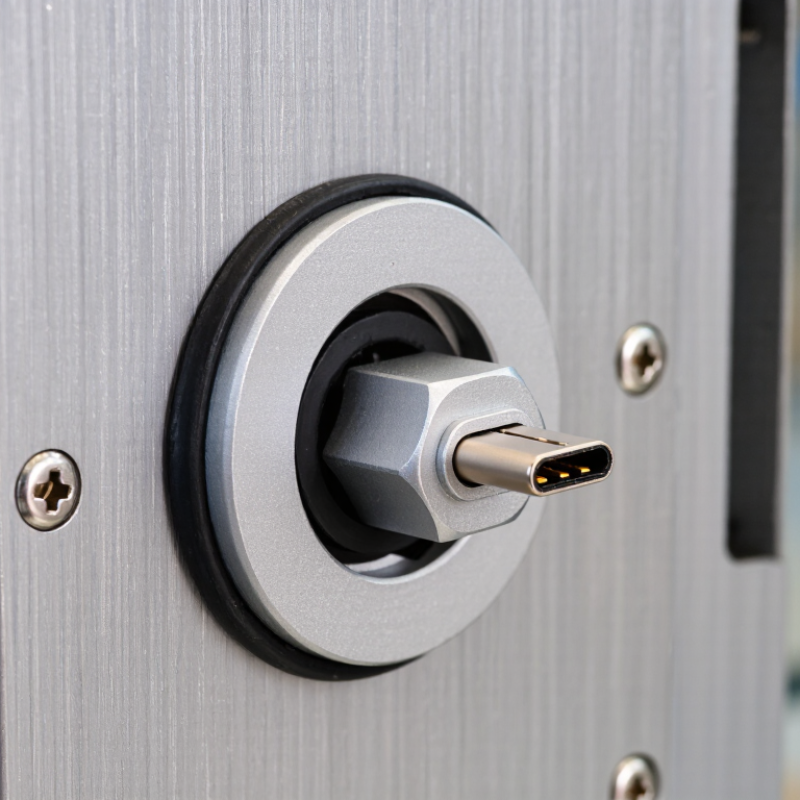
What Is a USB C Bulkhead Connector?
Common Types and Technical Specifications
A USB-C bulkhead connector mounts through an enclosure wall, letting users connect a cable from outside. Most designs have a USB-C receptacle on each side. They create a neat pass-through without leaving a cable permanently attached. A practical choice for equipment panels.
Common types include simple feedthroughs, panel-mount connectors with threaded collars, and sealed versions with gaskets or protective caps. Some use short internal pigtails instead of a direct-through connection. That difference matters: the internal cable can affect signal performance and available space. Measure the panel opening and thickness before ordering; a connector that looks compact may need clearance behind the wall.
Check the supported data protocol, not just the USB-C shape. USB 2.0 supports up to 480 Mbps, while USB 3.2 Gen 1 reaches 5 Gbps under suitable conditions. Higher rates require compatible connector construction, internal wiring, and cables. Power delivery also depends on the complete system, including the source, cable, and device; the receptacle alone does not guarantee a particular wattage. For outdoor or washdown installations, confirm the stated IP rating after mounting. A gasket can compress unevenly. That small detail is easy to overlook.