A Remote Control Actuator turns a command into visible movement: a vent opens, a valve shifts, or a machine’s panel adjusts. The right choice depends on more than reach. Load, travel distance, speed, duty cycle, power supply, and control method all shape performance. A compact actuator may fit neatly behind a cabinet door, yet struggle with a heavy panel or repeated cycles. Small details matter.
This guide compares seven remote control actuators across practical selection criteria, including installation, responsiveness, noise, and compatibility. It also considers where each type fits, from home automation to industrial equipment. No single model suits every setup. Even a strong product can disappoint when its stroke length or force rating does not match the application.
An expert quotation should add useful, verifiable insight—not borrowed authority. Since no source was supplied for a named specialist’s words, this introduction avoids inventing one. The comparison instead focuses on checkable specifications and real-world trade-offs. Look closely at the numbers. Then consider the actual load, mounting space, and control environment. A little uncertainty remains: published ratings cannot fully predict performance in every installation. That is worth remembering before choosing.
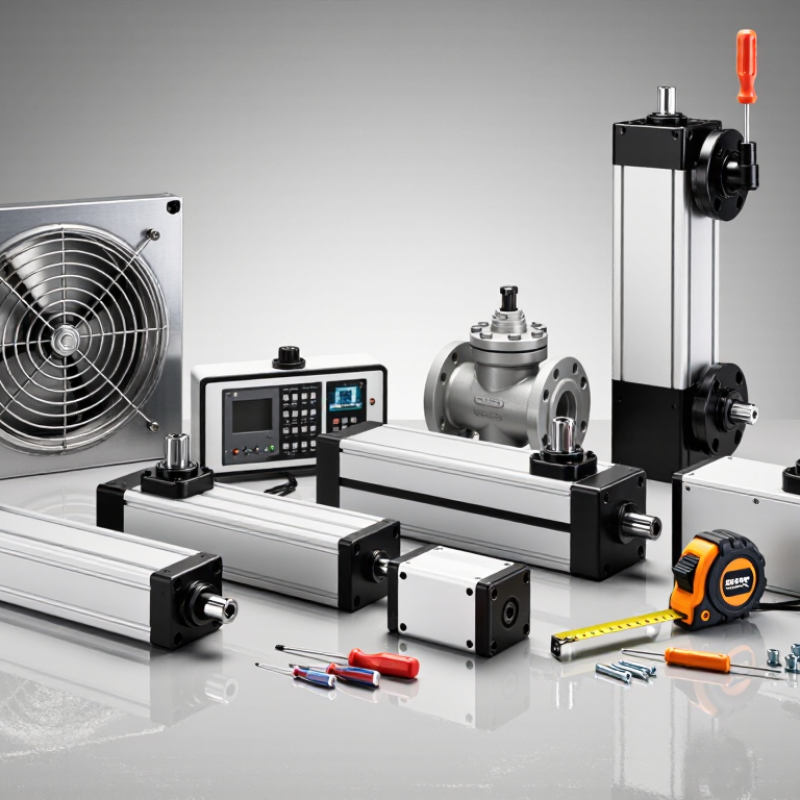
A remote-control actuator turns a command into physical movement. An electric model uses a motor and screw or gear to push, pull, or rotate a load. Hydraulic and pneumatic types use fluid or compressed air. A controller sends the command; sensors may report position or pressure back. “Remote” does not always mean wireless. Some systems use wired controls.
That movement appears in factory valves, adjustable workstations, machine guards, and solar-panel trackers. The International Federation of Robotics reported 541,302 industrial robots installed worldwide in 2023, with 4.28 million operating globally. Robots rely on controlled motion, though actuators are only one part of their systems. The figures show the scale of automation, not actuator sales. That distinction matters.
For a real installation, match force, travel distance, speed, duty cycle, and environmental protection to the task. A valve in a damp service room may need different protection from an actuator inside a clean assembly machine. Position feedback can prevent overtravel, but it adds wiring and setup. Not magic. Remote commands can also fail when power, communications, or calibration are poor. I would test the complete load, not just the actuator on a bench.
What Are the 7 Best Remote Control Actuators?
Which Features Matter When Comparing Remote-Control Actuators
The best remote-control actuator depends on the job, not a ranking. Compare seven practical features: rated force, stroke length, travel speed, duty cycle, power requirements, control and feedback options, and environmental protection. Force ratings deserve special attention. A unit that moves a light lid may struggle with a loaded hatch, especially when friction or an off-center load is involved. Numbers can mislead. Leave a sensible margin rather than choosing an actuator that barely meets the estimated load.
Check the full movement, too. Measure the distance between mounting points when retracted and extended, and confirm that the stroke will not push a linkage past its limit. A faster actuator may be useful for frequent adjustments, but speed can trade off against force. Duty cycle indicates how long the unit can run before it needs a rest; overlooking it can lead to overheating. Fit matters. Check voltage, wiring, remote range, and whether position feedback or limit switches are needed. For damp, dusty, or exposed installations, review the enclosure rating and mounting hardware. Noise and access for maintenance also matter. I would double-check those last details; they are easy to miss on a spec sheet.
| Actuator Type | Typical Motion and Application | Common Remote-Control Options | Features to Compare | Advantages | Important Limitations |
|---|---|---|---|---|---|
| Electric linear actuator | Straight-line movement for lifting, pushing, pulling, or positioning equipment, panels, and adjustable furniture. | Handheld radio-frequency remote, wired handset, or control system with a compatible receiver. | Rated load, stroke length, speed under load, duty cycle, mounting dimensions, limit switches, and protection rating. | Provides controlled linear movement and is available in many force and stroke configurations. | Load capacity and speed vary substantially by model. Confirm that the actuator, brackets, and structure can handle the expected forces. |
| Rotary actuator | Rotates a shaft or mechanism to operate equipment such as dampers, indexing devices, or adjustable fixtures. | Remote switch or transmitter connected to a compatible motor controller. | Output torque, rotation range, angular accuracy, speed, backlash, end stops, and feedback options. | Suited to applications that require turning rather than pushing or pulling. | Output torque must be matched to the load; a rotary actuator is not a direct substitute for a linear actuator. |
| Quarter-turn valve actuator | Turns compatible valves, commonly between open and closed positions through approximately 90 degrees. | Remote control through a receiver, relay, or building-control system; some installations also support position feedback. | Required valve torque, valve interface, operating time, supply voltage, manual override, and fail-safe behavior. | Can automate remote opening and closing of compatible valves without direct access to the valve. | Valve type, size, pressure conditions, and breakaway torque determine suitability. Verify the complete valve-actuator combination. |
| Automatic window opener | Opens and closes compatible windows for ventilation, including hard-to-reach installations. | Remote control, wall switch, or a compatible building-control system; some systems accept sensor inputs. | Window type, opening stroke, thrust, mounting position, weather resistance, and available manual operation. | Enables convenient ventilation and can be integrated with suitable environmental controls. | Compatibility depends on window geometry and installation. Wind, friction, and window weight affect operation. |
| Motorized curtain or drapery track | Moves curtains along a track, typically for residential or commercial window coverings. | Handheld remote, wall control, or compatible smart-home gateway. | Track length, curtain weight, opening direction, noise, power arrangement, and control-system compatibility. | Offers convenient operation for wide, tall, or difficult-to-reach window coverings. | Track and motor must be selected for the curtain’s weight and configuration. Remote and gateway compatibility varies. |
| Automatic gate operator | Moves a compatible sliding or swinging gate for controlled vehicle or pedestrian access. | Radio remote, keypad, access-control input, or other compatible control device. | Gate type and weight, travel distance, operating frequency, obstruction sensing, safety devices, and backup power. | Provides remote access control for suitably designed gate installations. | Safe operation requires correct installation and appropriate entrapment-protection devices. Site conditions and gate construction matter. |
| Automatic garage-door opener | Raises and lowers a compatible sectional or tilt-style garage door using a drive system and rail. | Handheld remote, wall control, or compatible connected controller. | Door balance and size, drive type, lifting capacity, travel limits, safety reversal, noise, and backup options. | Automates a frequently used door and can provide remote operation when paired with a compatible control. | The opener is not a remedy for an unbalanced or damaged door. Door condition, installation, and safety features are essential. |
| Comparison note: These are common actuator categories, not specific products. Performance, control range, load ratings, power requirements, and compatibility vary by model and installation. Check the manufacturer’s technical documentation and applicable safety requirements before selection. | |||||
Remote-control actuators vary by movement, load, and surroundings. Compact screw-driven linear units suit adjustable desks, cabinet lifts, and small access panels. They move in a straight line and are easy to fit in tight spaces. For heavier gates or equipment hatches, a robust rod-style actuator can provide greater pushing force. Check its rated load and stroke before installation; a short stroke may not clear the opening.
Track-style actuators work well where a carriage must slide along a rail, such as a reclining seat or vent window. Rotary actuators turn a shaft, making them useful for dampers, valves, and rotating mounts. For wet or dusty locations, choose a sealed unit with a suitable environmental rating. A rating alone is not a guarantee if cables or mounting points remain exposed. Small detail.
Low-voltage micro actuators can operate lightweight latches and model mechanisms, but they are not suited to heavy loads. Feedback-equipped actuators report position, helping a controller stop movement accurately in lift tables or adjustable machinery. Match the actuator to the duty cycle, power supply, mounting geometry, and control method. I would also test the real load, not just the empty mechanism. That step is easy to overlook. A quiet actuator may still move too slowly for the job.
Choosing among seven common remote-control actuator types—electric linear, rotary, telescopic, servo-driven, solenoid, pneumatic, and hydraulic—starts with the job, not the catalog. Define the load’s weight, direction, travel distance, and speed. Then calculate the force needed, allowing a sensible margin for friction and changing conditions. For a sliding hatch, measure the full stroke and note where resistance peaks. Rotary units suit turning tasks; solenoids generally suit short movements. That matters.
Next, match the actuator to its working environment and duty cycle. A gate that moves occasionally has different needs from a mechanism cycling all day. Check the whole path. Dust, moisture, heat, vibration, and limited installation space can affect performance. Pneumatic systems need a reliable air supply, while hydraulic systems require attention to fluid lines and possible leaks. For outdoor equipment, check the stated temperature and ingress ratings rather than relying on a sealed-looking housing.
Finally, consider control and safe operation. Confirm the available power, mounting points, end-of-travel limits, and whether position feedback is needed. A heavy load may need a brake or a way to remain secure when power is lost. I still find this easy to underestimate: a force rating alone does not prove a good fit. Test under real conditions, including the expected load and cycle frequency. If measurements are uncertain, verify them before installation.
Remote-control actuators need routine checks because a command can move a valve, gate, or load without warning. Before servicing, isolate electrical power and stored hydraulic or pneumatic pressure, then verify that motion has stopped. Never trust a display. Test emergency stops and interlocks on a controlled schedule, and inspect cables, connectors, seals, and mounting points for wear, leaks, looseness, or corrosion. Small faults matter.
Maintenance should follow the actuator’s operating conditions, not just a calendar. Dust, vibration, moisture, and frequent cycling can speed up wear. Record inspection dates, unusual sounds, response delays, and repairs; these notes help reveal gradual changes. OSHA estimates that proper lockout/tagout practices prevent about 120 fatalities and 50,000 injuries each year in the United States. That estimate highlights the value of controlling hazardous energy before hands enter a mechanism. A checklist still cannot catch everything, so technicians should question unexpected movement and stop work when behavior differs from the normal cycle.
Tips: Keep the remote control away from the work zone during servicing, label isolation points clearly, and test the system after maintenance with the area clear. Check manual-release procedures before an outage, too. Use trained personnel, follow the equipment instructions, and document any repeat fault rather than simply resetting it.