The "9 Rubber Mixing Mill" is a crucial tool for businesses in the rubber industry. It plays an essential role in enhancing productivity and quality. This equipment mixes raw materials efficiently, ensuring consistent product output.
With automation features, the 9 Rubber Mixing Mill reduces labor costs. It can handle various formulations, making it versatile for different needs. Many companies experience improved processing times, which directly impacts their bottom line.
Investing in a 9 Rubber Mixing Mill may seem daunting at first. However, its long-term benefits can outweigh initial challenges. This equipment can lead to significant improvements in operational efficiency and product quality. A careful assessment of your needs can lead to greater profitability.
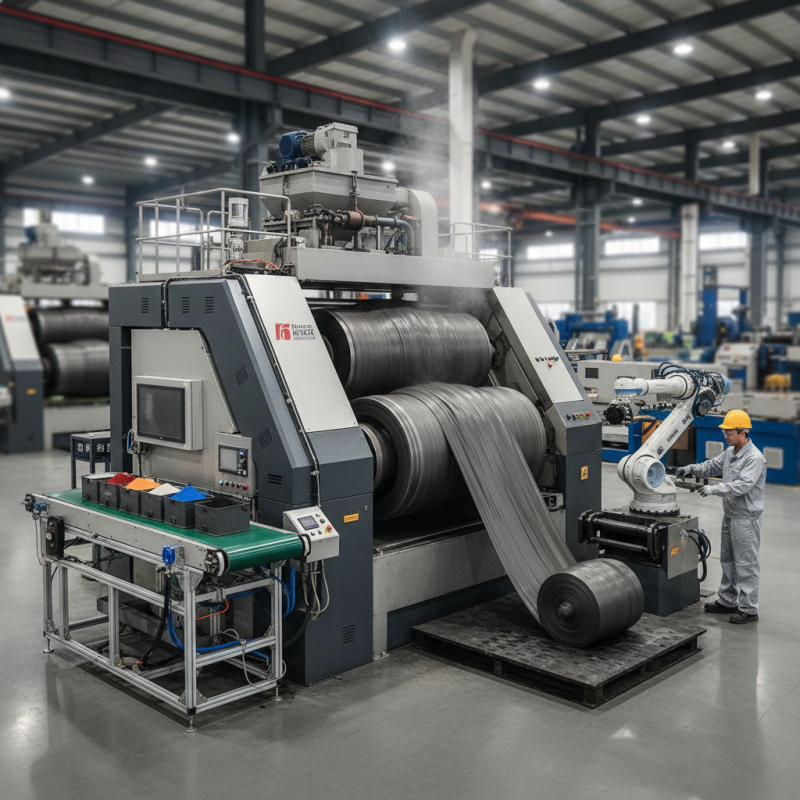
Rubber mixing mills play a crucial role in ensuring consistent material quality. With enhanced material consistency, businesses can achieve better product performance and reliability. According to a report by Freedonia Group, the demand for rubber products is expected to grow significantly, reaching over $40 billion by 2025. This underscores the necessity for businesses to invest in high-quality mixing equipment.
Maintaining consistency in rubber formulation is vital. Inconsistencies can lead to variability in product characteristics, which in turn affects durability and safety. Research published in the Journal of Applied Polymer Science highlights that reducing batch-to-batch variability improves overall processing efficiency. When using rubber mixing mills, manufacturers can mix compounds uniformly, ensuring that every product meets the required specifications.
However, challenges persist. Operators must be trained to monitor and adjust the mixing process. This is vital, as slight deviations in mixing time or temperature can impact the final product. According to industry surveys, about 30% of manufacturers report issues with material consistency. Investing in advanced rubber mixing mills can help mitigate these risks, but it requires a careful balance between technology and human expertise.
| Benefit | Description | Impact on Business |
|---|---|---|
| Enhanced Material Consistency | Achieves uniform mixing of rubber, improving quality and performance. | Reduces defects and waste, increasing profitability. |
| Increased Efficiency | Faster mixing cycles enhance productivity in production lines. | Lowers production costs and meets market demand more effectively. |
| Improved Product Quality | Consistent mixing leads to better final product characteristics. | Enhances customer satisfaction and brand reputation. |
| Cost-Effectiveness | Lower maintenance and operational costs associated with reliable machines. | Increases overall profit margins. |
| Versatility | Can mix various rubber compounds and additives. | Allows for a wider range of product offerings. |
| User-Friendly Operation | Designed for easy operation and minimal training requirements. | Faster onboarding and less downtime during training. |
| Safety Features | Equipped with safety mechanisms to prevent accidents. | Less risk of workplace injuries and associated costs. |
| Energy Efficiency | Designed to optimize energy consumption during operations. | Reduces utility costs, enhancing overall profitability. |
| Customization Options | Can be tailored to specific mixing requirements and compound formulations. | Allows businesses to cater to specialized markets. |
| Long Lifespan | Durable construction ensures reliable long-term use. | Decreases replacement frequency, leading to cost savings. |
The advancement in mixing technology has transformed rubber production. Using a 9 rubber mixing mill can significantly enhance production efficiency. These mills utilize superior mixing techniques to ensure uniformity in rubber compounds. The precision of these machines minimizes inconsistencies, which can lead to fewer defects. Manufacturers often notice an immediate improvement in product quality.
Efficient mixing not only saves time but also reduces waste. When materials are blended accurately, manufacturers use less raw material. This optimal usage leads to cost savings. However, there's an ongoing challenge in ensuring that every batch is consistent. Regular maintenance of the equipment is crucial to achieve this level of efficiency. A small oversight can lead to discrepancies, affecting production rates.
Investing in advanced mixing technology does require a financial commitment. Yet, the benefits often outweigh the costs. With proper training, employees can maximize the machine's capabilities. Production lines may need adjustments to fully integrate the new technology. Reflecting on the implementation process can reveal areas for improvement, fostering continuous growth within the business.
In rubber processing, durability and waste management are crucial. Using a rubber mixing mill can lead to significant cost savings for businesses. These machines are built to withstand rigorous usage and high temperatures. The materials used in their construction often exceed standard durability measures. This longevity means fewer repairs and replacements over time, which can dramatically lower operational costs.
However, businesses need to consider their specific needs when choosing a mixing mill. Not all machines will fit every situation. Misjudging the requirements can lead to underutilization or inefficiency. When the right mill is selected, waste reduction becomes apparent. The ability to mix materials precisely leads to a higher-quality output. This ensures that less material is wasted, while also producing a more consistent product. By refining processes, businesses can both save money and minimize their environmental impact.
Investing in a rubber mixing mill is a step toward better resource management. The initial cost can seem significant, but the long-term financial benefits often outweigh this. Nevertheless, companies must stay flexible and be ready to evaluate their choice as production needs evolve.
Achieving enhanced product quality starts with the mixing process. A rubber mixing mill can significantly improve this crucial aspect of production. With precise temperature control and better dispersion, it ensures that all components blend thoroughly. This leads to more uniform rubber compounds, reducing defects and inconsistencies in the final product.
Investing in modern mixing mills offers notable benefits. The mills can increase production efficiency while maintaining high-quality standards. However, it’s essential to monitor the mixing parameters closely. Sometimes, deviations in time or temperature can lead to suboptimal results. Observing these nuances can prevent potential issues and improve overall performance.
An effective mixing process lays the foundation for superior products, encouraging growth and customer satisfaction.
In the rubber industry, flexibility is key. A 9 rubber mixing mill enhances production capabilities for various applications. Businesses can easily adjust formulations, ensuring they meet specific requirements. This adaptability is crucial in a rapidly changing market.
Consider the diverse options available with a rubber mixing mill. It allows for alterations in temperature and mixing speeds. Companies can experiment with different additives. This opens doors for innovation in product development. However, not every mix will yield ideal results. Testing and refining are essential for improving quality.
Tips for maximizing your mill's potential include careful monitoring of mixing times. Over-mixing can lead to thermal degradation. Regular maintenance is important to ensure consistent performance. Also, keep an eye on the viscosity of your mixtures. Adjustments may be necessary based on the desired end product. Embrace the learning process, and don't shy away from failures. Each mistake offers valuable insights into refining production.