Blog

Top 10 Automobile Bushing Suppliers for Global Buyers?

Automobile Bushing suppliers rarely attract attention until a vehicle develops vibration, noise, or uneven handling. Yet these compact parts help isolate road shocks and support controlled movement between connected components. For global buyers, supplier choice affects more than unit price. Material consistency, tooling capability, testing records, delivery reliability, and technical support all matter.

The market context is substantial. OICA reported 93.5 million motor vehicles produced worldwide in 2023, showing the scale of the manufacturing base that depends on reliable components. The International Energy Agency’s Global EV Outlook 2024 estimated that electric-car sales reached nearly 14 million in 2023. These reports do not measure bushing demand directly, but they underline the scale and changing mix of vehicles suppliers must serve. Electric platforms can also bring different weight, noise, and durability considerations.

This guide compares ten suppliers through practical criteria: product range, manufacturing footprint, quality systems, customization, and experience serving international programs. Buyers should verify claims against current certifications, sample results, and application-specific testing. A polished catalog is not proof. Neither is a low quote. A shortlist is only a starting point, and supplier data can be difficult to compare fairly. That uncertainty deserves attention. The aim is a clearer first screen, not a substitute for engineering review or direct factory assessment.
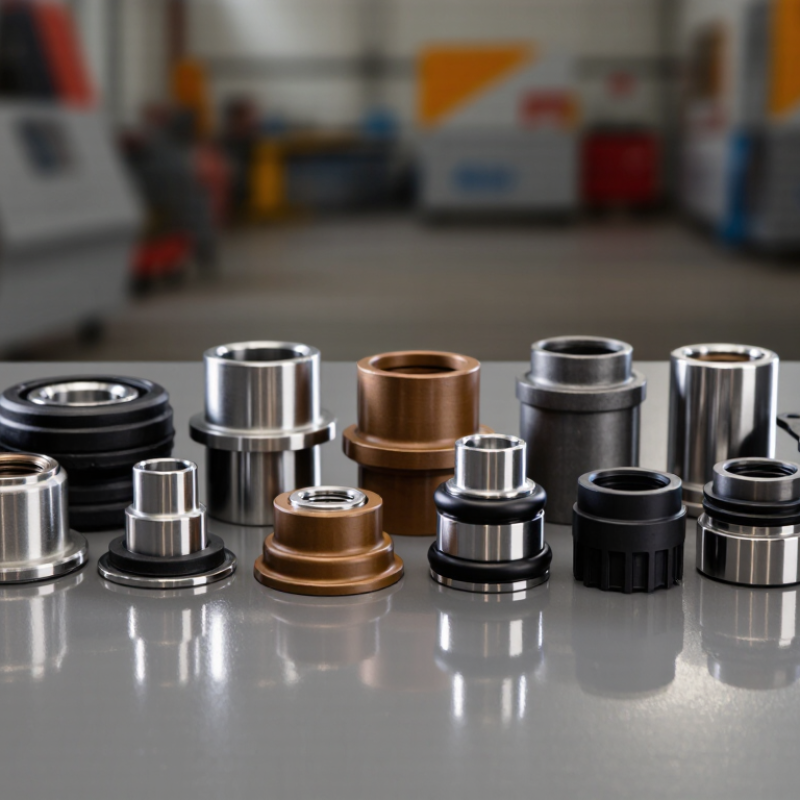
Top 10 Automobile Bushing Suppliers for Global Buyers?

What Automotive Bushings Do and Why They Matter

Automotive bushings are small flexible parts fitted between connected components, often in suspension arms, stabilizer bars, and engine mounts. They reduce direct metal-to-metal contact and help control vibration, noise, and movement. Many are made from rubber or engineered polyurethane, though the right material depends on load, temperature, and operating conditions. The part may look simple. Its job is not.

As a wheel crosses a pothole, a suspension bushing allows limited movement while helping keep the components aligned. That balance affects steering feel, tire contact, and cabin comfort. Bushings also help isolate engine vibration from the vehicle body. When one wears or cracks, drivers may notice clunks, loose handling, uneven tire wear, or extra vibration. These symptoms can have other causes, so inspection matters before replacing parts.

Fit and durability depend on more than dimensions. Buyers should check material specifications, hardness, operating temperature range, and whether the part matches the vehicle’s design. A bushing that is too stiff can transmit more vibration; one that is too soft may allow unwanted movement. Installation also matters: tightening some suspension joints at the wrong ride height can place extra stress on the bushing. Even careful selection cannot prevent every failure, especially on rough roads or in older vehicles.

How the Top 10 Suppliers Were Selected

A credible selection of the top 10 automobile bushing suppliers should begin with verifiable evidence, not polished catalog claims. The review can compare documented experience with rubber-to-metal bonding, material options, production capacity, and application support. Public certifications and quality procedures offer useful signals, but buyers should confirm their scope and current status. Verify the details.

Technical capability matters because bushings work under changing loads, heat, vibration, and exposure to fluids. A practical assessment should examine test methods, dimensional control, sample approval, and how design changes are handled. Ask for clear information on lead times, minimum order quantities, and shipping arrangements. Fit matters. A supplier with broad capacity may still be a poor match for a specialized vehicle program. Selection criteria should be applied consistently, while noting that available information can be incomplete or outdated.

Tips: Request a sample report and a marked drawing before comparing quotations. Check whether test conditions match your operating environment. Keep a short record of unanswered questions; responsiveness is useful evidence, though not proof of long-term performance. Recheck key details before placing an order.

Profiles of 10 Automotive Bushing Suppliers for Global Buyers

A practical profile of ten automotive bushing suppliers should compare capabilities, not just catalog size. Useful profiles include a high-volume original-equipment producer, a custom-molded elastomer specialist, a metal-rubber bonding expert, and a suspension-focused manufacturer. Others may specialize in powertrain mounts, noise-and-vibration tuning, electric-vehicle platforms, heavy-duty vehicles, regional production, or rapid prototyping. These are capability categories, not endorsements of specific companies.

OICA reported 93.5 million motor vehicles produced worldwide in 2023. That figure shows the scale of vehicle manufacturing, but it does not measure bushing demand directly. Buyers should check each supplier’s material traceability, dimensional inspection process, fatigue-test methods, and ability to maintain hardness across temperature changes. Ask for test conditions, not just a pass result. A bushing that looks sound on a bench can still transmit a low-frequency knock after repeated road loads. Supplier claims need verification.

Tips: Request samples from the intended production process, then compare dimensions and hardness against the drawing. Confirm tooling ownership, lead times, and change-control procedures in writing. Small gaps matter. A rushed comparison can miss them.

How Supplier Capabilities Differ Across Markets

Top 10 Automobile Bushing Suppliers for Global Buyers?
How Supplier Capabilities Differ Across Markets

Automobile bushing suppliers do not compete on the same terms everywhere. Buyers serving tropical roads may prioritize resistance to heat, water, and ozone. In colder regions, rubber flexibility and crack resistance become more visible concerns. Fit matters. Even a small hardness change can affect vibration, steering feel, and installation effort.

Market needs also shape capabilities beyond the rubber compound. Some suppliers provide local testing, short production runs, and engineering support near assembly plants. Others handle high-volume molding efficiently but rely on distant laboratories or longer tooling schedules. Neither model is automatically better. The right choice depends on how quickly a supplier can respond to a buyer’s launch, production, and service needs.

Compare data, not polished claims. Ask for compression-set results, dimensional checks, and batch traceability under clearly defined test conditions. Review samples after realistic heat cycling and exposure to road fluids; laboratory results alone rarely tell the whole story. I would also check how a supplier handles a failed batch. That detail is easy to overlook. Supplier rankings can help narrow the field, but local market fit is rarely as tidy as a top-ten list suggests.

What Global Buyers Should Check Before Choosing a Supplier

Choosing an automobile bushing supplier starts with a precise specification. Share the expected load, movement range, temperature exposure, and fluid contact. Ask how the supplier selects rubber compounds and controls metal-bonding processes. A datasheet is useful, but it cannot show how a part performs after repeated compression. Request test methods, sample results, and clear acceptance limits. Small details matter.

Tips: Compare samples against your drawing, not by feel alone. Check dimensions, hardness, bond quality, and packaging. Ask how batches are identified and how production changes are communicated. Get answers in writing.

Before placing a large order, review the supplier’s capacity and quality records. Confirm that tooling, inspection equipment, and production schedules can support your forecast. Ask for a sample from a normal production run, not only a specially prepared prototype. A polished sample can still hide inconsistency. If possible, assess how the supplier handles a failed test or delayed shipment; the response can reveal more than a sales presentation. Lead time and price matter, but unclear traceability or vague test reports can create costly uncertainty. Some checks may feel excessive for a small order. They are still worth discussing.

Top 10 Automobile Bushing Suppliers for Global Buyers? - What Global Buyers Should Check Before Choosing a Supplier

Buyer evaluation checklist: This table compares ten supplier-selection checks rather than ranking named companies. Verify each item against the supplier’s current documents, production site, and the requirements of your specific program.

No. Evaluation Dimension What to Verify Useful Evidence or Reference Why It Matters to Global Buyers
1 Automotive quality management Confirm the certificate is current, covers the quoted manufacturing site and relevant product scope, and can be verified with the issuing certification body. IATF 16949 certificate where applicable; otherwise assess the supplier’s quality system against the customer’s requirements. ISO 9001 is a general quality-management standard, not a substitute for customer-specific automotive requirements. Certificates apply to defined scopes and sites; a certificate alone does not demonstrate that a particular bushing program is controlled effectively.
2 Design and process validation Ask how product and process risks are reviewed, how changes are controlled, and what validation evidence is available for the proposed design. Program-specific APQP records, design or process FMEA where applicable, control plans, and agreed validation reports. Rubber-to-metal bushings depend on material, geometry, bonding, and process controls; validation should match the intended application and customer specification.
3 Production part approval Agree on the required approval level, submission timing, sample quantities, and acceptance criteria before production release. Customer-required PPAP submission or an agreed equivalent; dimensional results, material records, and process evidence as specified by the customer. Clear approval requirements help prevent shipment of parts that have not been accepted for the intended vehicle program.
4 Material and chemical compliance Request traceable declarations for elastomers, metals, coatings, and other substances, and confirm the applicable market and customer requirements. IMDS material data where required by the customer; relevant REACH and RoHS documentation where applicable; supplier declarations and supporting test records. Requirements differ by market, component, and application. Buyers should check the latest applicable rules and customer-specific restricted-substance lists.
5 Product testing and performance Review test methods, sample conditioning, acceptance limits, and results for the properties specified in the drawing or purchase requirements. Agreed reports for dimensions, hardness, bonding, stiffness, durability, or environmental performance when required by the application specification. There is no universal pass/fail range for every bushing; limits and test conditions need to be defined for the particular design and duty cycle.
6 Measurement and process control Check that critical characteristics are measured with suitable equipment and that measurement methods are documented and maintained. Inspection plans, calibration records, measurement-system studies where required, SPC records for designated characteristics, and nonconformance procedures. Reliable measurements and controlled processes support consistent production and make changes or deviations easier to detect.
7 Traceability and change control Determine how the supplier identifies batches and links finished parts to materials, production records, and inspection results; define notification and approval rules for changes. Lot or batch identification, production and material records, documented change-control procedure, and agreed customer notification requirements. Traceability can help contain quality issues. Unapproved changes to material, tooling, process, or production location can affect fit and performance.
8 Capacity and supply continuity Assess available capacity for the forecast, peak demand, tooling constraints, maintenance planning, and recovery arrangements for disruptions. Capacity study tied to the quoted process and shifts; production plan; contingency and business-continuity information. Capacity should be confirmed for the actual part family and production site, not inferred from a supplier’s general company size.
9 Packaging and international logistics Agree on packaging that protects parts from contamination, deformation, corrosion where relevant, and damage during the planned transport and storage route. Approved packaging specification, shipment labeling and documentation requirements, agreed Incoterms® rule and named place, and a validated shipping plan. Packaging, transit time, customs responsibilities, and delivery terms affect landed cost and the condition of goods on arrival.
10 Commercial terms and corrective action Clarify quotation assumptions, tooling ownership, warranty scope, lead times, payment terms, escalation contacts, and response expectations for quality issues. Written quotation and supply agreement; defined warranty and service terms; documented complaint and corrective-action process, such as 8D when required. Written, program-specific terms reduce ambiguity and establish how defects, delays, engineering changes, and costs will be handled.