Blog

China Top 10 Cold Rolled Steel Manufacturers

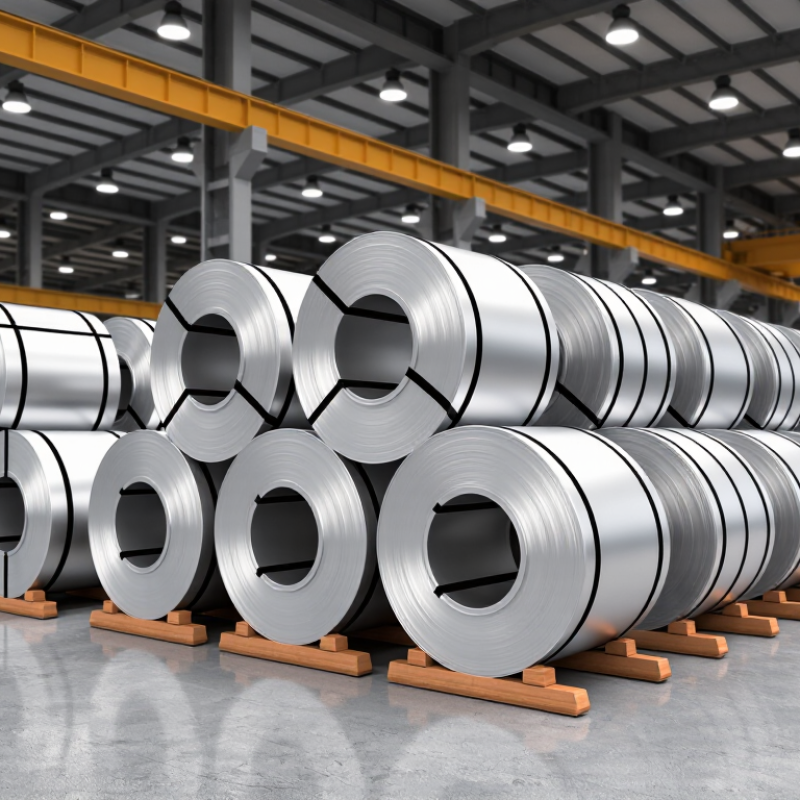
China’s cold rolled steel sector serves demanding markets, from appliance panels to automotive body parts. Buyers often judge a supplier by more than its catalogue. Consistent thickness matters. So do surface finish, flatness, and delivery reliability. A bright coil under warehouse lights may look flawless, yet its performance becomes clear only during forming and finishing.

This guide examines ten Chinese manufacturers through practical selection criteria: product range, production capability, quality documentation, export experience, and customer support. Metallurgist John D. Verhoeven’s work emphasizes the links between steel composition, processing, and material properties. The guiding line here is an editorial paraphrase, not a verbatim quotation: “A steel’s performance depends on how its chemistry and processing work together.” That distinction matters. A company profile alone cannot prove that every batch will meet a buyer’s specifications.

Readers should compare mill test certificates, applicable standards, coil dimensions, tolerances, and sample results before placing an order. Ask how defects are handled, too. Small details count. This overview is a starting point, not a substitute for supplier audits or technical review. Rankings can simplify a crowded market, but they may hide differences between product grades and production lines. Some evidence is also harder to compare than it should be. By looking beyond headline capacity, buyers can make a more informed shortlist of Cold Rolled Steel manufacturers in China.
China Top 10 Cold Rolled Steel Manufacturers

Cold-Rolled Steel Basics: Processing, Grades, and Typical Sheet Thicknesses

China Top 10 Cold Rolled Steel Manufacturers

Cold-Rolled Steel Basics: Processing, Grades, and Typical Sheet Thicknesses

Cold-rolled steel starts as hot-rolled coil, often with scale removed by pickling. The coil then passes through rollers at or near room temperature, reducing thickness and improving dimensional consistency. The process also hardens the steel, so manufacturers may anneal it to restore formability. A light final pass can refine flatness and surface texture. Details vary.

Grades are selected for how the sheet will be used. Commercial-quality steel suits general forming, while drawing-quality grades are designed for deeper shapes, such as appliance panels. High-strength low-alloy grades can offer greater strength at a given thickness, though forming limits still matter. Grade names and test requirements differ across standards, so buyers should confirm the applicable specification rather than rely on a familiar label.

Typical cold-rolled sheet thicknesses range from about 0.3 to 3 millimeters, but available dimensions depend on the mill, grade, and market. Thin sheet may suit enclosures or interior components; thicker sheet can serve brackets and formed parts. Check thickness tolerance, width, surface finish, and temper alongside the nominal gauge. A sample can reveal issues a datasheet misses, including springback or visible marks after forming. There is no single best thickness. The part design decides.

China’s Steelmaking Scale: 1,019.1 Mt of Crude Steel in 2023

China produced 1,019.1 million tonnes of crude steel in 2023, according to World Steel Association production data. Against 1,888.2 million tonnes worldwide, that represented roughly 54% of global output. This scale supports a broad supply base for downstream products, including cold-rolled sheet and coil. But crude steel output is not cold-rolled capacity. The distinction matters.

Cold-rolled quality depends on several steps: hot-rolled substrate quality, pickling, rolling control, annealing, and surface inspection. Buyers should compare thickness tolerance, width, surface finish, coil weight, and packaging details. Ask suppliers for recent inspection records and material test certificates, then verify that the documents match the delivered coil. Production scale can be reassuring, but it does not guarantee consistent results at every mill or for every grade. That part deserves a closer look.

Tips: Confirm whether quoted capacity means installed equipment or actual annual output. Request a sample specification and check traceability before placing a large order.

China Top 10 Cold Rolled Steel Manufacturers - China’s Steelmaking Scale: 1,019.1 Mt of Crude Steel in 2023

2023 crude steel production: leading producing countries and their share of global output

Rank Country Crude Steel Output (Mt) Share of Global Output
1China1,019.153.9%
2India140.27.4%
3Japan87.04.6%
4United States80.74.3%
5Russia76.04.0%
6South Korea66.73.5%
7Germany35.41.9%
8Türkiye33.71.8%
9Brazil31.91.7%
10Iran31.11.6%

Source: World Steel Association, 2023 crude steel production statistics. Global production was 1,892.2 Mt; country shares are calculated from this total and rounded to one decimal place. This industry-level table provides market context and does not rank individual cold-rolled steel manufacturers.

Ranking 10 Mills by Cold-Rolled Capacity, Product Mix, and Certifications

A credible ranking of China’s ten largest cold-rolled steel mills should compare verified annual capacity, not headline output alone. Capacity figures can cover different product scopes, and public disclosures do not always separate cold-rolled coil from downstream processing. That complicates comparisons. World Steel Association’s World Steel in Figures 2024 reports that China produced 1,019.1 million tonnes of crude steel in 2023, about 54% of global output. This establishes the scale of China’s steel sector, but it is not a measure of cold-rolling capacity.

Product mix helps distinguish mills with similar nameplate capacity. Compare grades and dimensions, including automotive sheet, electrical steel, appliance material, and high-strength coil. Also check whether published capacity reflects operating lines and current production, rather than planned projects. Certifications add another practical filter: verify the standard, certificate scope, issuing body, and expiry date. ISO 9001, ISO 14001, and IATF 16949 may be relevant, but certification alone does not prove consistent delivery quality. A transparent ranking should cite dated company disclosures and independent industry data, then flag gaps instead of filling them with estimates. One weakness remains: capacity data is not always reported on a like-for-like basis.

Profiles of Leading Producers: Baowu, Shougang, Ansteel, HBIS, and Peers

China’s leading cold-rolled steel producers generally combine large blast-furnace operations with downstream rolling and finishing lines. The World Steel Association’s World Steel in Figures 2025 reports that China produced 1,005.1 million tonnes of crude steel in 2024. That figure describes crude steel, not cold-rolled output, but it shows the scale behind the country’s supply base. Integrated groups can coordinate slabs, rolling schedules, and surface treatment across multiple facilities. Regional mills may compete through shorter delivery routes and closer customer service. The difference is practical. A coil’s consistency still depends on the specific plant, grade, and process.

When comparing producer profiles, buyers can examine product range, available widths, thickness tolerances, and documented inspection practices. Ask for mill test certificates and check whether stated specifications match the intended forming process. Look closely at surface finish under consistent lighting; small marks can matter on visible panels. Published capacity is useful, but it does not guarantee timely delivery or uniform quality. Company disclosures and industry reports also vary in scope, so avoid treating unlike figures as directly comparable. This comparison is imperfect. Public data rarely separates cold-rolled capacity cleanly from total steel capacity. Still useful. A careful supplier review should connect published claims with sample coils, technical documentation, and delivery records.

China Cold-Rolled Steel: Upstream Market Context

Annual crude steel production in China, 2020–2024 (million tonnes)

Crude steel is an upstream material for cold-rolled steel. These national figures provide industry context and do not represent cold-rolled output or any individual producer. Source: World Steel Association, World Steel in Figures 2025.

Buyer Comparison: GB/T 708, ASTM A1008, Coil Specs, and End Uses

A useful comparison of China’s cold rolled steel suppliers starts with the standards, not the price list. GB/T 708 addresses dimensions, shape, and tolerances for cold-rolled sheet and strip. ASTM A1008 covers product types and grades, including commercial and structural steel. These standards are not automatic equivalents. Ask suppliers to state the exact grade, standard edition, and inspection basis on the quotation.

Check the coil details that affect processing: thickness and width tolerances, inner diameter, outer diameter, coil weight, edge condition, and surface finish. Confirm whether the material is full hard or annealed, and request a mill test certificate showing chemistry and mechanical properties. A coil that fits the line matters. So does consistent flatness. For stamping, formability may be critical; for appliance panels, surface appearance can matter more. Match the grade to the actual forming depth and finish requirements.

End use should guide the comparison. Automotive components may require tighter traceability and defined mechanical properties, while cabinets or general fabrication may prioritize predictable dimensions and surface quality. Compare sample results, packing details, and delivery terms alongside the quoted price. A polished specification sheet is helpful, but it cannot prove every coil will behave identically. I would still verify a trial batch before approving repeat orders.