
Deep Hole Honing is a precision process for correcting bore geometry and producing a controlled internal finish. In hydraulic cylinders, engine components, and long tubular parts, a small error can persist over a large depth. Buyers comparing China’s top ten manufacturers should look beyond machine photos and headline specifications. Bore diameter range, honing stroke, straightness control, achievable surface finish, tooling support, and service response all matter.
The International Federation of Robotics reported 4,281,585 industrial robots operating worldwide in 2023 in its World Robotics 2024 report. This figure describes wider manufacturing automation, not honing-machine sales. Still, it shows why integration and repeatable process control deserve attention. On a factory floor, the practical questions are concrete: Can the machine hold tolerance through the full bore? Are setup data and inspection results traceable? How quickly can local technicians respond?
Quality expert W. Edwards Deming is widely associated with the observation, “Quality comes not from inspection, but from improvement of the production process.” He was not a Deep Hole Honing specialist, so this is a broader manufacturing principle, not a process-specific endorsement. That distinction matters. This guide compares Chinese manufacturers through verifiable capabilities, application fit, and support—not unverified rankings alone. Some supplier details may be difficult to confirm publicly; that is worth acknowledging before purchase.
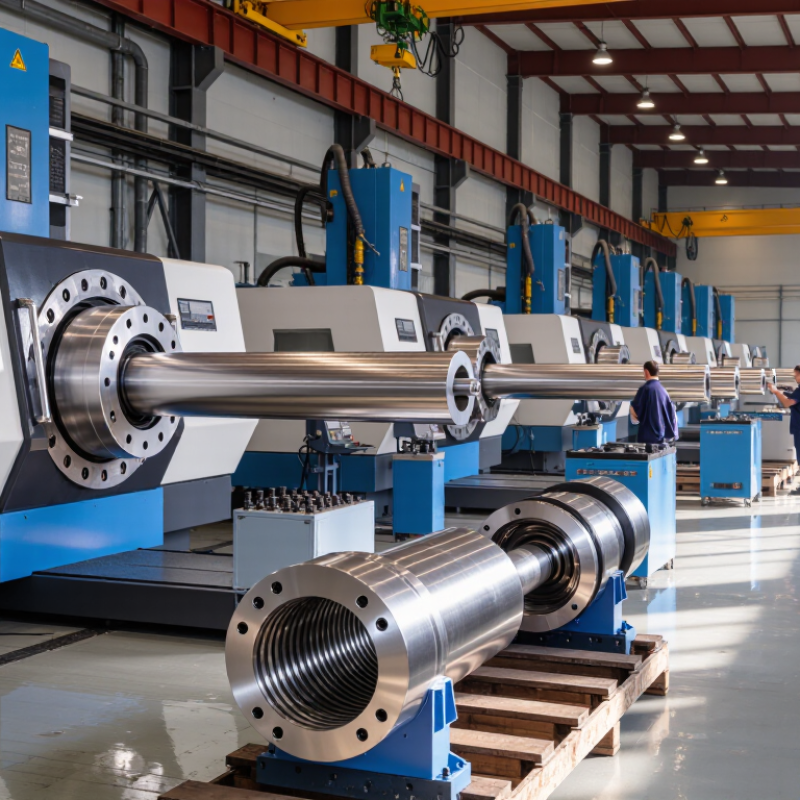
A deep-hole honing machine finishes the inside surface of a long, narrow bore. It uses an expanding abrasive head that rotates and reciprocates through the workpiece. The stones remove tiny high points, correct slight taper, and create a crosshatched texture that helps retain lubricant. Unlike drilling, honing is a finishing operation, not a way to create the bore from solid material. The result is a more consistent diameter and surface. It matters. NIST’s 2023 U.S. Manufacturing Factsheet reports that manufacturing contributed about $2.3 trillion in value added to the U.S. economy in 2022, underscoring the scale of industries that depend on accurate components.
These machines are used on hydraulic and pneumatic cylinders, where a smooth bore helps seals move without snagging. Engine blocks, fuel-system parts, and industrial pump housings also need controlled internal finishes. In aerospace and energy equipment, long passages may require close inspection because a small surface defect can affect flow or wear. ISO 286-1:2010 provides a framework for specifying dimensional tolerances, while engineers must also define surface finish and straightness for each part. Honing is not a cure-all: it cannot reliably fix a badly misaligned or undersized bore. Setup, abrasive choice, and measurement still matter, and real parts rarely behave exactly like drawings.
A brand-neutral overview of deep-hole honing functions, typical workpieces, and industrial applications.
| Application Area | Typical Workpieces | What Deep-Hole Honing Does | Common Materials | Why the Process Is Used |
|---|---|---|---|---|
| Hydraulic cylinders | Cylinder barrels and hydraulic tubes | Finishes the internal bore after drilling, boring, or tube production | Carbon steel, alloy steel, stainless steel | Helps produce a smooth, consistent bore surface for piston and seal operation |
| Pneumatic cylinders | Air-cylinder barrels and precision tubes | Corrects bore geometry and improves the internal surface finish | Aluminum alloys, steel, stainless steel | Supports reliable movement and sealing in reciprocating pneumatic components |
| Automotive engine components | Engine blocks, cylinder liners, and selected bores | Refines cylindrical bores and can create a controlled crosshatched surface | Cast iron, aluminum alloys with suitable bore surfaces, steel liners | Helps manage oil retention and the running-in behavior of piston-ring assemblies |
| Diesel and fuel-injection equipment | Precision sleeves, housings, and long internal passages | Finishes internal cylindrical surfaces where bore quality is important | Hardened steel, alloy steel, stainless steel | Provides a controlled bore surface for components requiring accurate internal fits |
| Oil and gas equipment | Valve bodies, pump sleeves, and tubular components | Improves bore finish and may correct small geometric variations | Carbon steel, alloy steel, corrosion-resistant alloys | Helps prepare internal surfaces for sealing, fluid handling, or close-fitting parts |
| Pump and compressor components | Pump barrels, sleeves, and cylinder bores | Removes small amounts of material to improve bore size and surface condition | Cast iron, steel, stainless steel, selected non-ferrous alloys | Supports consistent clearances and surface contact in moving assemblies |
| Aerospace and landing-gear parts | Precision hydraulic bores and selected tubular components | Finishes long internal bores to meet specified dimensional and surface requirements | High-strength steel, stainless steel, titanium alloys where process-compatible | Used when internal finish and dimensional control are important to component function |
| Industrial machinery | Spindles, shafts with internal bores, and machine-tool components | Finishes internal cylindrical surfaces that are difficult to access with external tools | Steel, alloy steel, cast iron | Can improve bore uniformity in long or deep components |
| Mold and die production | Guide bores, cooling passages, and precision sleeves | Refines accessible cylindrical passages and bores after prior machining | Tool steel, alloy steel, stainless steel | Helps achieve a more uniform internal surface where the design and geometry permit honing |
| General precision tube manufacturing | Seamless tubes, drawn tubes, and long precision bores | Uses an expanding abrasive tool to finish the inside diameter along the bore | Carbon steel, stainless steel, copper alloys, other machinable metals | Can improve bore size, straightness, roundness, and surface finish, depending on the setup |
Note: Actual workpiece limits, achievable tolerances, surface finish, and suitable materials depend on the machine configuration, honing tool, abrasive, workpiece geometry, and process parameters. Deep-hole honing is generally a finishing operation performed after an earlier bore-making process.