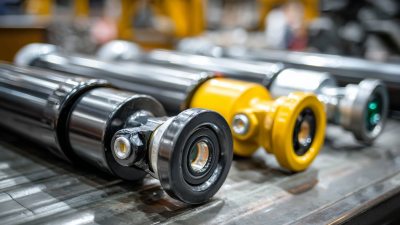
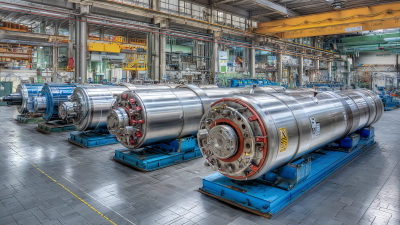
A Hydraulic Cylinder Bore is the inside diameter of the cylinder barrel, where the piston moves under fluid pressure. It is not the piston rod’s diameter. That distinction matters: bore area helps determine extension force, while rod diameter reduces the effective area during retraction. In a workshop, the bore is the measured opening inside the barrel—not an outside dimension that can be judged by eye.
The specification affects more than force. Bore size influences cylinder capacity, operating speed, and the space required for installation. For example, a larger piston area can produce more force at the same pressure, but it may also require more oil flow to maintain the same speed. Small details matter. Surface condition, seal fit, and wear can also affect performance. A formula alone cannot tell the whole story.
The Hydraulic Cylinder Market Size, Share & Trends Analysis Report by Grand View Research estimated the global market at USD 14.36 billion in 2023 and projected a 5.1% compound annual growth rate from 2024 to 2030. That forecast reflects broad equipment demand; it does not explain how to size one cylinder. This guide examines what bore means, how it relates to force, and what to check when comparing specifications. A practical caveat: published dimensions may not reveal a cylinder’s wear or internal condition. Measure carefully, and verify the manufacturer’s data before choosing a replacement.
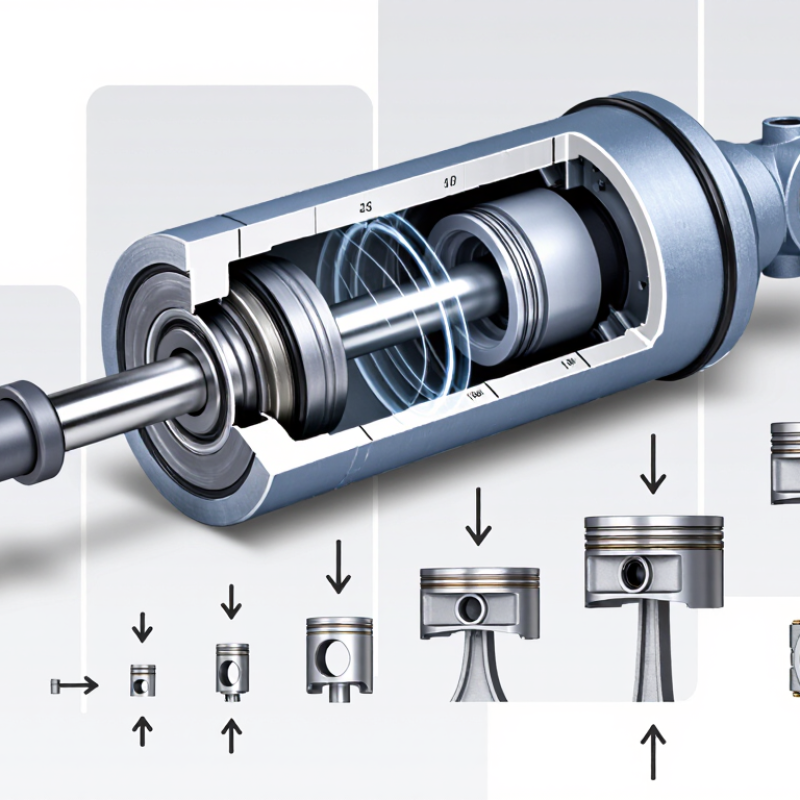
The bore of a hydraulic cylinder is the inside diameter of its barrel. It is the space in which the piston moves, guided by the barrel’s inner surface. Not the rod. That distinction matters because bore size helps determine how much force the cylinder can produce at a given pressure. A larger piston face generally creates more force, while also requiring more hydraulic fluid for each stroke.
The bore also affects cylinder speed: with a fixed fluid flow, a larger bore usually moves more slowly. On a workbench, the difference can be easy to picture: a wider piston needs more oil to travel the same distance. The bore’s surface condition matters, too. Scoring, corrosion, or uneven wear can damage seals and lead to leaks or rough movement. A precise measurement should use the cylinder’s specifications and suitable measuring tools; measuring a worn area alone may give a misleading result. One detail is easy to overlook: the nominal bore size does not describe every feature inside the cylinder. Seal design, clearances, and the rod diameter also influence performance. In practice, those parts do not always wear evenly.
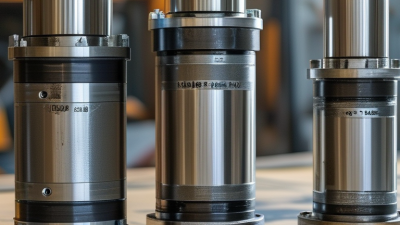
What Is a Hydraulic Cylinder Bore?
How the Bore Converts Hydraulic Pressure into Force
The bore is the inside diameter of a hydraulic cylinder barrel. It determines the piston’s working area, which is central to how pressure becomes force. That area matters. When pressurized oil pushes against the piston, the resulting theoretical force equals pressure multiplied by the piston area. For example, a larger bore gives pressure more surface to act on, so the cylinder can produce greater pushing force at the same pressure. The relationship is direct, but the bore alone does not tell the whole story.
During extension, pressure acts across nearly the full piston face. During retraction, the piston rod takes up part of that area, leaving a smaller annular area and usually less pulling force. Small detail, real consequence. A wider bore also needs more oil to move the piston the same distance, which can affect speed and system sizing. Actual output may be lower than the theoretical figure because seals create friction, and pressure can vary under load. Measurements deserve care: bore refers to the barrel’s internal diameter, not the rod diameter. Wear or measurement error can distort calculations, so a cylinder’s specifications should be checked rather than guessed. The simple pressure-area formula is useful, but it is not a complete performance test.
A cylinder bore is the internal diameter of its barrel and determines the piston area. On the extension stroke, hydraulic pressure acting on that area produces force: Force = Pressure × Piston Area.
| Cylinder Bore (mm) | Piston Area (mm²) | Theoretical Force at 100 bar (kN) | Theoretical Force at 160 bar (kN) |
|---|---|---|---|
| 25 | 490.9 | 4.91 | 7.85 |
| 32 | 804.2 | 8.04 | 12.87 |
| 40 | 1,256.6 | 12.57 | 20.11 |
| 50 | 1,963.5 | 19.63 | 31.42 |
| 63 | 3,117.2 | 31.17 | 49.88 |
| 80 | 5,026.5 | 50.27 | 80.42 |
| 100 | 7,854.0 | 78.54 | 125.66 |
| 125 | 12,271.8 | 122.72 | 196.35 |
| 160 | 20,106.2 | 201.06 | 321.70 |
Note: Values are theoretical extension forces, calculated using bore area (π × bore² ÷ 4) and the stated pressure. Actual force may be lower due to friction, pressure losses, and operating conditions. Retraction force is lower because the piston rod reduces the effective area.
A hydraulic cylinder bore is the inside diameter of its barrel. It sets the piston’s working area, so even a modest diameter change can noticeably alter performance. Extension force is approximately pressure multiplied by piston area. Because area grows with the bore diameter squared, a 20 percent wider bore provides about 44 percent more piston area at the same pressure.
There is a trade-off. With the same pump flow, a larger bore usually extends more slowly because each inch of travel needs more oil. For example, the cylinder may push a heavy load steadily but take longer to reach the end of its stroke. On retraction, the rod occupies part of the piston area, so retracting force is lower and speed can differ. The exact result depends on rod diameter, flow, pressure losses, and the load.
When comparing cylinders, check the actual operating pressure and available flow, not just the bore measurement. A larger bore can add force, but it also needs more fluid volume and may demand a larger pump. Measure the barrel’s internal diameter carefully; measuring its outside can be misleading. The calculation is useful, but real machines have friction, changing loads, and imperfect flow. That detail is easy to overlook.
The bore is the inside diameter of a hydraulic cylinder barrel. At a constant pressure of 100 bar, a larger bore produces more extension force. At a constant flow rate of 30 L/min, however, it extends more slowly. Values shown are ideal estimates for the cap end, before friction and other losses.
A hydraulic cylinder bore is the finished inner surface of the barrel. Its design affects friction, leakage, and how smoothly the piston moves. Common options include honed seamless-steel tubing, honed welded tubing, and machined bores in cast components. Seamless tubing avoids a longitudinal weld line; welded tubing can be economical when its weld and finish meet the application’s requirements. The choice is not simply about strength. Bore straightness and surface finish matter, too.
Steel is widely used because it combines strength with practical machinability. The World Steel Association’s World Steel in Figures 2025 reports global crude steel production of 1,882.6 million tonnes in 2024. That figure is not specific to hydraulic cylinders, but it shows the scale of the material supply behind many industrial components. Stainless steel may suit damp or corrosive environments, while aluminum can reduce weight in some lower-pressure designs. Material choice still depends on operating pressure, fluid, temperature, and maintenance conditions.
A finely honed bore gives seals a controlled surface to run against. Too rough, and the seal may wear faster; too smooth, and it may retain too little oil. There is no perfect finish for every cylinder. In workshops, measurements can look excellent at one point and drift along the barrel. That detail is easy to miss. Specify the bore diameter, tolerance, material, and surface finish together, then verify them against the cylinder’s actual duty.
What Is a Hydraulic Cylinder Bore?
How to Measure and Specify a Cylinder Bore
A hydraulic cylinder bore is the inside diameter of its barrel. It determines the piston’s working area and affects the force produced at a given pressure. Measure the barrel’s internal surface, not the piston rod or the cylinder’s outside diameter. Small differences matter.
Before measuring, make sure the cylinder is depressurized and securely supported. If the barrel is disassembled, clean away oil and residue. Use an internal micrometer or a bore gauge suited to the cylinder’s depth. A quick caliper reading can feel reassuring, but it may not reach accurately or reveal wear. I would not rely on one reading alone.
Measure at several points along the barrel, including near each end and through the middle. At each point, check across two directions, roughly 90 degrees apart. This can reveal taper or an out-of-round bore. Record the actual readings, units, and measurement locations. When specifying a replacement, state the nominal bore diameter and required tolerance, alongside the stroke and operating pressure. Include surface-finish and seal requirements when known; a correct diameter alone may not ensure a good fit. If readings vary noticeably, verify them with suitable equipment or consult a cylinder specialist before ordering.