
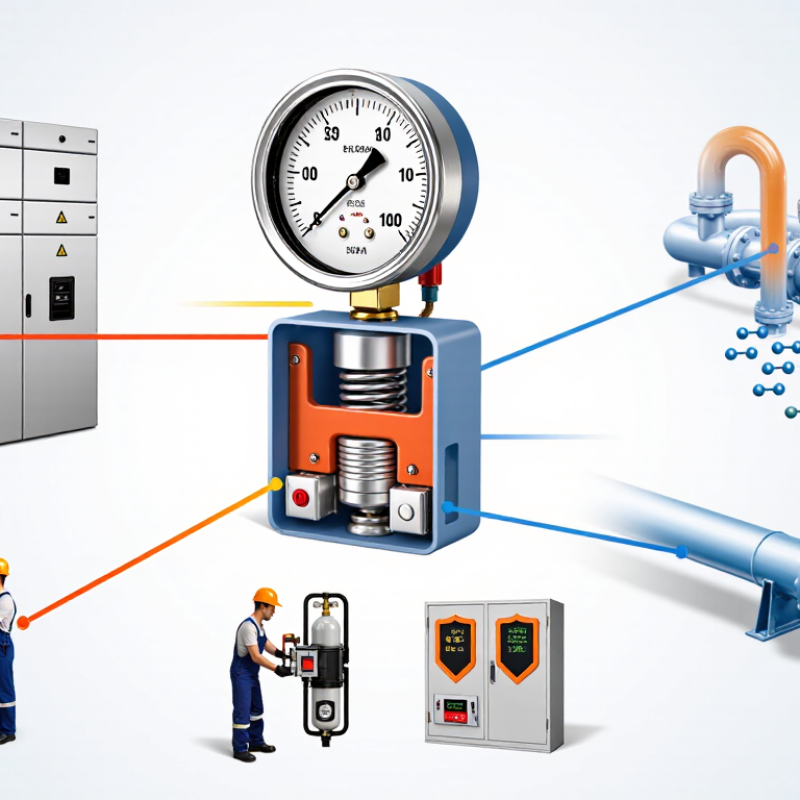
A gas density indicator monitors the mass of gas within a sealed system, rather than pressure alone. This distinction matters because pressure changes with temperature. A warm afternoon can raise pressure even when no gas has entered the vessel. The indicator corrects this effect and shows a density-related condition.
Its main components include a pressure sensor, a temperature sensor, a calibrated measuring chamber, and an electronic or mechanical display. The pressure sensor reads absolute pressure, while the temperature sensor records the gas temperature nearby.
For a stable gas composition, density follows the relationship between pressure and absolute temperature. The internal processor applies this relationship and compares the result with preset values. Some indicators provide switching contacts for alarms. Others show a local reading through a pointer or digital screen.
During practical inspections, technicians should check the indicator against the equipment temperature, not only the displayed value. A small leak may appear slowly. Early signs can include a lower reading during a cold morning and repeated alarm activation.
Gas composition also affects accuracy, especially after maintenance or partial filling. That limitation is easy to overlook. Calibration intervals, sensor aging, and installation position deserve attention.
A reliable indicator is not merely a pressure gauge; it is a measurement system that interprets pressure and temperature together. Mistakes still happen when operators trust one reading without checking the surrounding conditions.