Blog

How to Choose the Right Switching Power Supply for Your Needs?

Choosing the right Switching Power Supply can be challenging. John Doe, a renowned expert in power electronics, once said, “The key to efficiency is selecting the right power solution.” This quote highlights the importance of making informed decisions.

When searching for a Switching Power Supply, consider your specific needs. Factors such as voltage, current, and load requirements are crucial. A mismatched power supply can lead to inefficiency or failure. It's easy to overlook these details, but doing so may cause costly mistakes.

Shopping for a Switching Power Supply often involves trade-offs. You may need to balance cost against performance. Sometimes cheaper options lack the necessary reliability. Reflecting on these choices helps ensure you make the best decision. Each project demands careful attention to its unique power needs.
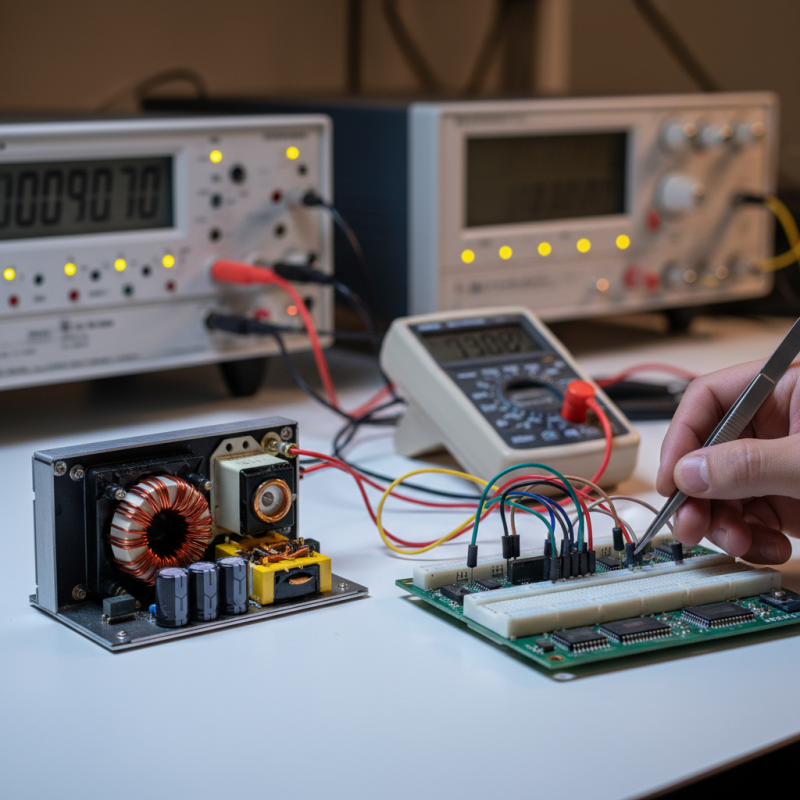
How to Choose the Right Switching Power Supply for Your Needs?

Understanding the Basics of Switching Power Supplies and Their Components

Understanding switching power supplies is essential in selecting the right one for your needs. These components convert electrical power efficiently. They use transistors to switch the input voltage on and off rapidly. This process reduces heat and energy loss.

When choosing a power supply, consider its input and output voltages. Knowing your device's requirements is crucial. Not all supplies can handle varying loads. Some may perform poorly under certain conditions. Reliability is key. Opt for supplies that have stable outputs across a range of temperatures.

Tip: Always check the wattage rating. Exceeding the capacity can lead to failure. Look for features like overload protection. This can prevent damage to your devices. Another consideration is the size. Some applications require compact designs. But make sure they do not compromise on performance.

Be aware of noise levels in power supplies too. Some can emit electromagnetic interference. This can affect nearby electronics. Testing under realistic conditions is wise. Sometimes, what looks good on paper may not work in practice.

Key Specifications to Consider When Selecting a Switching Power Supply

Choosing the right switching power supply is crucial for various applications. You should consider key specifications before making a decision. Understanding the voltage and current ratings is essential. They must match your device’s requirements. For instance, an output voltage of 12V may be needed for some electronics, while others may require 5V or 24V. It is important not to overlook this aspect, as mismatched specifications can lead to device failure.

Efficiency is another vital factor. Look for power supplies with high efficiency ratings. An efficient power supply reduces energy waste and heat generation. Operating at lower temperatures extends the lifespan of the unit. Pay attention to load ranges as well. Some supplies perform better at specific load conditions. If your application fluctuates frequently, select a unit that maintains stability across diverse loads.

Additionally, consider protection features. Over-voltage, over-current, and short-circuit protections can prevent damage. These features offer reliability and peace of mind. Do not forget about the physical dimensions. Ensure the power supply fits within your device's constraints. Proper ventilation is important too. Sometimes, compact designs can lead to overheating issues, which requires careful evaluation.

Analyzing Load Requirements: Voltage, Current, and Power Ratings

When selecting a switching power supply, accurately analyzing load requirements is crucial. Voltage is the first factor to consider. Most electronic devices operate within a specific voltage range. For instance, many LED applications run on 12V or 24V. A mismatch in voltage can lead to failure.


Next, current ratings must be assessed. Current is measured in amperes (A) and is essential for determining compatibility with your devices. For example, if your device needs 1A at 12V, it’s vital to choose a power supply that can provide that without overloading. Reports indicate that about 60% of power supply failures stem from inadequate current support. This highlights the need for proper assessment.


Power ratings, measured in watts (W), are equally important. Understanding total wattage requirements helps in selecting the right unit. For example, if your devices collectively demand 60W, minimally 75W supply is recommended for safety. Oversizing sometimes helps, but excessive capacity can lead to inefficiencies. Some people opt for too powerful supplies, thinking it ensures reliability. This approach often results in increased costs and wasted energy. Balancing these factors can be challenging, but it’s essential for effective power management.

Efficiency Ratings and Their Impact on Power Supply Performance

When selecting a switching power supply, efficiency ratings matter significantly. An efficient power supply converts more input power to output power. This reduces wasted energy, leading to lower electricity costs. Additionally, improved efficiency results in less heat generation. Less heat can mean a longer lifespan for your devices.

You might find efficiency ratings confusing. They are often stated as a percentage. A rating of 80% indicates that 80% of energy is converted to usable power. However, this doesn’t mean a power supply is perfect. Even high-rated units can underperform under certain loads. Real-life conditions often differ from ideal lab tests.

Choosing a power supply with a higher efficiency doesn't guarantee flawless performance. Sometimes, costs increase with higher efficiency ratings. Evaluate your needs carefully. Look for a balance between performance and cost. A good starting point is to check the efficiency at different loads. Understanding these details can enhance your decision-making.

Common Applications and Industry Standards for Switching Power Supplies

When selecting a switching power supply, consider its applications. These power supplies are widely used in devices like computers and networking equipment. They convert electrical power efficiently. This efficiency often results in less heat generation. However, not every model is ideal for all applications.

Different industries have specific standards for power supplies. For example, medical devices require extra reliability. They often must meet strict safety and performance standards. In contrast, consumer electronics have more flexibility, but also need adequate efficiency.

It's crucial to match the power supply characteristics with your device's requirements. Voltage, current, and load types must align closely. Many users overlook these details, leading to issues. A wrong match can cause failures or degrade performance. Consideration of these factors can lead to better choices. This way, your system performs reliably.

Power Supply Efficiency Ratings Based on Application