
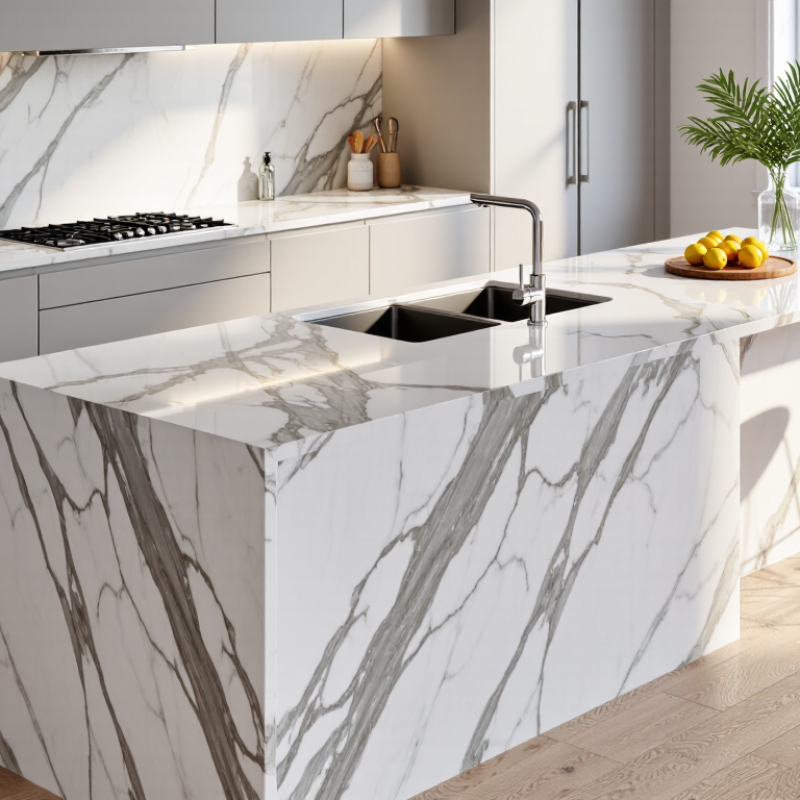
When choosing marble countertops, inspect the actual slab in daylight, not only a small sample. Move along its full length and look for changes in color, veining, and surface texture. Strong veins can create a striking focal point, but check how they will meet at corners and seams. A pattern that looks balanced on one slab may feel busy across a large island. Take photos from several angles. I’ve found that phone screens can distort pale tones, so compare them with the stone in person.
Tips: Ask the fabricator to mark visible fissures, filled areas, and planned cutouts. Natural lines are common, but a deep crack near a sink or cooktop deserves closer review. Run your hand gently over the surface. Notice rough spots, small pits, or repairs. Ask how each feature may affect fabrication and daily use.
Look closely at the edges and back of the slab, too. Uneven thickness or poorly bonded repairs may matter during installation. Marble varies naturally, and not every vein is a flaw. Still, it can be hard to judge from one visit. Bring cabinet or flooring samples, then view them beside the slab. If a mark worries you, ask for a clear explanation before approving the layout.