In the rapidly evolving world of manufacturing, choosing an Injection Molding Machine With Robot can revolutionize production processes. According to a recent report by the International Federation of Robotics, industrial robots are predicted to increase global manufacturing productivity by 30% by 2025. Combining robotic automation with injection molding can streamline operations. This integration enhances precision, reduces waste, and increases overall efficiency.
Businesses face tough competition, making it essential to adopt advanced technologies. The market for injection molding machines equipped with robots is witnessing a significant growth rate, expected to reach $25 billion by 2026. However, not all companies utilize this combination effectively. Some struggle with implementation and training, leading to missed opportunities for innovation and cost reduction.
Investing in an Injection Molding Machine With Robot may seem daunting. Companies need to assess their specific needs and capabilities. A comprehensive understanding of robotic functions can help mitigate challenges. Embracing such technology can position businesses for success in an increasingly automated industry landscape. Reflecting on these aspects can guide manufacturers in making informed decisions for the future.
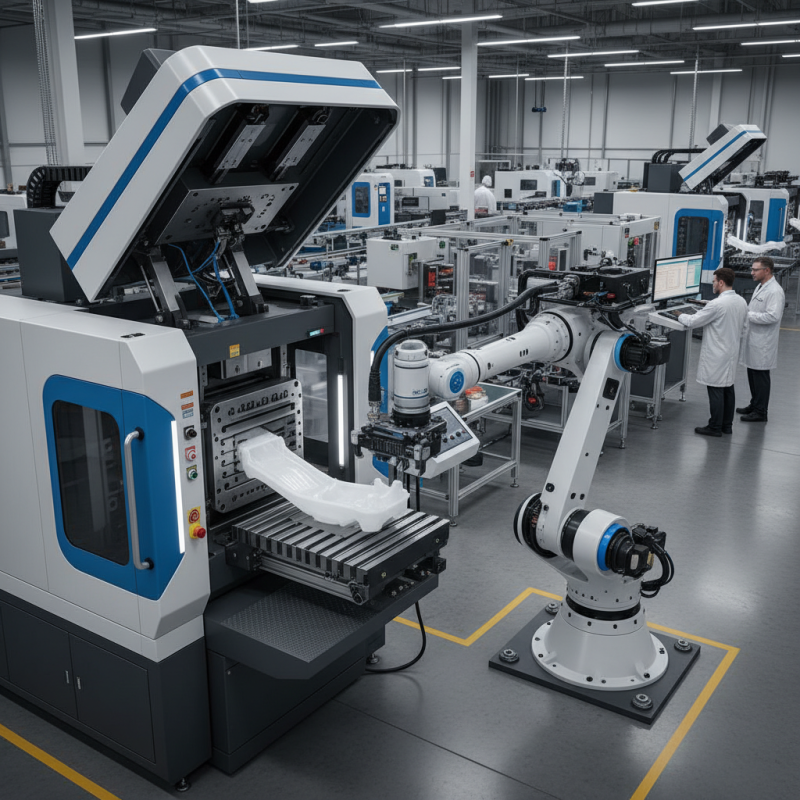
Integrating robots with injection molding machines offers significant advantages for manufacturing efficiency. A study by the Plastics Industry Association indicates that automation can increase production efficiency by up to 30%. This boost can be crucial in highly competitive markets. Robots can take over repetitive tasks, reducing human error and improving product consistency.
Moreover, robots can operate in harsh environments. They enhance safety by handling heavy components or toxic materials. This means a safer workplace for employees, which is increasingly important. Yet, there are challenges; the initial investment can be substantial. Companies need to consider whether the long-term savings outweigh upfront costs.
The flexibility of robotic systems allows for quick changes in production lines. This adaptability caters to varying product demands. However, integrating robots often requires retraining staff. Changing the workforce dynamic can lead to resistance, reflecting the need for thoughtful implementation. Embracing automation is not just about machines; it’s about people too. Balancing technology with human input is essential for success.
The manufacturing sector is undergoing significant changes. Automation has become a crucial focus. According to a report by McKinsey, about 60% of all occupations could see automation by the mid-2030s. This trend will reshape industries. Companies embracing automation are likely to gain a competitive edge.
Injection molding is no exception. Research from Statista indicates that the global injection molding machine market is expected to grow from $15.14 billion in 2020 to $22.02 billion by 2025. This growth reflects a rising demand for efficient production methods. Adding robots to injection molding processes increases productivity and consistency.
However, not all manufacturers will benefit equally. Some face challenges in integrating robots with existing systems. Workforce training and technology costs can be significant hurdles. A strategy for automation requires careful planning. Companies must balance investment with potential returns. The path to automation is not just about technology; it’s also about people. Addressing skill gaps is vital for success.
In recent years, the demand for injection molding has increased. Many businesses are adopting robotic systems in their processes. The cost-benefit analysis shows that these systems can significantly enhance productivity. According to industry reports, robotic solutions can improve cycle times by up to 30%. This means more products made in less time, lowering production costs.
Having a robot integrated with injection molding machines can reduce manual handling. Manual handling often results in labor costs and potential injuries. Automated systems, on the other hand, require less oversight. Statistics indicate that businesses employing robotics save between 15% and 30% on operational costs. This suggests a compelling return on investment for companies willing to embrace technology.
Robotic systems in injection molding have shown significant improvements in efficiency. A study by the Association for Advancing Automation found that the integration of robots can boost production rates by up to 30%. Robots handle tasks such as part removal and material loading, reducing cycle times effectively. This allows manufacturers to produce more in less time, ultimately leading to higher profits.
Quality control is another area where robotics excel. According to a report from the International Society of Automation, automated systems reduce defects by as much as 50%. Robots maintain consistent speed and precision in tasks. They minimize human error, which often leads to costly reworks. Yet, it is crucial to note that implementing robotic systems requires upfront investment and time for training.
While the benefits are evident, challenges exist. Some companies report issues with integration into existing workflows. Additionally, there is a learning curve for staff. Resistance to change can hinder progress. Continuous evaluation of processes is necessary to maximize the benefits of automation. Each factory's unique needs should guide the implementation strategy.
| Feature | Benefit | Impact on Efficiency | Impact on Quality |
|---|---|---|---|
| Automated Loading Systems | Reduces manual labor and increases speed | Increases cycle times by up to 20% | Consistent material feeding improves part uniformity |
| Robotic Arm Precision | Enhanced precision in part handling | Reduces scrap rates by 15% | Minimizes defects through precise assembly |
| Real-time Quality Monitoring | Instant feedback and adjustments | Faster detection of issues leads to reduced downtime | Higher defect detection rate, increasing product quality |
| Reduced Cycle Time | Quicker time-to-market | Potential to save 30% on production time | Faster production allows for better quality assessments |
In recent years, automation in injection molding has transformed many manufacturing processes. A significant case study highlights a medium-sized company that integrated a robotic arm with their injection molding machinery. This change led to a 30% increase in production efficiency. The robotic system reduced cycle times and minimized material waste. Such results underscore the growing trend towards automated solutions in the industry.
A report by the International Federation of Robotics indicates that companies implementing robots can expect a 25% reduction in labor costs. In one instance, a company reported slashing its defect rate from 5% to below 1% after adopting robotic systems. However, not every implementation has been smooth. Some businesses faced initial hurdles, such as employee resistance and technical glitches. These challenges reveal the importance of proper training and systems integration. Companies must invest in developing employee skills alongside introducing new technology. This dual approach can significantly enhance the successful implementation of robotics in injection molding.
The future points towards even more automation, but the journey isn't without its bumps. Continued learning and adaptation are key. Companies should remain open to adjustments as they integrate new technology. Balancing innovation with workforce skill development will determine success.