Blog

How to Choose the Best Perforated Mesh Machine for Your Needs?

Choosing the right Perforated Mesh Machine is crucial for your manufacturing needs. Every business has unique requirements. The demand for perforated mesh in sectors like construction and filtration is rising. According to a recent market report, it is projected to grow at a CAGR of 5% over the next five years.

Selecting the best machine can be daunting. Various factors come into play, such as the material type and thickness. You may find that one machine excels in speed, while another is more efficient in precision. This detail could significantly impact your production quality and costs. Moreover, durability is a key aspect that shouldn't be overlooked.

It's essential to consider the reputation of manufacturers. Industry leaders often provide robust support and warranty options. However, customer reviews can reveal imperfections in service or performance you may not expect. These insights help you avoid machines that seem perfect at first glance. Careful evaluation can lead to better purchasing decisions.
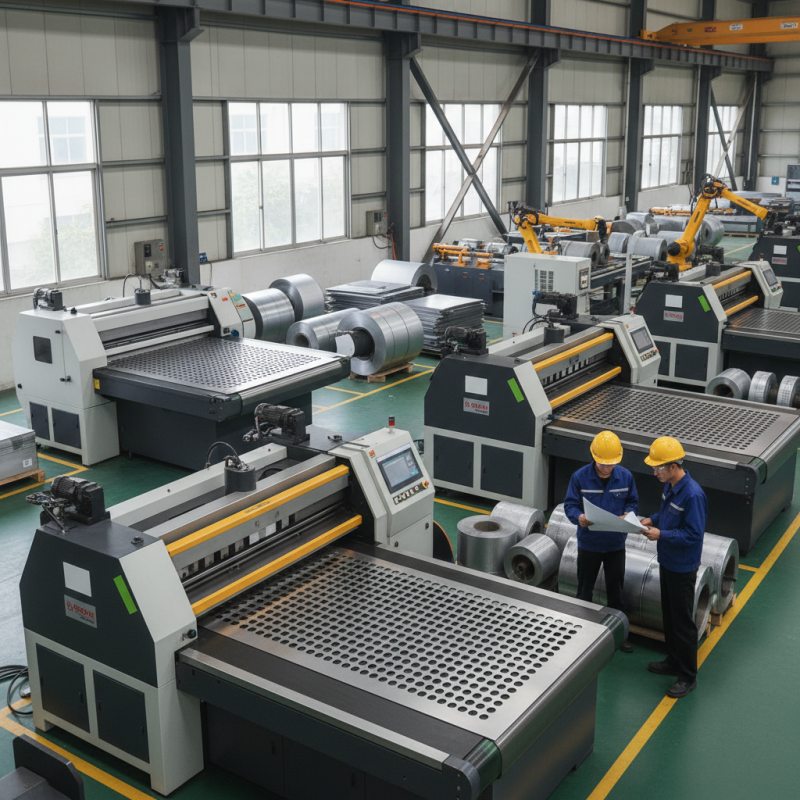
How to Choose the Best Perforated Mesh Machine for Your Needs?

Understanding Perforated Mesh Machines: Types and Applications

When selecting a perforated mesh machine, understanding the types and applications can significantly impact your choice. There are mainly two types: rotary and flatbed perforated machines. Rotary machines are known for their high-speed production of holes and are ideal for large-scale operations. Flatbed machines, on the other hand, offer versatility for varied hole sizes and patterns, making them perfect for custom projects.

Consider the application of the perforated mesh. For instance, in the construction industry, perforated sheets are used for facades that enhance aesthetics while ensuring durability. The automotive sector utilizes these machines for sound-damping materials. According to a recent market study, demand for perforated materials is projected to grow by 5.4% annually through 2025. This statistic emphasizes the relevance of choosing the correct machine type based on industry needs.

Tip: Evaluate how different hole patterns affect the material’s functionality. A simple pattern might suffice for certain applications, but intricate patterns can maximize both aesthetics and performance. Additionally, consult with industry professionals to understand emerging applications and technologies. Balancing speed, quality, and adaptability can be a learning curve, but it leads to better long-term investment decisions.

Key Features to Consider When Selecting a Perforated Mesh Machine

When selecting a perforated mesh machine, several key features should guide your decision. One important aspect is the machine's versatility. A robust machine can handle various materials, including metals, plastics, and composites. This flexibility is crucial for manufacturers who need to adapt to changing demands. According to industry reports, companies that invest in versatile machinery increase their overall efficiency by 20%.

Another critical feature to consider is the machine's ease of use. User-friendly interfaces and automated settings can significantly reduce the learning curve. Research indicates that machines with intuitive controls enhance productivity, with a reported increase in output by up to 15%. Operators often feel overwhelmed by complex setups. Therefore, simpler machines tend to yield better results and minimize errors.

Maintenance requirements also deserve attention. Machines requiring frequent servicing can lead to production downtimes. It's advisable to look for machines with a reputation for reliability. Regular maintenance checks may seem daunting but can prevent larger issues down the line. As noted in a recent industry survey, companies that prioritize machine upkeep see a 30% reduction in operational costs. Reflecting on these aspects helps ensure you choose a perforated mesh machine that aligns with your operational needs and goals.

Key Features to Consider When Selecting a Perforated Mesh Machine

Evaluating Your Production Needs: Size, Speed, and Material

Choosing the right perforated mesh machine requires careful evaluation of your production needs. The size of the machine is crucial. For example, a larger machine can handle bigger sheets and achieve higher output. However, if your production demands are low, a smaller, compact machine might be more efficient. According to industry reports, companies report that a well-sized machine can enhance productivity by up to 30%.

Speed is another vital factor. Machines with higher speeds can significantly reduce production time. Some high-performance machines reach speeds of up to 150 meters per minute. While this sounds impressive, it’s essential to assess whether your product quality can maintain pace with increased speed. Test runs are advisable to ensure that quality remains consistent, as pushing limits can lead to flaws.

Material selection also influences your choice. Different materials react differently under varying conditions. For instance, softer materials may require slower speeds to avoid deformation. A study revealed that machines designed for diverse materials have a 25% increase in adaptability. However, know that not all machines will perform well under every circumstance. Evaluation and reflection on which materials you frequently use will guide you in making a sound decision.

Budgeting for Your Perforated Mesh Machine: Costs and ROI

When budgeting for a perforated mesh machine, consider initial costs versus long-term ROI. The average price of these machines can range from $5,000 to $50,000, depending on features and capabilities. According to a recent industry report, businesses can expect a 20-30% increase in production efficiency after incorporating these machines. This boost can lead to significant cost savings over time.

Evaluating potential ROI involves analyzing operating costs, labor savings, and production output. A 2022 survey by the Manufacturing Technology Association revealed that 65% of manufacturers who invested in advanced machinery reported reduced downtime. However, not every machine will deliver the same results. Factors such as material type and production volume heavily influence performance.

It's crucial to weigh the specific needs of your operation. While high initial costs may deter some, consider the long-term benefits. Advanced machines often have features that enhance precision and reduce waste. This can translate into lower long-term operational expenses. Always conduct thorough research and consult with experts before making a decision.

Maintenance and Support: Ensuring Longevity and Performance

When selecting a perforated mesh machine, maintenance plays a crucial role in ensuring its reliability. Regular maintenance checks are necessary to identify wear and tear. This helps in making informed decisions about repairs. Keeping a routine schedule can prevent unexpected downtime. Simple tasks, like cleaning and lubricating moving parts, can greatly extend machine life.

Support from experienced technicians can enhance performance. They can offer insights into best practices for operating machinery. Their expertise is invaluable in troubleshooting issues. It can be frustrating when a machine fails unexpectedly. Having reliable support can ease these concerns. Users may sometimes overlook the importance of training staff. Proper training ensures that everyone understands optimal usage.

Longevity often hinges on how well machines are treated. Neglect can lead to poor performance. Users might find themselves grappling with inefficiencies. Investing in good maintenance is always a smart choice. Monitoring usage patterns can highlight areas that require attention. Small changes can lead to significant improvements. Emphasizing these practices can foster better machine health.