Blog

Why Choose Aluminum Products for Your Global Supply Needs?

In today's global marketplace, choosing the right materials is crucial for success. Aluminum Products stand out for various reasons. They are lightweight yet strong, making them ideal for many applications. Industries ranging from automotive to aerospace rely on aluminum's unique properties. This versatility supports efficiency and innovation.

Despite their advantages, some may overlook aluminum's long-term sustainability. Yet, recycling aluminum is energy-efficient and reduces waste. Businesses can benefit from reducing their carbon footprint. Using aluminum products not only enhances performance but also promotes environmental responsibility.

However, companies must also consider supplier reliability. Not all providers offer high-quality aluminum products. It is essential to conduct thorough research. This ensures the materials meet industry standards. Trustworthy suppliers can make a significant difference in product quality. Making informed choices can lead to enhanced trust and success in your supply chain.
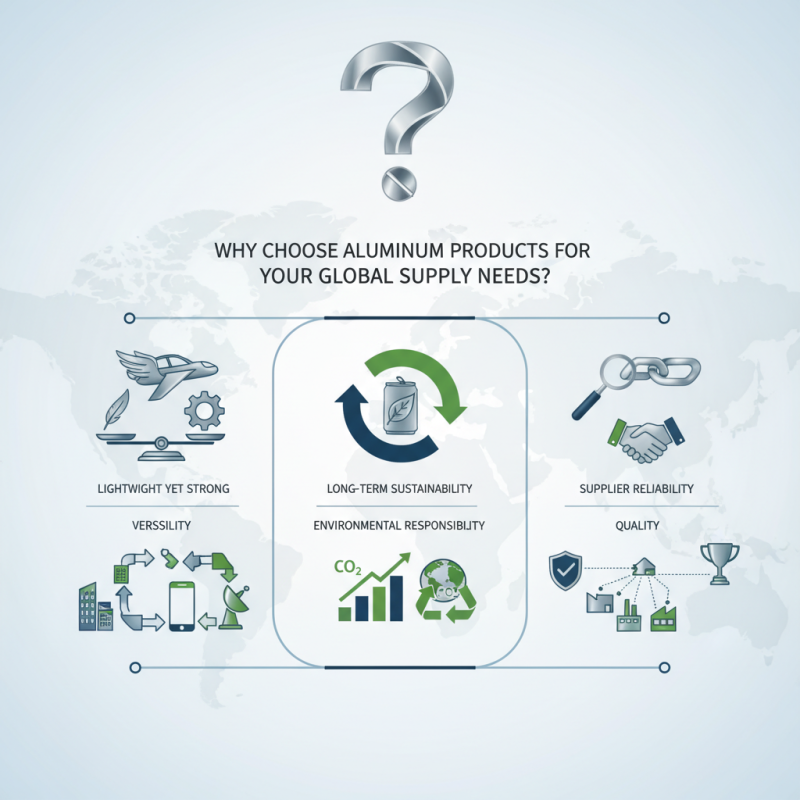
Why Choose Aluminum Products for Your Global Supply Needs?

Advantages of Aluminum in Global Supply Chains

Aluminum has emerged as a preferred choice in global supply chains for several reasons. Its lightweight nature allows for reduced shipping costs, which is a significant advantage for businesses managing logistics. When transporting goods, every ounce matters. Lighter materials improve fuel efficiency, saving money and reducing carbon footprints. Companies benefit when they choose aluminum for these reasons.

Durability is another key benefit. Aluminum resists corrosion, making it ideal for various environments. This longevity reduces the need for frequent replacements. But relying solely on aluminum isn't without its challenges. The energy required for extraction and production is considerable, raising environmental concerns. Companies must weigh these factors carefully against the advantages. While aluminum is often seen as an eco-friendly material, its production process requires reflection on sustainability practices.

Flexibility in design adds to aluminum's appeal. It can be easily shaped and molded to meet specific requirements. This adaptability allows for innovation in product development. However, over-reliance on aluminum can lead to monoculture in material selection. Diversity in materials often encourages better overall performance across supply chains. Companies navigating these complexities must embrace both the benefits and the potential downsides of using aluminum.

Durability and Strength of Aluminum Products

Aluminum products are increasingly recognized for their exceptional durability and strength. According to a recent industry analysis, aluminum alloys can withstand extreme temperatures ranging from -50°C to 150°C. This range makes aluminum suitable for various applications, including automotive, aerospace, and construction industries.

The strength-to-weight ratio of aluminum is another critical advantage. It is about one-third the weight of steel, yet it maintains a high tensile strength. This unique property allows for lighter structures without compromising integrity. Additionally, aluminum is resistant to corrosion, thanks to a natural oxide layer. This resistance enhances longevity and reduces maintenance costs.

Not all aluminum products are created equal. Variability in alloy composition can lead to performance differences. It's essential to select the right grade for your needs to ensure reliability. Hence, consulting with industry experts or conducting thorough material evaluations is advisable. Doing so enhances trust in the product's durability and overall lifespan, contributing significantly to global supply chain efficiency.

Cost-Effectiveness of Aluminum for Manufacturers

Aluminum stands out as a cost-effective choice for manufacturers globally. According to the Aluminum Association, aluminum has seen a decline in prices over recent years due to technological advancements in production. This makes it a more appealing option compared to other materials like steel.

In 2022, global aluminum production reached approximately 65 million metric tons. This abundance helps stabilize prices and supports manufacturers in maintaining their budgets. More manufacturers are acknowledging the lightweight nature of aluminum, which reduces transportation costs. In fact, using aluminum can lower fuel consumption significantly, leading to long-term savings. Manufacturers need to consider these aspects while weighing their options.

However, there can be hidden costs associated with aluminum. Some might overlook the initial investment in tooling for production. This can be substantial, especially for small to medium enterprises. Proper risk assessment is necessary. While aluminum offers benefits, reflecting on these challenges is crucial for long-term success in the global supply chain.

Sustainability and Recyclability of Aluminum Materials

Aluminum materials present a significant advantage in sustainability and recyclability. According to the International Aluminum Institute, around 75% of all aluminum ever produced is still in use today. This statistic highlights aluminum's longevity and the effectiveness of recycling processes. Each time aluminum is recycled, it retains its properties without degradation. Importantly, this process requires 95% less energy than creating new aluminum from ore.

The recycling rate for aluminum cans reached approximately 69% in the U.S. in 2018, as reported by the Aluminum Association. This high recycling rate reflects a robust infrastructure and public awareness. While many products pose environmental challenges, aluminum stands out due to its circular economy potential. However, challenges remain. Not all aluminum products are recycled effectively. Some end up in landfills, impacting overall sustainability efforts.

Recycling initiatives need continuous improvement. Educational programs can bolster rates and practices. An estimated 1.6 million tons of post-consumer aluminum waste still goes unrecognized. Addressing this gap is vital for achieving the full environmental benefits that aluminum products can offer. As industries shift towards sustainable practices, aluminum is poised to become a cornerstone of eco-friendly material choices.

Versatility and Applications of Aluminum in Various Industries

Aluminum has emerged as a key material across industries due to its remarkable versatility. This lightweight metal is used in construction, automotive, aerospace, and packaging. In the construction industry, aluminum frames are favored for windows and doors. They are durable, require low maintenance, and can easily fit various architectural styles. In addition, their resistance to corrosion extends the lifespan of buildings.

In the automotive sector, aluminum is increasingly utilized for its excellent strength-to-weight ratio. It contributes to fuel efficiency while still providing safety and durability. However, its recycling process requires attention. While aluminum is recyclable, the energy used for recycling can be significant. Awareness of this impact is essential.

In aerospace, aluminum alloys are crucial for manufacturing aircraft components. These materials not only reduce weight but also enhance performance. Packaging industries also benefit from aluminum's malleability and barrier properties. Nevertheless, challenges in optimizing the use of aluminum still exist. Finding sustainable practices in all these applications is vital for long-term benefits.

Why Choose Aluminum Products for Your Global Supply Needs?

Aluminum is a versatile material utilized across various industries. The chart above illustrates the estimated usage of aluminum in different sectors such as transportation, construction, packaging, electrical, and consumer goods, highlighting its significance and adaptability in global supply chains.