Choosing among China’s top Design Cylinder manufacturers requires more than comparing catalog prices. A reliable supplier must understand load demands, stroke length, mounting space, operating pressure, and working conditions. These details determine whether a cylinder performs smoothly or fails early.
This guide reviews ten established Chinese manufacturers through a practical purchasing lens. It considers engineering capability, production experience, quality controls, customization, export support, and after-sales service. Factory audits, material certificates, pressure-test records, and ISO-based systems can provide useful evidence. They should not be treated as automatic proof of excellence.
Small details matter. A polished piston rod resists corrosion. Correct seal selection reduces leakage in dusty workshops. Accurate bore tolerances help maintain stable motion. Design Cylinder projects also require careful attention to hydraulic fluid, temperature, cycle frequency, and installation alignment. A supplier may offer impressive equipment yet lack experience with a particular application.
The ranking is therefore a research starting point, not a final verdict. Public information can change, and manufacturers may use different testing standards. Independent verification remains important. Request current drawings, inspection reports, sample results, and realistic lead times before placing an order. Speak with technical staff, not only sales representatives.
Some manufacturers may excel in heavy industrial cylinders, while others focus on compact equipment, agricultural machinery, or custom hydraulic solutions. That difference matters. The best choice is rarely the largest factory. It is the supplier that can explain its process clearly, identify design risks, and deliver consistent performance over time. There is no perfect list, but a careful comparison can prevent expensive mistakes.
China Top 10 Design Cylinder Manufacturers?
What Defines a High-Quality Design Cylinder Manufacturer in China
A high-quality design cylinder manufacturer begins with engineering evidence, not attractive catalog images. MarketsandMarkets estimates the global hydraulic cylinder market will grow from USD 14.7 billion in 2023 to USD 19.1 billion by 2028. This growth increases pressure on manufacturers to deliver repeatable performance, not merely lower prices.
Look for ISO 9001-based quality controls, documented material certificates, and traceable inspection records. The ISO Survey 2022 recorded more than 1.26 million ISO 9001 certificates worldwide. Certification helps, but it does not replace factory verification. Ask for dimensional reports, surface-hardness results, seal compatibility data, and pressure-test records from actual production batches.
A capable design team should use load calculations, finite element analysis, and prototype testing before mass production. For hydraulic applications, alignment matters. A small rod misalignment can increase seal wear, leakage, and maintenance costs. Cylinders designed around ISO 6020/2 or ISO 6022 requirements offer a clearer technical reference, although application conditions still matter.
Inspect the details.
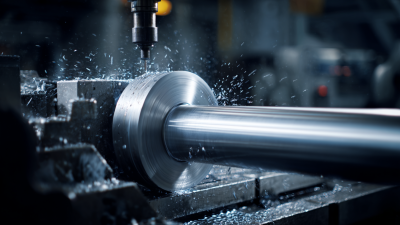
Visit the machining area if possible. Check honing marks, welding consistency, storage conditions, and final assembly cleanliness. Request fatigue-test evidence when the cylinder works through frequent cycles. One weakness remains: many suppliers present sample results instead of long-term production data. Buyers should challenge this gap and compare at least three completed batches before trusting a promising design.
Brand-neutral benchmarking framework for evaluating industrial pneumatic and hydraulic cylinder manufacturers in China.
| No. | Evaluation Dimension | What a High-Quality Manufacturer Should Demonstrate | Relevant Standard or Technical Reference | Objective Verification Evidence | Suggested Weight |
|---|---|---|---|---|---|
| 1 | Engineering and Custom Design Capability | Ability to convert load, stroke, speed, mounting, environment, and duty-cycle requirements into a documented cylinder design. | ISO 4413 Hydraulic fluid power systems ISO 4414 Pneumatic fluid power systems |
Approved technical drawings, design calculations, 3D models, application review records, and documented design-change control. | 15% |
| 2 | Dimensional and Interchangeability Control | Consistent bore, rod, mounting, port, and overall dimensions that support installation and replacement requirements. | ISO 15552 Pneumatic cylinders with detachable mountings ISO 6432 Small-bore pneumatic cylinders |
Dimension inspection reports, calibrated measuring equipment, controlled drawings, and documented dimensional tolerances. | 12% |
| 3 | Material Selection and Traceability | Materials are selected according to pressure, corrosion, temperature, wear, and operating-fluid requirements. | ISO 9001 Quality management and controlled processes |
Material certificates, heat or batch numbers, supplier approval records, incoming inspection reports, and traceability records. | 10% |
| 4 | Machining Precision and Surface Finish | Accurate bore geometry, suitable rod straightness, controlled sealing surfaces, and repeatable surface quality. | ISO 286-1 ISO system of limits and fits ISO 21920 Surface texture specification |
Coordinate-measuring-machine reports, bore gauges, roughness measurements, process capability data, and tool calibration records. | 12% |
| 5 | Pressure, Leakage, and Functional Testing | Each production batch or defined production lot is tested for pressure resistance, leakage, movement, and functional performance. | ISO 4413 Hydraulic safety and system requirements ISO 4414 Pneumatic safety and system requirements |
Pressure-test records, leak-test results, end-of-line inspection data, test-gauge calibration certificates, and nonconformance reports. | 15% |
| 6 | Seal and Performance Reliability | Seal materials and designs are matched to pressure, temperature, speed, fluid compatibility, and expected cycle life. | Application-specific engineering validation; seal supplier technical data and fluid-compatibility documentation. | Cycle-test results, temperature and pressure test records, seal-material certificates, failure-analysis reports, and warranty data. | 12% |
| 7 | Surface Treatment and Corrosion Protection | Rod, tube, end covers, and mounting components receive finishes appropriate for indoor, outdoor, humid, chemical, or marine environments. | ISO 9227 Salt spray testing for corrosion protection evaluation ISO 12944 Corrosion protection of steel structures |
Coating or plating specifications, thickness measurements, corrosion-test reports, visual inspection records, and process certificates. | 8% |
| 8 | Quality Management and Process Control | Manufacturing processes are documented, monitored, and improved through controlled inspection and corrective-action procedures. | ISO 9001 Quality management systems |
Valid certification from an accredited body, process flow charts, control plans, internal audit records, CAPA records, and inspection plans. | 8% |
| 9 | Production Capacity and Delivery Stability | Capacity planning, component availability, production scheduling, and supply-chain controls support repeat orders and agreed lead times. | Documented production planning and supplier-management procedures; no single universal capacity standard applies. | Capacity statements, historical on-time-delivery data, production schedules, inventory policies, and supplier continuity plans. | 5% |
| 10 | Technical Support and After-Sales Service | Provides installation guidance, troubleshooting assistance, spare-parts support, warranty conditions, and structured complaint handling. | ISO 10002 Customer satisfaction and complaint handling guidelines |
Technical manuals, response-time commitments, spare-parts lists, warranty policy, service records, and corrective-action reports. | 3% |