
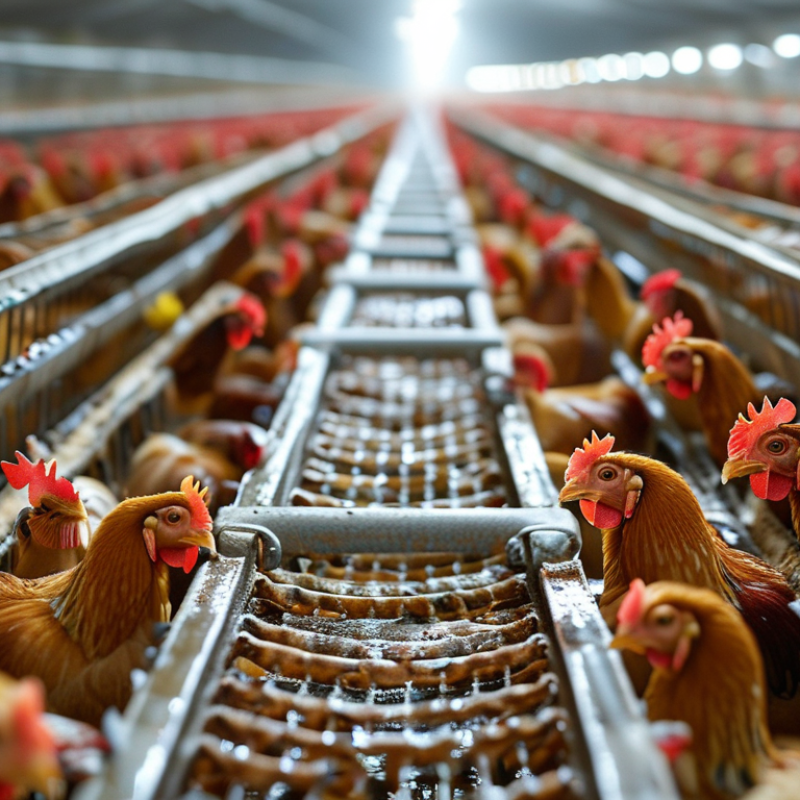
China Top Chicken Cage Manure Belt Supplier?
Key Features of High-Quality Chicken Manure Belts
Global egg production exceeded 90 million tonnes in 2022, according to FAO FAOSTAT. Large farms therefore need reliable manure handling, not merely low-cost parts. A high-quality manure belt should use uniform, corrosion-resistant material. Polypropylene is common because it tolerates moisture, ammonia, and repeated cleaning. The belt surface should stay flat under daily loading. That detail matters.
The European Commission’s 2017 Best Available Techniques reference document identifies frequent manure removal and drying as useful emission-control practices. A suitable belt supports both tasks. Look for stable tensile strength, accurate thickness, sealed edges, and reinforced joints. A belt that stretches can drift sideways and scrape against the frame. That creates waste and downtime. Poor seams fail first. Usually.
Good suppliers should provide measurable specifications, including belt width tolerance, tensile strength, operating temperature, and joint method. They should also explain how the belt performs under wet manure, not only dry laboratory samples. A 2023 review in Poultry Science connected higher manure moisture with greater ammonia-release risk, although farm conditions vary widely. This is where selection becomes practical: ventilation, flock density, cleaning frequency, and belt speed all influence results. A thicker belt may last longer, but it can still underperform if tracking is poor. No brochure replaces a real-house trial. Ask for inspection records and test data.