Blog

China Best Ball End Mill Manufacturer for CNC Milling?

China’s CNC tooling market offers many ball-nose options, but a low price alone says little about cutting performance. Grand View Research valued the global CNC machine market at US$101.22 billion in 2023 and projected 9.5% annual growth from 2024 to 2030. That broader trend makes dependable tooling and supplier verification increasingly important. It does not prove that any single cutter will deliver better results.

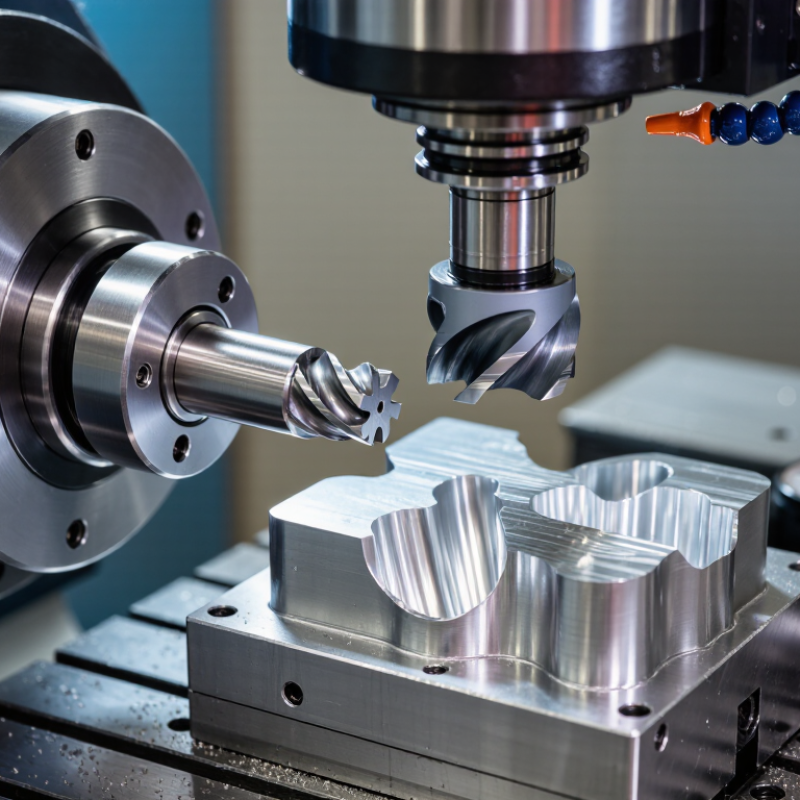
A Ball End End Mill can leave smooth contours on molds, turbine blades, and sculpted aluminum parts. Yet the finish depends on more than the cutter’s label. Runout, flute geometry, coating, toolpath, and workpiece material all matter. A few microns of setup error can show up as a visible ripple. Small details count.

Manufacturing scholar Dr. David Dornfeld studies process-aware production and manufacturing systems. A practical shop-floor rule for this buying decision is: “Measure runout before blaming the cutter.” This is a useful principle, not a verified quotation from Dornfeld. Buyers comparing Chinese manufacturers should request material specifications, dimensional tolerances, inspection records, and application-specific test results. Ask about consistent batch quality, too. A polished sample is not enough. Real performance should be checked under the intended cutting conditions, with tool life and surface finish recorded. Supplier claims deserve scrutiny; even a strong catalog cannot replace a controlled trial.
China Best Ball End Mill Manufacturer for CNC Milling?

What Is a Ball End Mill and How Does It Work?

A ball end mill is a rotary cutting tool with a rounded tip. Its curved end forms a hemispherical cutting edge, while flutes carry chips away from the cut. On a CNC milling machine, the tool spins as programmed paths guide it across the workpiece. The rounded geometry can machine curved surfaces, sculpted contours, and grooves with radiused bottoms. Small details matter.

Unlike a flat end mill, a ball end mill does not leave a square corner at the bottom of a pass. The contact point shifts as the cutter moves over a surface, so cutting speed varies across the rounded tip. Near the center, it can be very low. This affects heat, finish, and tool wear, especially when the tool cuts directly on its axis. A slight tilt or a suitable toolpath may improve cutting conditions, but the best choice depends on the machine and part.

CNC programmers often use small stepovers to reduce visible scallops on curved surfaces. Smaller steps can improve finish, though they add machining time. The result also depends on tool diameter, flute count, material, rigidity, and chip evacuation. A clean-looking surface is not guaranteed by the tool alone. I have seen setup details matter more than expected, and that deserves a trial cut before a long production run.

China Best Ball End Mill Manufacturer for CNC Milling? – What Is a Ball End Mill and How Does It Work?

Dimension Information Practical CNC Milling Note
Tool shape A ball end mill has a rounded, hemispherical cutting end. The rounded tip can machine curved surfaces and 3D contours.
Ball radius For a standard ball end mill, the ball radius is half the cutting diameter. Example: a 6 mm diameter tool has a nominal 3 mm ball radius.
How it cuts Rotating flutes remove material as the tool follows a programmed toolpath. Side cutting and the rounded tip can both contribute, depending on tool orientation and contact point.
Cutting speed at the tip The rotational cutting speed approaches zero at the exact center of the ball tip. Tilted toolpaths can move contact away from the center and may improve cutting action and surface finish.
Common applications 3D surface finishing, sculpted forms, dies, molds, and radiused features. Often used for finishing after roughing with a larger or flat-ended tool.
Flute count Available flute counts vary; two- and four-flute designs are common. Choice depends on workpiece material, chip evacuation needs, and the machining operation.
Tool material Solid carbide and high-speed steel are common tool materials. Material selection should account for workpiece hardness, machine rigidity, and cutting conditions.
Coatings Some tools use coatings such as TiAlN or AlCrN; uncoated tools are also available. Coating suitability depends on the tool material, workpiece, and operating temperature.
Surface finish A ball end mill leaves scallops when cutting a surface with adjacent tool passes. Reducing stepover generally reduces scallop height but increases machining time.

How Are Ball End Mills Classified by Design and Material?

China Best Ball End Mill Manufacturer for CNC Milling?

How Are Ball End Mills Classified by Design and Material?

Ball end mills are classified by cutting geometry, flute count, and reach. Their rounded tips create curved surfaces, such as the walls of a mold cavity. Two-flute designs leave more room for chips to escape, while tools with more flutes can support smoother finishing when chip removal is controlled. Necked designs reach into deep features. Small details matter. A longer reach can also increase deflection, so tool length should match the cut.

Material is another key distinction. High-speed steel is tough and can suit less demanding operations. Solid carbide offers greater stiffness and hot hardness, making it common for precise CNC finishing. Carbide-tipped tools combine a carbide cutting portion with a different tool body. Coatings are separate: they modify the surface, not the substrate. That distinction is easy to miss.

The USGS Mineral Commodity Summaries 2024 estimated global tungsten mine production at 78,000 metric tons in 2023, including 63,000 tons from China. Tungsten is a major raw material for cemented carbide, but mined output does not measure finished-tool quality.

For selection, match substrate and design to workpiece hardness, machine rigidity, and coolant conditions. Then check wear on the actual part. Catalog guidance helps, but it cannot replace a controlled trial.

Which CNC Milling Applications Use Ball End Mills?

Ball end mills are used where a CNC part has curved surfaces, blended radii, or sculpted details. Common applications include mold and die cavities, rounded pockets, and contoured parts for aerospace or medical equipment. On a mold surface, a small ball end mill can follow a shallow curve and leave an even pattern of fine scallops. The finish depends on stepover, tool size, and the machining strategy.

They also suit 3D profiling of impeller blades and other complex shapes, especially when a flat-bottom cutter would leave sharp transitions. A five-axis machine can tilt the tool to reach steep walls and reduce rubbing near the ball’s center. That matters because cutting speed approaches zero at the very tip. Small details, though, need careful toolpath planning.

Ball end mills are not ideal for every operation. A flat end mill may remove material faster from a broad, level pocket, while a ball end mill can leave more finishing work. It is easy to overstate what the tool can do. The right choice depends on material, reach, rigidity, and the required surface finish. A long, slender tool may reach a deep cavity, but it can also chatter. Short test cuts can reveal problems before they mark the whole surface.

How to Evaluate Ball End Mill Manufacturers in China

Evaluating a Chinese ball end mill manufacturer starts with process evidence, not catalog photos. Ask for the carbide grade, coating specification, flute geometry, and tolerance data for the exact diameter you intend to buy. The U.S. Geological Survey’s Mineral Commodity Summaries 2024 estimates China mined 63,000 metric tons of tungsten in 2023, out of 78,000 tonnes worldwide. That supply context matters, but it does not prove a mill’s carbide purity or consistency. Numbers are clues.

Review inspection records for ball radius, shank runout, and coating thickness, then confirm how each value is measured. ISO 13399 can help standardize cutting-tool data exchange; it is not a performance certificate. Request traceability by production lot and a sample test using your own material, machine, and toolpath. Record tool life, surface finish, and edge chipping. A smooth finish on one test piece is not enough. Grand View Research estimated the global cutting-tools market at USD 23.79 billion in 2023, but market growth cannot verify an individual supplier. Compare quotations only after aligning specifications and test conditions. I would still question unusually low prices: sometimes the stated tolerance looks acceptable, while batch consistency is less clear.

How to Choose a Manufacturer for Your Milling Requirements

China Best Ball End Mill Manufacturer for CNC Milling?

Choosing a ball end mill manufacturer starts with your actual milling requirements, not a broad claim of “best.” For CNC work, share the workpiece material, cutter diameter, flute count, toolpath, and target surface finish. A supplier should explain how its geometry and coating suit those conditions. Ask whether it can provide material specifications, inspection records, and consistent dimensions across repeat orders. A useful supplier will discuss trade-offs, such as tool life versus cutting speed, rather than promise one cutter for every job. Do not judge by price alone. Small differences matter. I have seen a tool run smoothly in one alloy but leave chatter marks in a different setup. That is a reminder to test carefully.

Tips: Request sample tools and compare them on the same machine, material, and cutting parameters. Record tool wear, finish, and cycle time. A polished sample is not proof of reliable batch quality.

Check the manufacturer’s quality process, production capacity, and ability to trace batches. Ask how it handles tolerance issues and whether technical staff can review your application. Clear answers are a good sign. Still, no checklist removes every risk; machine condition and operator choices affect results too. One small trial can reveal more than a long sales presentation. Also check packaging, lead times, and how the supplier responds when specifications change. Reliable communication helps prevent mismatched tools and production delays. When a sample performs well, confirm that the production order uses the same agreed specifications.

How to Choose a Ball End Mill Manufacturer for CNC Milling

How to use this chart: These suggested evaluation weights are a buyer-defined framework, not industry survey results. Prioritize material and coating expertise, dimensional consistency, and application support, then adjust the weights to fit your workpiece materials, machining conditions, and delivery needs.