
China’s elevator supply chain is expanding alongside dense urban development. The United Nations’ World Urbanization Prospects 2018 projects that 68% of the global population will live in urban areas by 2050, increasing the need for reliable vertical transportation. Behind each smooth ride are components that rarely attract attention. Small parts matter.
An Elevator Guide Rail Bracket secures the guide rail to the building structure and helps maintain its position under operating loads. Its dimensions, material, finish, hole pattern, and adjustability can affect installation accuracy and long-term stability. ISO 8100-1:2019 sets safety requirements for passenger and goods passenger lifts, but it does not certify every bracket or manufacturer. Buyers should therefore check how a supplier documents product specifications, quality controls, and compatibility with the intended lift system.
For companies comparing manufacturers in China, the “best” choice depends on the project. Review drawings, material grades, production tolerances, inspection records, and sample consistency. Ask how the bracket performs with the selected rail profile and fixing method. Confirm that testing and documentation match the destination market’s applicable requirements. A polished catalog can be persuasive; it is not proof of dependable production. Not always. This guide examines practical criteria for assessing manufacturers, while recognizing that public product claims may not reveal every detail. Request evidence, compare like for like, and verify critical dimensions before ordering.
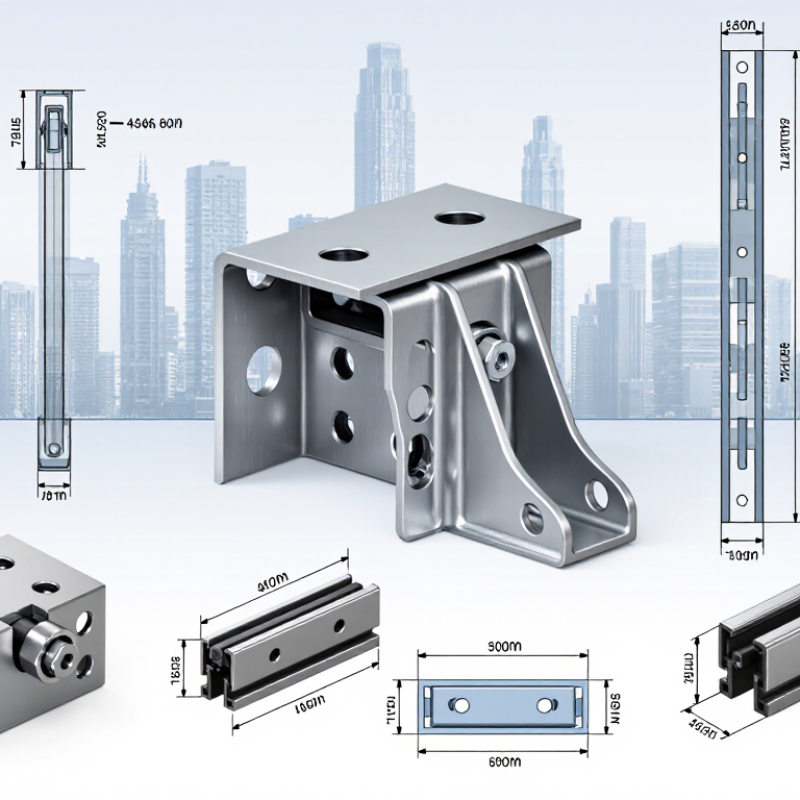
An elevator guide rail bracket is the steel connection between a guide rail and the building structure. It holds the rail in position while the elevator car or counterweight travels along it. The bracket does not guide the car by itself; it keeps the rail aligned and transfers forces to the supporting wall or frame. Small part. Big consequence. A loose anchor or poorly aligned bracket can contribute to vibration, noise, and uneven travel.
The fit matters. ISO 7465:2007 specifies dimensions and tolerances for T-section lift guide rails, so bracket design and installation must suit the rail profile and the building interface. In practice, installers check rail alignment, bracket spacing, anchor condition, and clearance at each fixing point. The UNEP 2023 Global Status Report for Buildings and Construction estimates that buildings account for 34% of global energy demand and 37% of energy- and process-related carbon dioxide emissions. Those figures concern the wider building sector, not brackets specifically, but they underline why durable, well-fitted components deserve attention. A bracket may look simple; its exact loading and spacing still depend on the elevator design. That detail is easy to underestimate.
| Data Dimension | Typical Information | Selection or Verification Notes |
|---|---|---|
| Component definition | A metal support assembly that connects an elevator guide rail to the hoistway structure. | The bracket supports and positions the rail; it is not the guide rail itself. |
| Primary function | Holds the guide rail in its specified position and transfers rail loads to the building structure. | The complete support path includes the bracket, fasteners, anchors, and supporting structure. |
| Common materials | Fabricated carbon steel is commonly used; protective finishes may include paint or zinc coating. | Material and finish should suit the design loads and the hoistway’s environmental conditions. |
| Rail compatibility | Depends on the guide-rail profile, rail clips or fasteners, and bracket geometry. | Confirm the rail profile and connection details against the approved elevator drawings. |
| Bracket spacing | Project-specific; there is no single spacing suitable for every elevator installation. | Use the elevator design documents and applicable codes to determine spacing and support requirements. |
| Adjustment dimensions | Slot length, hole location, and adjustment range vary by bracket design. | Check the available adjustment against the measured rail position and hoistway layout. |
| Building interface | May connect to concrete, structural steel, or another designed support system. | Anchor type and capacity must be suitable for the actual substrate and specified loads. |
| Typical configuration | A fixed or adjustable steel bracket used with compatible rail-fastening hardware. | Confirm whether the installation requires adjustment during alignment and whether the hardware is included. |
| Key inspection points | Check material condition, finish, welds where applicable, hole and slot dimensions, and fastener fit. | Installation and alignment should follow approved drawings and qualified elevator procedures. |
| Manufacturer evaluation | Assess drawing conformity, dimensional consistency, material documentation, quality controls, and traceability. | Request project-specific drawings and documentation; do not select a bracket by appearance alone. |
Note: Bracket dimensions, loads, spacing, and anchorage are installation-specific. Verify them against approved elevator and structural design documents and applicable local requirements.