Blog

How to Build a Liquefaction Plant in 2026?

Building a Liquefaction Plant by 2026 presents unique challenges and opportunities. According to the Global Liquefied Natural Gas (LNG) Market Report, the LNG sector is expected to grow by 6.8% annually. This growth underscores the increasing demand for efficient liquefaction processes. However, project delays and budget overruns are common. Many plants face issues in meeting the tight deadlines and cost constraints.

Developing a successful Liquefaction Plant involves selecting the right technology. The industry has numerous options, each with distinct advantages and disadvantages. For example, mixed refrigerant processes are popular but can lead to operational complexities. Conversely, cascade processes offer simplicity, yet they may not be as efficient. Companies must weigh these factors carefully.

Financial considerations also play a critical role. The initial investment for a Liquefaction Plant can reach billions. Ensuring a solid return on investment requires careful planning and risk assessment. Environmental regulations are tightening, adding another layer of complexity. Reflecting on these elements is vital for a successful project.
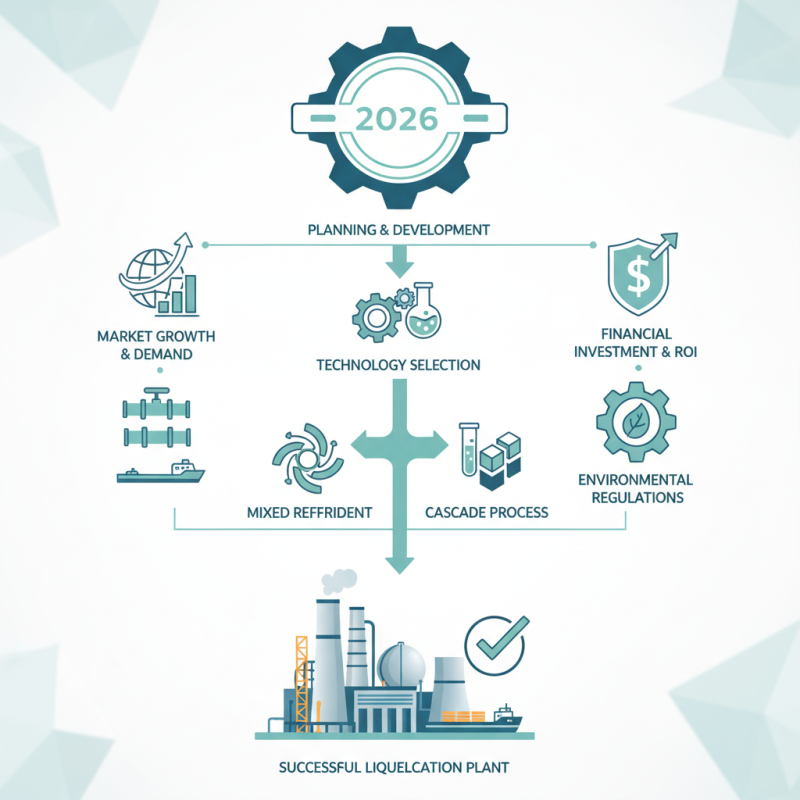
How to Build a Liquefaction Plant in 2026?

Site Selection and Feasibility Study for a Liquefaction Plant

Selecting an optimal site for a liquefaction plant is crucial. It influences both cost and efficiency. According to the International Gas Union (IGU), proximity to natural gas sources and markets can lower transportation expenses. A report from the U.S. Energy Information Administration (EIA) suggests that sites near existing infrastructure offer reduced capital expenditures.

Environmental considerations also come into play. The site should minimize the impact on local ecosystems. A 2021 study highlighted that high seismic areas pose risks for plant operations. Therefore, engineers must analyze geological stability as part of the feasibility study. Factors like flood zones and land usage rights are also important.

Accessibility to skilled labor and supply chains is vital. Unfortunately, many promising sites may lack local workforce availability. A feasibility study should address this gap. Engaging local communities can provide insights and help navigate potential objections. Ultimately, a comprehensive assessment that includes economic, environmental, and social factors is essential for a successful liquefaction plant project.

Design and Engineering Considerations for Liquefaction Technology

Designing a liquefaction plant involves multiple engineering considerations. Understanding the technology itself is crucial. The plant must efficiently convert natural gas to liquid form. This process requires precise temperature and pressure control. Each component must be robust enough to handle extreme conditions.

Tip: Choose materials that withstand cryogenic temperatures. This ensures durability and enhances safety.

Layout is another vital factor. The spatial arrangement impacts workflow and safety. Equipment should be placed for easy access during maintenance. Consider potential hazards. Proper distance between equipment is essential to minimize risks.

Tip: Conduct simulations to identify potential bottlenecks. Adjust designs based on these findings.

Finally, think about energy efficiency. Liquefaction is energy-intensive. Implement systems to capture waste heat. This can improve overall efficiency and reduce costs. Keep in mind that every choice matters. Reflections on initial designs can lead to better outcomes later on.

Procurement and Installation of Essential Equipment and Materials

Building a liquefaction plant requires careful planning and equipment procurement. Focus on essential equipment for effective operations. Key items include compressors, heat exchangers, and storage tanks. Each piece plays a vital role in the liquefaction process.

Tips: Prioritize local suppliers for faster deliveries. Verify equipment compatibility with your plant’s specifications.

Installation should be strategically timed. Delays can occur due to supply chain issues. Consider creating a buffer in your installation schedule. This could prevent potential setbacks.

Tips: Regularly assess installation progress. Ensure team members communicate effectively. Adjust plans if unexpected challenges arise. The aim is to stay on track, yet be flexible. Seeking feedback during installation can highlight areas needing improvement.

Procurement of Essential Equipment for Liquefaction Plant in 2026

Regulatory Compliance and Environmental Impact Assessment

Building a liquefaction plant involves several critical steps. Regulatory compliance is one of the most challenging aspects. Each region has its own regulations, which can be quite complex. For instance, you may need to evaluate zoning laws, safety standards, and emissions guidelines. It’s essential to research these thoroughly. Non-compliance can lead to delays or penalties.

Environmental impact assessments (EIAs) are also pivotal. They help identify potential environmental risks. Conduct a detailed evaluation of the local ecosystem. Water sources, wildlife, and air quality must be considered. Unforeseen impacts can arise, often later in the process. Engaging with local communities is crucial. Their insights can highlight overlooked issues, and build trust.

Documentation plays a significant role. Keep records and reports organized. Mistakes can be costly and time-consuming. It often feels overwhelming, but staying detail-oriented is important. Continuous monitoring of the environmental impacts during the construction phase is vital. Adjustments may need to be made on the fly. Flexibility in approach can mitigate unforeseen challenges.

Operational Planning and Workforce Training for Plant Management

Building a liquefaction plant requires careful operational planning and effective workforce training. Identifying key roles is crucial. Operators, engineers, and maintenance personnel all play vital parts. Training programs must address both technical and safety requirements. Sessions should include hands-on activities and simulations. This will enhance learning and engagement.

A thorough analysis of potential challenges is necessary. It’s essential to understand how equipment might fail or how processes can be interrupted. Workers must be prepared for unexpected situations. Regular drills can strengthen readiness. Feedback from these drills can be invaluable for improving training methods.

Moreover, instilling a culture of continuous learning is vital. Encourage employees to share insights and experiences. This can lead to innovative solutions. However, not all suggestions will be practical. Some ideas may require further reflection. Nonetheless, fostering an open environment can help in overcoming future obstacles. It cultivates resilience within the workforce, essential for operational success.

How to Build a Liquefaction Plant in 2026? - Operational Planning and Workforce Training for Plant Management

Phase Description Timeline Key Workforce Skills Training Method
Site Selection Identify and analyze potential sites for liquefaction plant Q1 2026 Site assessment, Environmental science Workshops, Field studies
Design Phase Create detailed engineering designs for the plant Q2 2026 Engineering, CAD proficiency Online courses, Design software training
Construction Build the liquefaction plant according to design Q3 2026 - Q1 2027 Construction management, Safety protocols On-site training, Safety drills
Operational Training Train the workforce on operational protocols Q2 2027 Operational efficiency, Equipment handling Simulations, Hands-on training
Commissioning Test all systems and processes before full operation Q3 2027 Quality control, Troubleshooting System testing, Review sessions