Choosing the best steel suppliers in China starts with the job, not a glossy catalog. Steel Fabrication Materials must match the design, fabrication method, and service environment. A structural frame may need dependable section sizes and documented grades. A pressure vessel or outdoor installation can require tighter attention to specifications, corrosion exposure, and inspection records. Small differences matter. A few millimeters can affect fit-up, welding time, and waste.
A reliable supplier should provide clear product data, traceable documentation, and realistic delivery information. Ask for mill test certificates, available grades and dimensions, surface-condition details, and inspection options. Confirm that the documents match the actual batch, not only a sample file. Then request samples or arrange an independent inspection when project risk justifies it. These steps do not guarantee a perfect order. They make problems easier to spot before material reaches the workshop.
Price still matters, of course. But the lowest quotation may exclude packaging, testing, or delivery details that affect the final cost. Compare suppliers using the same specification and quantity. Check how quickly they answer technical questions, and whether their answers stay consistent. One awkward point: published supplier lists can become outdated, and “best” depends on your project. A careful comparison is more useful than a universal ranking. It gives buyers a practical starting point—and room to revise their choice when evidence changes.
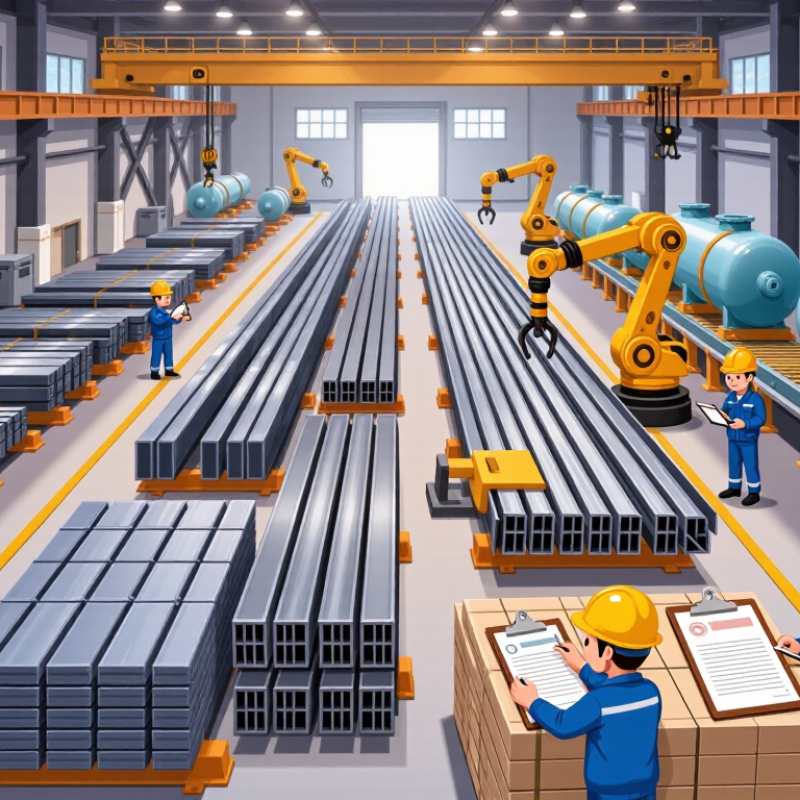
Chinese steel fabrication suppliers commonly provide carbon-steel plates, sheets, beams, channels, angles, and flat bars. Many also offer stainless-steel and alloy-steel grades, plus round bars, pipes, and hollow structural sections. Stock thicknesses and lengths vary by supplier and production schedule. A workshop cutting 10-millimeter plate into brackets may need different tolerances from a project using long structural beams. Confirm the grade, dimensions, and applicable material standard before ordering.
Some suppliers can provide cut-to-size pieces, drilling, edge preparation, or surface treatments such as priming and galvanizing. Ask what processing is done in-house and what is subcontracted. Request material test certificates showing chemical composition and mechanical properties, and check that the heat numbers match the delivered items. Details can get missed. I would not rely on a product description alone, especially when several grades look similar.
Tips: Send a clear drawing and list thickness, length, quantity, and finish. Ask for sample documents before production. Check packaging too; wet timber or damaged wrapping can leave steel stained during transit. Small checks help. Still, paperwork and appearance cannot replace independent inspection when project requirements call for it.
Steel suppliers commonly provide carbon steel plate and structural shapes, high-strength low-alloy steel, and stainless steel in forms such as plate, sheet, sections, pipe, and tube. This chart compares minimum specified yield strengths for selected grades; actual availability and requirements vary by product form and applicable standard.
China’s steel supplier landscape is layered, with each tier serving a different role. Large mills produce core materials such as plate, coil, sections, and bar. Their output may pass through service centers, which cut, slit, or level steel to customer dimensions. That matters.
Fabricators and component makers sit further downstream. They turn processed material into beams, frames, brackets, or welded assemblies. Some suppliers combine several functions, while trading firms may coordinate orders across mills and processors. A supplier’s title alone does not reveal who makes, tests, or handles the material. Check the actual production route.
For fabrication projects, compare suppliers by capability, not just price. Confirm grade, thickness tolerance, surface condition, and available inspection records. Ask who performs cutting and welding, and where each step takes place. Request samples or a trial order when dimensions are critical. A detailed drawing helps expose gaps early. Still, paperwork can look complete while communication remains vague; that is a warning worth taking seriously. Delivery planning also matters, since processing capacity and transport time can affect when material reaches the workshop.
China’s steel supply chain includes producers, processors, distributors, and export-oriented service providers. The most suitable supplier type depends on material specification, processing needs, order size, and delivery requirements.
| Supplier category | Common materials | Typical role in the supply chain | Best suited for | Checks before ordering |
|---|---|---|---|---|
| Integrated steel producers | Hot-rolled and cold-rolled coil, plate, and other mill-produced steel products | Produce steel and supply large-volume orders, often through direct sales or authorized distribution channels | Large, recurring orders with defined grades and delivery schedules | Mill test certificates, grade and dimensional tolerances, production lead time, and whether the material is available for export |
| Regional steel service centers | Plate, sheet, coil, sections, and sometimes pipe or tube | Hold inventory and may cut, slit, level, or otherwise process material to order | Buyers needing smaller lots, local stock, or basic processing | Actual stock availability, processing tolerances, traceability to the original material certificate, and packing method |
| Section and structural-steel distributors | Hot-rolled beams, channels, angles, flats, and other structural sections | Aggregate products from mills or stockholders and supply fabrication and construction markets | Structural fabrication, buildings, platforms, and infrastructure work | Section dimensions, steel grade, length, straightness, surface condition, and applicable product standard |
| Pipe and hollow-section manufacturers or distributors | Welded steel pipe, rectangular hollow sections, and square hollow sections | Supply tubular products for structural, mechanical, and general-purpose applications | Projects requiring specified outside dimensions, wall thickness, and length | Product standard, manufacturing method, dimensional tolerances, weld requirements, and inspection documents |
| Specialty and alloy-steel distributors | Stainless steel, weathering steel, and specified alloy or high-strength grades | Source less-common grades and may provide cutting or material identification services | Applications with corrosion, temperature, strength, or other special material requirements | Exact grade and product form, chemical and mechanical test results, heat-number traceability, and required condition or finish |
| Export-oriented trading and sourcing providers | Products sourced from mills, service centers, or manufacturers, depending on the order | Coordinate sourcing, documentation, export packing, logistics, and communication across suppliers | Overseas buyers managing multi-item orders or needing export coordination | Confirm the producing source, certificate issuer, inspection arrangements, trade terms, packing details, and responsibility for claims |
| Fabricators with material-procurement capability | Plate, sections, hollow sections, and other materials specified for fabricated assemblies | Purchase material as part of a wider service that may include cutting, welding, machining, or assembly | Buyers seeking finished or partly finished components rather than raw steel alone | Material substitution rules, drawing revision control, welding and inspection requirements, and material traceability |
A reliable steel materials supplier is defined by verifiable quality, traceability, and delivery—not price alone. The World Steel Association’s World Steel in Figures 2024 reports 1,892.2 million tonnes of crude steel production in 2023. The OECD’s 2024 Steel Outlook puts global steelmaking capacity at roughly 2.5 billion tonnes. In such a large market, matching the material grade and production batch to the order is essential. Similar-looking plates can differ in chemistry and strength.
Ask for mill test certificates that match the bundle’s heat numbers and show chemical composition and mechanical test results. Confirm the applicable standard, thickness tolerance, coating weight, and inspection method before ordering. Paperwork matters. Verify certificate details with the issuing mill, and consider independent testing for higher-risk orders.
Check dispatch records, stock location, packing photos, and damage claims when assessing delivery performance. For fabrication, inspect cut lengths, flatness, and edges on arrival with calibrated measuring tools.
A checklist cannot catch everything. I would start with a small trial order; it takes time, but can reveal inconsistent dimensions or weak traceability before a larger commitment.
When comparing steel fabrication suppliers in China, verify documents against the actual material and production process. The ISO Survey 2022 reported 1,265,216 valid ISO 9001 certificates worldwide. That scale makes one point clear: a certificate alone does not prove a supplier can meet your specification. Check its scope, issuing certification body, expiry date, and whether fabrication activities are included. Request sample material test certificates and match heat numbers to markings on the steel, purchase orders, and inspection records. Small mismatches matter.
Ask for welding procedure and welder qualification records relevant to your project, plus recent dimensional and non-destructive testing reports where required. Confirm that reports identify the inspected parts, methods, acceptance criteria, and inspector. A polished document can still leave gaps; it is easy to overlook whether the certificate covers the factory doing the work. Where risk or order value justifies it, arrange an independent factory audit or pre-shipment inspection. The World Steel Association reported global crude steel production of about 1.89 billion tonnes in 2023, underscoring the scale and variety of supply—not uniform quality.
Tips: Request one traceability package from a completed order, then follow a heat number from the test certificate to the finished component. Verify certificates with the issuing body, and record unresolved discrepancies before approving production.
Sourcing steel materials from China begins with a precise specification, not a broad request for a low price. State the grade, applicable standard, thickness, dimensions, surface finish, tolerances, quantity, and intended use. Attach drawings when parts require cutting or forming. Clear details help suppliers quote the same product. They also reduce costly assumptions. Ask how material batches are identified and whether mill test certificates can be linked to the delivered steel. Check that the supplier can explain its production or sourcing process, inspection records, and realistic lead time. Ask for a sample when the finish or fit matters. Small details count.
Compare complete quotations, including packaging, freight, payment terms, and delivery schedule. A cheaper offer may exclude inspection or use a different grade. Put agreed specifications and change approvals in writing. Before shipment, arrange checks for dimensions, markings, visible defects, and documents; use independent testing when the application demands it. Confirm packaging suits the route, especially for steel exposed to moisture. For a new supplier, a modest trial order can reveal communication gaps before a larger commitment. It is easy to overlook this step. Supplier documents are useful, but they do not replace verification. Keep records of approvals and inspection results, and revisit the specification when actual production exposes a weak point.