Blog

7 Best Pull Out Ironing Board Drawers for Cabinets?

Choosing the right Pull Out Ironing Board Drawer can make a cramped laundry area feel surprisingly practical. A cabinet door opens, the board slides forward, and pressing clothes becomes less disruptive. Yet not every drawer deserves a place in your home.

The best models must balance stability, clearance, installation quality, and everyday comfort. A narrow drawer may suit a compact apartment, but it can feel restrictive with shirts, trousers, or larger fabrics. Strong runners matter. So does a heat-resistant surface. Small details often decide whether the drawer feels useful or frustrating.

Professional organizer Julie Morgenstern offers a helpful principle: “Organizing is a way of making room for what matters.” That idea fits this review. A good Pull Out Ironing Board Drawer should save space without creating another chore. It should close smoothly, stay level, and remain accessible when your hands are full.

We compared seven cabinet-friendly options with real household use in mind. The review considers board width, folding design, drawer depth, mounting strength, and ventilation needs. It also looks at installation limits, because attractive product photos can hide awkward measurements. That happened during one trial.

Measure twice.

Some drawers require more cabinet depth than expected. Others feel solid at first, but wobble under pressure. These imperfections deserve attention before purchase. Our guide highlights the strongest choices for compact kitchens, laundry rooms, dressing areas, and custom wardrobes. Each recommendation focuses on practical performance, not flashy features alone.
7 Best Pull Out Ironing Board Drawers for Cabinets?

What Is a Pull-Out Ironing Board Drawer?

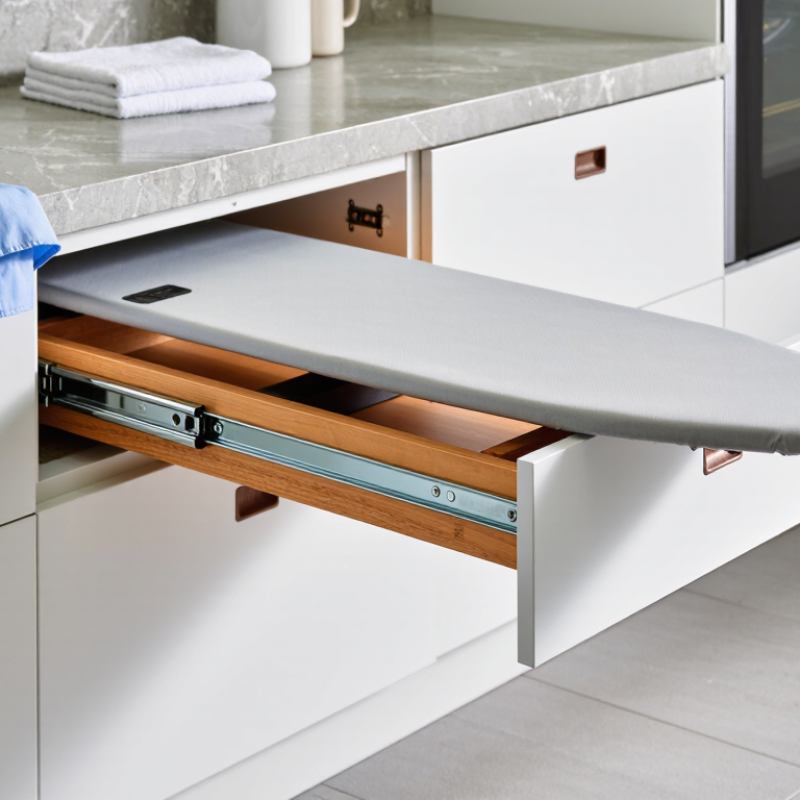
A pull-out ironing board drawer is a shallow cabinet drawer that stores and unfolds an ironing surface. Unlike a freestanding board, it hides behind a cabinet front. Two sliding runners guide the frame outward, while hinges open the board for use. Some models swivel, fold in half, or include a small heat-resistant cover.

The idea suits laundry rooms, dressing areas, and compact apartments. Houzz’s 2024 U.S. Kitchen Trends Study reported that 76% of renovating homeowners upgraded their cabinets. The same study found strong interest in specialized storage. That matters here. A dedicated drawer can keep the board, spray bottle, and cloth brush together, instead of scattering them across a closet.

Size needs careful checking. Measure cabinet width, internal depth, door clearance, and nearby handles. A practical drawer often needs about 14 to 18 inches of internal width, but construction varies. Verify the manufacturer’s load rating and heat protection. The NKBA’s 2024 Design Trends Research Report also highlights storage efficiency as a continuing design priority. Still, “space-saving” can be overstated. A narrow board may feel unstable, and weak runners can sag after repeated use. Leave the board fully open during ironing, keep hot surfaces away from unfinished wood, and inspect the hinges occasionally. Small details decide whether the drawer feels clever or frustrating.

Key Features to Compare Before Choosing a Cabinet Model

Choosing among seven pull-out ironing board drawers requires more than checking cabinet compatibility. Measure the cabinet opening, internal depth, and nearby hinges before comparing models. A board can fit the width but still block drawers or doors. Small errors become annoying every week.

Look for a sturdy sliding mechanism with a clearly stated load rating. Full-extension runners usually provide better access and steadier movement. Check whether the board locks securely when opened and closes without sudden movement. A heat-resistant cover matters, especially during long ironing sessions. Removable, washable fabric is more practical than permanently attached padding. Ventilation holes may also reduce heat buildup beneath the board.

Board size affects comfort. A narrow surface suits shirts but slows larger items. A wider design needs more cabinet clearance and stronger support. Inspect the mounting method, screw quality, and adjustment range. Some models need precise alignment; uneven installation can create rubbing or sagging. I once trusted a listed cabinet width without checking the internal frame. It fitted on paper, but the runners had no room to operate. That mistake changed how I compare dimensions. Also consider noise, cleaning access, replacement covers, and the drawer’s finished depth. A neat appearance is useful, but reliable movement matters more.

Seven Recommended Pull-Out Ironing Board Drawers

Seven Recommended Pull-Out Ironing Board Drawers

A well-designed pull-out ironing board drawer can turn a narrow cabinet into a practical laundry station. Seven useful options include full-extension, half-fold, swivel, side-mount, under-shelf, compact, and reinforced drawer systems. Each design serves a different cabinet depth and working style. Full-extension models provide better legroom, while half-fold boards suit shallow cupboards. Swivel versions can rotate toward the room. Side-mount systems leave more cabinet space for detergents and baskets. Under-shelf drawers work well in utility rooms with limited wall space. Compact boards suit apartments, although their smaller surfaces may slow larger loads. Reinforced drawers feel steadier when pressing heavy fabrics.

Measure carefully before choosing one. Check cabinet width, interior depth, frame clearance, and the drawer’s weight rating. A soft-close runner reduces noise, but it may not solve poor alignment. The board should lock firmly when extended and fold without catching nearby hinges. I once underestimated door thickness, and the drawer opened only halfway. A small mistake matters. Heat-resistant covers improve safety during use, but they still require regular inspection for scorching or loose fabric.

Tips: Mark the cabinet’s usable space with masking tape before installation. Test the folded board against the door and shelves. Choose corrosion-resistant hardware for humid laundry areas. Leave enough room for your wrist and iron cord. If the drawer feels unstable, stop using it until the runners and mounting screws are checked. Real convenience comes from smooth movement, not just a neat appearance.

How to Measure and Install an Ironing Board Drawer

Measuring an ironing board drawer begins with the cabinet, not the board. Empty the cabinet and measure its internal width, height, and depth at several points. Walls are rarely perfectly square. Record the smallest measurement. The drawer should be 3–6 millimeters narrower than the opening, allowing smooth movement. Measure the folded board too, including hinges, brackets, and the handle. A board that fits diagonally may still jam when pulled forward. I learned this the hard way.

Allow at least 450 millimeters of clear standing space in front of the drawer. The National Kitchen & Bath Association recommends wider work aisles where two people work together, often around 1,220 millimeters. That guidance matters in laundry rooms with doors, baskets, or appliances nearby.

Select full-extension runners rated above the board’s weight. Add the cover and pressing force. Mark screw holes carefully, then pre-drill to prevent cabinet splitting. Install the runners level on both sides. Test the drawer before tightening every screw.

Tips: Use masking tape to mark measurements. Check the floor level. Keep the board’s center near waist height when opened. Never trust one measurement. A small error can create scraping, tipping, or a drawer that refuses to close.

The 2024 Houzz U.S. Kitchen Trends Study reports that storage upgrades remain a major renovation priority, but more storage is not automatically better. Accessibility and safe movement still need attention.

Maintenance, Safety, and Space-Saving Tips

A pull-out ironing board can turn a narrow cabinet into a practical laundry station. Measure the drawer opening, cabinet depth, and folded board thickness before installation. A few millimeters of error can cause scraping or uneven movement. Choose sturdy runners rated for the board’s weight and repeated extension. I once ignored this detail. The drawer sagged within weeks.

Keep the board fully extended before pressing clothes, and lock it if the hardware provides a locking mechanism. Never iron while the board is half open. Heat can damage nearby cabinet panels, especially thin laminate or unfinished wood. Place the hot iron upright on a stable rest, away from fabric edges and children. Unplug it immediately after use. Check the cord for cracks, flattened areas, or exposed wiring.

Maintenance is simple but easy to postpone. Wipe dust from the runners monthly, then inspect loose screws and worn stops. Avoid heavy oil, which can collect lint and make the drawer sticky. Let the cover cool and dry before folding it away. A damp cover may develop odors inside the cabinet. Leave enough clearance around the folded board for ventilation and hand access. Space-saving design helps most when the drawer opens smoothly. Otherwise, the cabinet becomes an attractive obstacle.

7 Best Pull Out Ironing Board Drawers for Cabinets? - Maintenance, Safety, and Space-Saving Tips
Option Typical Cabinet Opening Board Size Mounting Style Recommended Cabinet Depth Approx. Weight Capacity Space-Saving Benefit Maintenance and Safety Notes Best For
1. Compact Single-Fold Drawer Board About 12–15 in wide × 5–7 in high Approximately 32–38 in long × 10–12 in wide Under-cabinet drawer slides with a folding hinge At least 14 in Typically 25–35 lb when evenly loaded Uses a narrow drawer bay and folds into a shallow storage space. Keep the hinge and slides free of lint. Tighten mounting screws periodically. Lock the board fully before use. Small laundry rooms, apartments, and narrow utility cabinets
2. Full-Length Folding Drawer Board About 15–18 in wide × 6–8 in high Approximately 38–42 in long × 12–14 in wide Heavy-duty side-mount drawer slides with a folding support frame At least 16 in Typically 35–45 lb when properly secured Provides a near-standard ironing surface without requiring a separate freestanding board. Check that the slides are rated for the complete board assembly. Do not sit or lean heavily on the extended board. Frequent ironing and family laundry areas
3. Swivel-Out Cabinet Board About 14–18 in wide × 6–9 in high Approximately 36–42 in long × 11–14 in wide Pivoting swivel mechanism combined with a pull-out frame At least 18 in Typically 25–40 lb during normal ironing Swivels away from the cabinet, improving access to the front and sides of the board. Leave clearance for the pivot path. Inspect the rotation stop and pivot fasteners. Keep fingers away from pinch points. Corner cabinets and layouts where side access is limited
4. Bi-Fold Door-Integrated Board About 16–20 in wide × 18–24 in high Approximately 36–42 in long × 12–14 in wide when open Folding board attached to the inside of a cabinet door At least 14 in Typically 20–30 lb during use Stores vertically and makes use of otherwise unused door space. Reinforce lightweight doors before installation. Verify that the door hinges can support the added load. Close the board before shutting the door. Tall linen cabinets and shallow storage units
5. Double-Sided Drawer Board About 18–22 in wide × 6–8 in high Approximately 40–42 in long × 14–16 in wide Wide drawer slides with a reinforced folding frame At least 18 in Typically 40–50 lb when the cabinet is structurally reinforced Offers a wider ironing area while remaining hidden inside a drawer-style cabinet. Use two synchronized slides where possible. Inspect the cabinet bottom and side panels for deflection. Keep the board centered during use. Larger households and users who iron shirts, trousers, or bedding regularly
6. Removable Board Insert Drawer About 15–19 in wide × 6–8 in high Approximately 34–40 in long × 11–13 in wide Pull-out tray with a removable heat-resistant ironing insert At least 15 in Typically 25–40 lb during normal use The insert can be removed for cleaning, replacement, or seasonal storage. Replace a worn cover or padding promptly. Allow the board to cool before returning it to the cabinet. Never store a hot iron in the drawer. Flexible storage systems and cabinets shared with other laundry supplies
7. Heavy-Duty Utility-Cabinet Board About 20–24 in wide × 7–10 in high Approximately 42–48 in long × 14–16 in wide Reinforced pull-out frame with folding legs or front support At least 20 in Typically 45–60 lb when installed into a solid cabinet structure Supports a larger working surface while replacing a freestanding ironing station. Anchor the cabinet securely to wall studs or a suitable structural surface. Check leg locks, frame joints, and slide fasteners before each use. Dedicated laundry rooms and high-frequency ironing