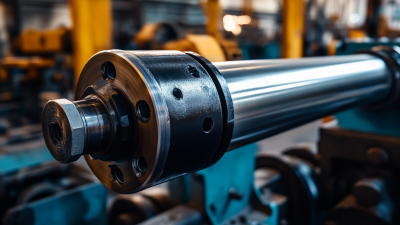
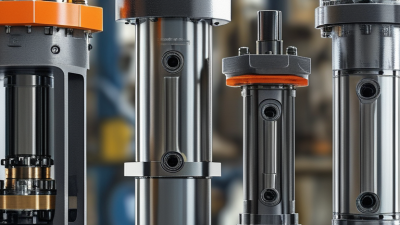
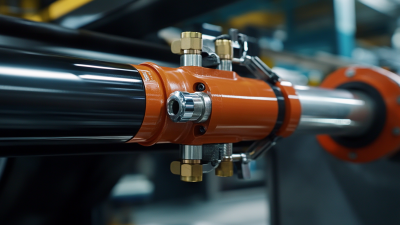
Global demand for hydraulic motion systems is expanding across construction, mining, agriculture, marine equipment, and industrial automation. MarketsandMarkets reports that the hydraulic cylinders market is projected to grow steadily through 2028, supported by machinery upgrades and infrastructure investment. Grand View Research also identifies construction and material-handling equipment as major application sectors. These findings suggest stronger demand for reliable long-stroke equipment, including the Long Hydraulic Cylinder.
However, buying a long cylinder is not simply a matter of choosing the longest available stroke. A 4-meter cylinder may experience buckling, side loading, seal wear, or unstable extension if the mounting geometry is poor. Engineers should check rated pressure, retracted length, rod diameter, mounting style, stroke tolerance, and operating temperature. ISO 6020/2 and ISO 6022 provide useful dimensional and performance references for many industrial hydraulic applications. Yet standards do not replace application testing.
This guide compares seven Long Hydraulic Cylinder options for global buyers, focusing on performance, customization, serviceability, and supply reliability. It considers welded and tie-rod designs, chrome-plated rods, corrosion-resistant finishes, and sensor-ready configurations. Practical details matter, such as whether replacement seals are available near the jobsite or whether a cylinder can survive dusty quarry conditions. A premium cylinder may reduce downtime, but its value depends on correct sizing and maintenance. That point is easy to underestimate.
The data supports market growth, but product claims still require verification. Buyers should request load calculations, pressure-test records, material specifications, and documented warranty terms. This review offers a useful starting point, not a substitute for engineering approval.
Understanding Long Hydraulic Cylinders and Their Main Applications
Long hydraulic cylinders convert pressurized fluid into controlled linear force over extended distances. They are common in cranes, excavators, lifting platforms, agricultural machinery, waste compactors, and steel-handling equipment. Their long stroke helps move heavy structures, but it also increases bending risk, side loading, and alignment sensitivity.
The global hydraulic cylinder market was valued at about USD 14.6 billion in 2023, according to Grand View Research. MarketsandMarkets forecasts growth from approximately USD 16.6 billion in 2024 to USD 22.8 billion by 2029. These figures reflect rising demand from construction, material handling, and industrial automation. However, market growth does not make every long cylinder suitable. A double-acting welded cylinder suits mobile equipment, while a tie-rod design often fits cleaner indoor systems. Telescopic cylinders work well where installation space is limited.
Stroke length is only one selection factor. Engineers must check working pressure, retracted length, mounting style, rod diameter, buckling resistance, and duty cycle. ISO 6020/2 provides dimensional guidance for some hydraulic cylinder designs, but field conditions still matter. Dust, vibration, uneven loading, and temperature can shorten service life.
Small details matter. A few millimeters of misalignment can create damaging side force. A larger rod may improve stability, yet reduce available stroke. This trade-off is easy to overlook. Buyers should request load calculations, testing records, seal specifications, and corrosion protection details before approving a long-cylinder design. Fancy data sheets are not enough.
Long hydraulic cylinders demand more than a simple bore-and-stroke comparison. Grand View Research estimated the global hydraulic cylinder market at approximately USD 15 billion in 2023, showing strong demand across construction, agriculture, and industrial equipment. However, market growth does not make every cylinder suitable for every machine.
Start with working pressure, bore diameter, rod diameter, and stroke length. For example, a 100 mm bore at 210 bar produces roughly 165 kN of extension force. Retraction force will be lower because the rod reduces piston area. Check rated pressure, not only peak pressure. ISO 6020/2 and ISO 6022 provide useful dimensional and pressure references for metric hydraulic cylinders. Mounting style also matters. A misaligned clevis can create side loading, seal wear, and premature rod damage. It happens more often than catalog tables suggest.
Compare buckling capacity for long strokes. Use a safety factor based on mounting conditions, stroke length, and load direction. Review seal material, operating temperature, rod coating, corrosion protection, and expected cycle frequency. ISO 4413 emphasizes safe hydraulic-system design, including pressure control and energy isolation. Inspection reports from maintenance teams often identify contamination as a major cause of leakage and valve wear, although cylinder failures are not always measured separately. That data gap deserves attention. A lower-cost cylinder may look efficient, but weak documentation, unclear fatigue ratings, or limited spare-seal availability can increase lifetime expense. Ask for pressure-test records, dimensional tolerances, and traceable material certificates before approval.
Global buyers often need long hydraulic cylinders for lifting, tilting, telescoping, or controlled positioning. The right choice depends on stroke length, mounting space, load direction, and operating environment. A longer body is not automatically better.
Option one is a heavy-duty welded cylinder for excavators, loaders, and lifting frames.
Option two is a tie-rod cylinder for cleaner industrial settings and easier seal replacement.
Option three uses a chrome-plated rod for humid sites and repeated movement.
Option four is a double-acting cylinder when both extension and retraction require controlled force.
Option five is a single-acting cylinder for simpler lifting tasks with gravity-assisted return.
Option six is a multi-stage telescopic cylinder where installation space is limited.
Option seven is a custom long-stroke cylinder for unusual mounting dimensions or pressure requirements.
Before selection, buyers should check the bore diameter, rod diameter, stroke tolerance, working pressure, and retracted length. Side loading deserves careful attention. It can bend the rod and shorten seal life. A spherical bearing may help when alignment changes during operation. In cold regions, hydraulic fluid viscosity can slow movement. In dusty areas, rod wipers need stronger protection.
Field measurements should guide the final specification. A first load estimate may be wrong, especially when impact forces are ignored. I have seen oversized cylinders create unnecessary weight and slower cycles. That mistake is common. Requesting pressure-test records, material details, surface treatment data, and replacement-seal availability improves purchasing reliability across borders.
Long hydraulic cylinders should be selected by application, not appearance. Seven practical options include single-acting, double-acting, telescopic, welded, tie-rod, mill-duty, and corrosion-resistant designs. Each offers different control, service life, and installation benefits. A seamless honed steel barrel supports smooth piston travel under high pressure. A hardened, chrome-plated rod resists scoring and moisture. However, chrome alone is not a complete corrosion strategy. Rod seals, wipers, and surface treatment must match the working environment.
Safety depends on more than the stated pressure rating. Check buckling resistance at full extension, especially for vertical lifting equipment. Use load-holding valves, mechanical stops, and properly sized hoses where uncontrolled movement could cause harm. Pressure testing, traceable material certificates, and clear maintenance instructions improve purchasing reliability across borders. Field inspections often find misalignment, not cylinder weakness, behind early failures. Side loading is easy to underestimate.
Tips: Confirm stroke, retracted length, mounting style, load direction, oil type, temperature range, and duty cycle before ordering. Ask for test records and seal compatibility data. Protect long rods during transport. Even a small dent can damage a seal quickly. Allow space for inspection and replacement. If the cylinder operates near saltwater, dust, or washdown areas, specify suitable coatings and drainage details. One overlooked factor remains installation accuracy; a perfect cylinder can perform poorly when the frame is slightly twisted.
Long hydraulic cylinders demand more than a high-pressure rating. The best options include tie-rod, welded, mill-duty, telescopic, plunger, differential, and guided custom designs. Each suits different stroke lengths, loads, mounting spaces, and operating cycles. A guided design can reduce side loading during movement. A telescopic cylinder saves space, but its extended sections need careful alignment. That trade-off is easy to underestimate.
Installation accuracy strongly affects service life. Measure the mounting points before delivery, not after unloading. Keep the cylinder parallel with the machine structure. Even small misalignment can damage seals, rods, and bearings. Use clean hydraulic oil, protected hoses, and correctly rated fittings. Never force a rod into position with external equipment. It may appear efficient. It is usually expensive later.
Maintenance should include rod inspection, leakage checks, pin lubrication, and pressure monitoring. Record unusual vibration or slower movement. These details often reveal internal wear early. For international purchasing, confirm stroke, bore, rod diameter, working pressure, temperature range, and retracted length. Request dimensional drawings, material information, testing records, packing details, and spare seal specifications. Check thread types and hydraulic port standards carefully. They are not always interchangeable. I have seen projects delayed by one incorrect port thread. Delivery promises also need realistic production and inspection time. A lower initial price can hide poor documentation, weak packaging, or difficult replacement procedures. Allow room for human error.
| Option | Typical Application | Indicative Bore / Rod Range | Practical Stroke Range | Typical Working Pressure | Recommended Mounting | Long-Stroke Installation Priorities | Maintenance Requirements | International Purchasing Factors | Common Material and Protection Choices |
|---|---|---|---|---|---|---|---|---|---|
| 1. Heavy-Duty Welded Cylinder Best all-round option |
Mobile equipment, material handling, agricultural machinery, and outdoor industrial equipment. | Usually 50–200 mm bore; 25–140 mm rod diameter. | Approximately 1,000–3,000 mm, subject to buckling and side-load analysis. | Typically 160–250 bar; confirm the rated pressure and safety factor for the application. | Clevis, cross-tube, spherical-eye, or trunnion mounts. Use spherical bearings where alignment is difficult. | Keep the cylinder centerline aligned with the load; provide adequate rod guidance; prevent side loading; use mechanical stroke stops where required. | Inspect rod surface, wiper, gland, pins, and mounting bushings. Check hydraulic leakage and retorque mounting hardware during scheduled service. | Specify metric or inch ports, thread form, test documentation, corrosion protection, packaging dimensions, and spare seal-kit availability. | Honed steel tube, hard-chrome-plated rod, polyurethane or PTFE-based seals, and painted or zinc-coated external surfaces. |
| 2. Tie-Rod Cylinder Best for standardized replacement |
Factory automation, presses, packaging lines, machine tools, and general industrial equipment. | Commonly 25–200 mm bore; rod diameter selected according to load and unsupported length. | Generally 300–2,000 mm; longer strokes require careful rod stability and mounting review. | Often 70–210 bar, depending on construction, seal package, and service conditions. | Flange, foot, side-lug, clevis, and trunnion arrangements are widely available. | Use precision mounting faces and parallel guides; avoid using the cylinder as a structural guide; control acceleration at the end of stroke. | Check tie-rod torque, rod scoring, seal leakage, air contamination, and hydraulic-fluid cleanliness. Replace seals before leakage becomes severe. | Confirm dimensional standard, port location, spare-parts interchangeability, documentation language, and destination-country import requirements. | Steel tie rods and barrel, chrome-plated rod, nitrile or fluorocarbon seals, with optional stainless hardware for corrosive environments. |
| 3. Mill-Duty Cylinder Best for severe industrial duty |
Steel processing, foundries, heavy presses, rolling equipment, and high-cycle industrial machinery. | Approximately 80–500 mm bore; rod diameter commonly 50–300 mm. | About 500–4,000 mm, with engineering review for load, speed, and column stability. | Typically 160–250 bar; some designs are engineered for higher pressures. | Flange, trunnion, foot, or custom mountings with replaceable bearing and gland components. | Protect the rod from scale, heat, weld spatter, and abrasive particles; use water-cooled or heat-resistant components when necessary. | Perform frequent rod and seal inspections, monitor oil temperature and contamination, and check bearing wear, alignment, and mounting stresses. | Plan for higher shipping weight, lifting points, export packing, heat-treatment records, material certificates, and local overhaul capability. | Thick-wall steel construction, hardened or plated rod, high-temperature seals, replaceable wear rings, and optional protective bellows. |
| 4. Telescopic Cylinder Best where retracted length is limited |
Dump bodies, tipping platforms, lifting systems, trailers, and applications requiring a long extension from a compact package. | Multiple stages; outside diameters commonly range from about 60–350 mm depending on capacity and stage count. | Approximately 1,000–8,000 mm, depending on the number of stages and required stability. | Often 160–250 bar; the smallest stage usually governs the final force capacity. | Base trunnion, flange, or pivot mounting with adequate angular freedom and structural support. | Maintain correct pivot geometry throughout travel; prevent side loads; use a controlled flow circuit; verify minimum oil level and air-bleeding procedure. | Inspect each stage for scoring, dents, contamination, and leakage. Lubricate external sliding surfaces only as specified by the design documentation. | Confirm retracted and extended dimensions, stage sequence, mounting orientation, oil volume, transport position, and replacement-stage availability. | Chrome-plated or hardened steel stages, guide rings between stages, application-specific seals, and painted or zinc-coated outer surfaces. |
| 5. Double-Rod Cylinder Best for balanced motion |
Reciprocating machinery, positioning equipment, synchronized mechanisms, and applications needing equal mechanical access at both ends. | Commonly 40–200 mm bore; both rods are sized for load, speed, and buckling requirements. | Approximately 500–3,000 mm, subject to rod strength and guide alignment. | Typically 100–210 bar, depending on bore, seal design, and manufacturer rating. | Foot, flange, trunnion, or clevis mounts with external guides where side loads are present. | Keep both rods concentric with their respective loads; ensure both end connections move on the same axis; provide positive end-of-stroke control. | Inspect both rod surfaces and seal groups, verify equal travel, and check for torsional or side-loading forces in connected tooling. | Specify rod-end threads, port locations, overall retracted length, mounting tolerances, and separate seal-kit requirements for each end. | Honed steel barrel, chrome-plated rods, low-friction guide rings, and seal compounds selected for temperature and fluid compatibility. |
| 6. Corrosion-Resistant Cylinder Best for marine and washdown use |
Marine equipment, food-processing machinery, wastewater systems, coastal installations, and outdoor washdown environments. | Approximately 32–160 mm bore; 20–100 mm rod diameter is common for medium-duty applications. | Roughly 300–2,500 mm, depending on load, environment, and available mounting space. | Typically 100–210 bar; verify the rating of the selected stainless or coated construction. | Stainless clevis, flange, trunnion, or spherical-eye mounting; avoid dissimilar-metal contact where galvanic corrosion is possible. | Provide drainage, avoid trapped wash water, protect ports during installation, and use compatible fasteners and hose fittings. | Rinse salt or process residue, inspect plating and seals, check for pitting, and use approved corrosion-resistant lubricants where specified. | Confirm stainless grade, surface finish, salt-spray or corrosion test requirements, food-contact documentation if applicable, and customs classification. | Stainless steel tube and hardware, stainless or coated rod, FDA-compatible seal options where required, and electroless-nickel or ceramic coatings. |
| 7. Position-Sensing Long-Stroke Cylinder Best for controlled positioning |
Automated presses, injection equipment, test rigs, lifting platforms, and closed-loop positioning systems. | Usually 40–200 mm bore; rod size commonly 25–140 mm, with sensor selection based on stroke and resolution. | Approximately 500–4,000 mm; sensor feasibility and rod stability must be verified for each stroke. | Typically 100–250 bar, depending on the cylinder construction and integrated sensor arrangement. | Rigid flange, foot, trunnion, or clevis mounting combined with external guidance for accurate motion. | Protect the sensor cable, observe minimum bend radius, control electrical noise, align the cylinder accurately, and prevent shock at end of stroke. | Check sensor output, connector sealing, cable damage, rod wear, hydraulic cleanliness, and repeatability of the position signal. | Specify sensor type, output signal, connector standard, cable length, IP rating, operating temperature, electromagnetic compatibility, and replacement lead time. | Steel or stainless construction, chrome-plated rod, integrated magnetostrictive or other linear sensor, and seals matched to the hydraulic fluid. |