A Bed Fan is a compact airflow system designed to make sleeping more comfortable without cooling the entire room. Most models sit beside or beneath the bed, where a small fan pushes bedroom air through a flexible tube or outlet. The air then travels between the mattress and top sheet, creating a gentle flow around the sleeper. The name can be a little misleading: a bed fan usually moves air rather than refrigerating it.
That distinction matters. Moving air can help carry heat and moisture away from the skin, which may feel cooling, especially under warm bedding. It does not lower the room’s temperature like an air conditioner, and results depend on room conditions, bedding, and personal comfort. In a humid room, for example, airflow may feel less refreshing. Some sleepers may also notice the fan’s sound or feel a draft near their feet.
Small details matter. Check how the unit fits your bed, where its air outlet sits, and whether the hose or fan needs regular cleaning. A loose sheet can change how air travels; a thick comforter may limit it. Bed fans are not a perfect solution, and the best setting may take a few nights to find. This guide explains common designs, how airflow works, and what to consider before choosing one.
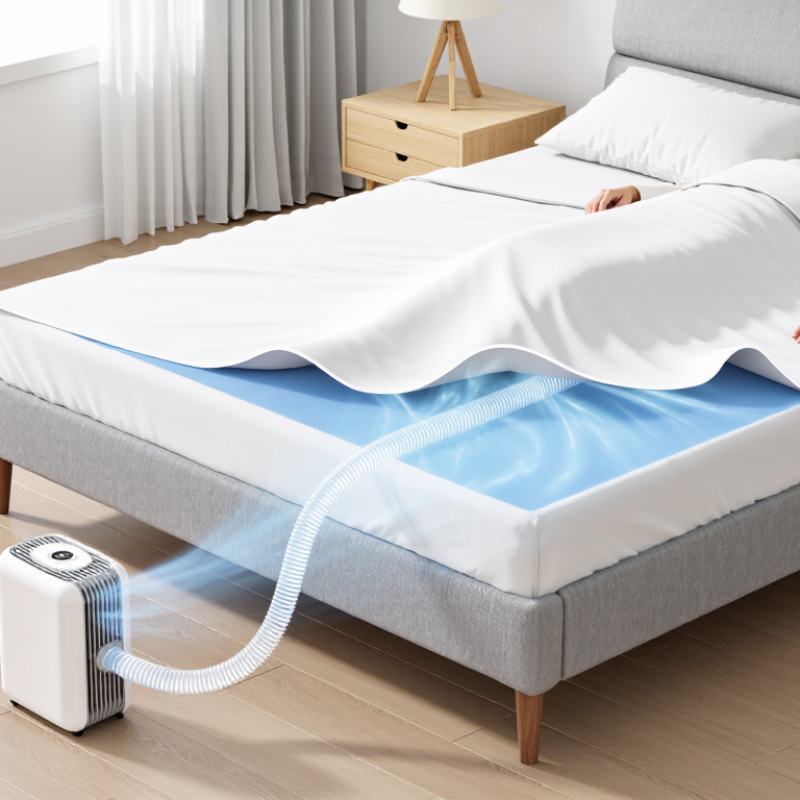
A bed fan is a compact airflow device designed to cool the person in bed rather than the whole room. Some models sit beside the bed and direct air beneath the sheets through a flexible tube. Others move air from under the bed toward the sleeper. The airflow helps carry heat and moisture away from the skin; it does not lower the room’s temperature. A useful distinction.
The U.S. Energy Information Administration’s 2020 Residential Energy Consumption Survey found that nearly nine in ten U.S. households used air conditioning. That figure shows how common mechanical cooling is, but it does not measure bed-fan performance. Bed fans are used in bedrooms, shared rooms, and other sleeping spaces where someone wants localized airflow or prefers not to cool the entire room as much. They may suit a sleeper who feels warm while a partner does not. Set the outlet so air reaches the bedding, and keep the intake clear of blankets and dust. Small details matter. A bed fan can make a warm night more comfortable, but airflow varies by setup, and it is not a treatment for persistent night sweats.
A bed fan usually has three main parts: a fan unit, a flexible air hose, and a flat outlet that sits beneath the covers. The fan unit draws in room air and pushes it through the hose. The outlet spreads that air near the feet or along the lower edge of the mattress. Cool air, gently delivered.
The fan housing contains the motor and speed controls. Some models offer several airflow settings, so you can adjust the breeze instead of directing a strong blast at your body. The hose is often bendable, but sharp bends can restrict airflow. Check that it lies securely and does not get pinched by the bed frame or bedding.
The outlet is the part you position under the sheets. Its shape helps distribute air, though the effect depends on the mattress, blankets, and where you place it. A few inches can matter. Setup is not always exact science; you may need to shift the outlet after trying it for a night. Keep the motor’s air intake clear, and follow the manufacturer’s instructions for placement and cleaning. Dust can collect around vents, especially near the floor.
A bed fan moves air through a narrow space, usually along the mattress and beneath the top sheet. Its motor draws in room air and sends a steady, low stream toward the sleeper. That moving air helps carry heat and moisture away from skin and bedding, which can make a warm sleep surface feel less stuffy. Air moves locally. The fan does not refrigerate the air or lower the bedroom’s temperature, so its effect depends on room conditions and how the airflow reaches the body.
The U.S. Department of Energy’s Energy Saver guidance notes that moving air from a ceiling fan can let people raise a summer thermostat setting by about 4°F without reducing comfort. A bed fan uses the same basic comfort principle, but directs airflow closer to the sleeper; that DOE figure is not a performance rating for bed fans.
Placement matters: a blocked outlet, thick bedding, or a fan aimed away from the body can weaken the sensation.
Not room cooling. A gentle stream may feel pleasant, while stronger airflow can dry eyes or disturb loose sheets.
There is a trade-off, and personal comfort can be hard to predict from a product description alone.
A bed fan is a compact device that moves bedroom air beneath the covers. It does not cool the air like an air conditioner. Instead, the gentle airflow can help carry heat and moisture away from the space around your body. You may notice the difference around your feet or under a heavy duvet. Airflow is not refrigeration.
A cooler-feeling sleep space matters to many people. The National Sleep Foundation’s 2015 Bedroom Poll reported that 78% of respondents considered a cool room important for good sleep. That survey covered bedroom preferences, not bed-fan use, so it cannot prove that a fan improves sleep. Still, it supports the idea that temperature comfort is worth attention.
Try a low setting first, then adjust the airflow and bedding to suit you. Strong or continuous airflow may feel drying, or simply become irritating; personal comfort varies. Humidity, room temperature, and the thickness of your covers can all change how a bed fan feels. Comfort is personal. If you wake chilled or notice dry eyes, reduce the airflow or turn the device off. A quiet fan can also feel less restful if its hum keeps drawing your attention.
What Is a Bed Fan and How Does It Work?
Common Bed Fan Designs and Features
Most bed fans use a small floor or bedside unit connected to a flat air channel tucked beneath the top sheet. Air travels along the mattress and moves across the sleeper’s body, rather than cooling the whole room. Some designs use a single channel; others offer separate outlets for each side of the bed. Look for adjustable fan speeds, a timer, and controls you can reach without sitting up. Small details matter.
ASHRAE Standard 55-2023 evaluates thermal comfort using six factors: air temperature, radiant temperature, humidity, air speed, clothing, and activity level. That professional standard helps explain why airflow can feel useful even when room temperature stays unchanged. But a fan cannot control all six factors. A channel that bunches near your feet, for example, may leave your shoulders warm. More airflow is not always better, either; noise and drafts can disrupt comfort.
Tips: Check that the air channel lies flat and does not block the fan intake. Start at a low setting, then adjust. If two people share a bed, separate outlets may help—but they do not guarantee equal comfort. The fit can be imperfect.