Choosing Silica Tubing is not just a matter of selecting a clear, heat-resistant tube. The right choice depends on temperature, pressure, chemical exposure, dimensions, and how the tubing will be installed. A tube used near a furnace may face different demands from one carrying fluid through a laboratory instrument. Small details matter. A tight bend, rough cut, or mismatched connector can become a weak point.
Glass scientist Robert H. Doremus studied how glass composition and structure influence its properties. A practical takeaway from that work is: “Choose glass for the conditions it must withstand, not for appearance alone.” This is a selection principle, not a direct quotation. It points to the questions behind these seven tips: What temperature range is expected? Will the tubing contact corrosive chemicals? How much dimensional tolerance does the assembly require? Clear silica can look similar across products, yet grades and manufacturing quality may differ.
Good specifications make comparison easier. Record the inner and outer diameters, wall thickness, required length, and operating conditions before ordering. Check the supplier’s technical data, and ask about tolerances, surface finish, and compatibility when information is unclear. Do not assume that “high purity” automatically means suitable for every process. It may not. The seven tips below offer a practical way to assess performance, fit, documentation, and supplier reliability—while leaving room to revisit a choice when real operating conditions reveal something the initial specification missed.
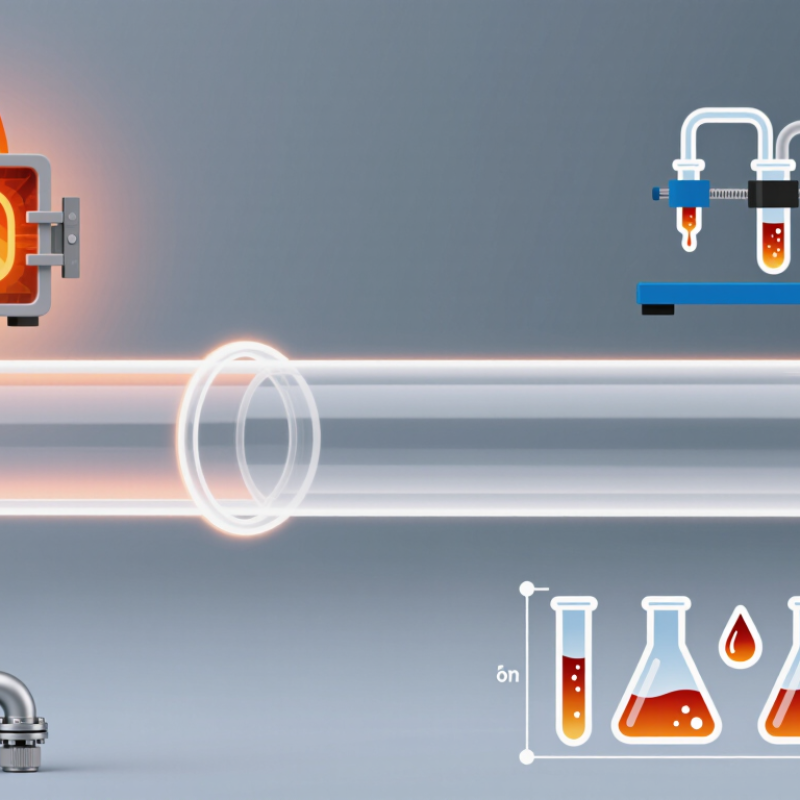
Before selecting silica tubing, define what it must carry and where it will operate. Record whether the line handles a gas, liquid, or sample that must remain clean. Note its temperature range, pressure, flow rate, and exposure to chemicals or moisture. Small details matter. A tube near a furnace may face rapid heating, while a line beside a pump may experience vibration. These conditions can affect service life even when the average temperature looks modest.
Specify both normal and worst-case conditions. Include temperature spikes, pressure changes, cleaning cycles, and how often the tubing will be handled. This step is easy to rush. It should not be. Check the proposed tubing’s limits against the conditions it will actually encounter, not just a short peak listed in a process note. Also consider inner diameter, wall thickness, and bend radius. A tight turn behind a panel can restrict flow or create stress, especially during installation. Leave enough clearance for supports and thermal movement. If the setup is new, test a short section under representative conditions first. Real measurements may reveal an awkward assumption. That is useful information.
Choosing silica tubing starts with identifying what “silica” means on the specification sheet. Synthetic fused silica is made from high-purity feedstock, while some fused quartz is produced from natural quartz. Their impurity levels can differ. Check the stated metallic impurity and hydroxyl content, not just a broad “high purity” label. Ask for a certificate when trace contamination could affect a process. Small details matter.
Thermal properties deserve the same scrutiny. Fused silica has low thermal expansion, which helps it tolerate rapid temperature changes, but it is not immune to cracking. A cold tube exposed to a hot flame can still develop stress, especially near clamps or unevenly heated sections. Compare the working temperature, thermal gradients, and atmosphere against the tubing’s data sheet. Dimensions matter, too: wall thickness changes heat-up time and mechanical strength. I still find purity labels easy to overread; a cleaner grade is not automatically the better choice if its thermal or dimensional limits do not fit the application. Check how the tube will be mounted and heated, not just its nominal maximum temperature.
Thermal expansion affects how tubing responds to temperature changes. Fused silica has a very low coefficient of thermal expansion, making it suitable for applications involving rapid temperature changes. The values shown are typical approximations; actual properties vary by composition and supplier. Confirm the tubing’s material, purity, and certified specifications before selecting it.
For silica tubing, specify inner diameter, outer diameter, wall thickness, and length separately. A tube listed only by outside diameter may still have too little bore for a probe or fluid path. Published fused-silica property tables, including the CRC Handbook of Chemistry and Physics, place its linear thermal expansion near 0.55 × 10⁻⁶ per °C. A 300 mm tube changing by 100°C would expand roughly 0.017 mm. Small, but not always negligible in a close-fitting assembly. ASTM E228 describes a method for measuring linear thermal expansion; actual material and test conditions matter.
Set tolerances around the assembly, not just the drawing. For example, a narrow bore tolerance can improve probe fit, but may raise inspection costs and reject usable tubing. Ask suppliers to state whether dimensions refer to minimum, maximum, or nominal values, and whether measurements apply at room temperature. Check ovality too. A tube can meet its average diameter while pinching a delicate insert at one point. Specify the measurement method and gauge resolution; otherwise, two inspection reports may disagree without either being careless. I would also leave a little clearance where thermal cycling or debris is expected. It is easy to over-specify a dimension before testing the real assembly.
Tip 1: List every fluid, vapor, and cleaning agent that will contact the tubing. Silica resists many chemicals, but hydrofluoric acid attacks it. Strong alkaline solutions can also damage silica, especially with heat.
Tip 2: Check the actual concentration and temperature, not just the chemical name. A compatibility chart is a useful start, not a guarantee.
Tip 3: Match the tubing’s temperature range to normal operation and short-term peaks.
Tip 4: Confirm inner diameter, outer diameter, and tolerances against your fittings and required flow. A small mismatch can cause leaks or restrict flow.
Tip 5: Check pressure limits for the exact tube dimensions and support conditions. Do not assume thin walls tolerate the same pressure as thicker ones. Details matter.
Tip 6: Consider thermal cycling. Silica expands very little, but sudden temperature changes and mechanical stress can still cause cracks.
Tip 7: Review purity and surface requirements if contamination matters. Ask for relevant specifications and test the tubing with your process conditions when practical. I would not rely on a generic compatibility table alone; real mixtures and exposure times can complicate the answer.
A reliable silica tubing supplier should be able to explain how each production run is controlled. Ask about raw material inspection, forming methods, and dimensional checks. Request tolerances for inner diameter, outer diameter, and wall thickness. Small details matter. A few tenths of a millimeter can affect fit, flow, or assembly, depending on the application.
Look for traceable inspection records, not just a polished quality certificate. Ask whether the supplier can link a delivered lot to its test results and production date. If surface finish or cleanliness matters, confirm how these are assessed and documented. Request a sample from the same production process you plan to order. Then inspect it under consistent lighting and measure several points, rather than relying on one convenient spot. Ask for evidence.
Supplier reliability also shows in everyday communication. Send a practical question about lead times, packaging, or handling, and notice whether the answer is specific. Clear responses can signal a well-managed process, though they are not proof by themselves. Check how changes or defects are reported and resolved. No checklist catches everything. I would still compare more than one order before treating a supplier’s consistency as established; that step takes time, and it is easy to skip when schedules tighten.
| Tip | Selection Area | What to Check | Useful Evidence to Request |
|---|---|---|---|
| 01 | Define the material and application | Confirm whether the tubing is fused silica or another silica-based glass, then match its purity, hydroxyl content, and optical or thermal characteristics to the application. Requirements can differ for high-temperature use, UV transmission, and fluid handling. | A material specification or data sheet that identifies the material type and the properties relevant to the intended operating environment. |
| 02 | Specify dimensions and tolerances | State the required outside diameter, inside diameter, wall thickness, length, and tolerances on the drawing or purchase specification. Check that the proposed tolerances are suitable for assembly and flow requirements. | A dimensioned drawing, written tolerance table, and sample inspection results showing how dimensions are measured. |
| 03 | Evaluate geometry and finish | Inspect straightness, roundness, concentricity, cut-end quality, and surface condition. Chips, cracks, and deep scratches can create handling or performance risks, especially in thin-walled tubing. | Inspection criteria, representative samples, and details of visual or dimensional inspection methods. |
| 04 | Review process control | Ask how the supplier controls forming, drawing, cutting, cleaning, and packaging. Consistent process controls help reduce variation between production lots. | A description of production and inspection steps, documented acceptance criteria, and the method used to manage nonconforming material. |
| 05 | Check traceability and documentation | Confirm that delivered tubing can be linked to its production lot and applicable inspection records. Agree in advance on any required certificates, test reports, or material declarations. | A sample lot record or certificate format, together with an explanation of how lot identification is maintained through packing and delivery. |
| 06 | Assess supplier reliability | Review the supplier’s ability to meet required quantities, lead times, packaging conditions, and communication expectations. Clarify how changes to specifications or delivery schedules are handled. | Written lead-time and packaging commitments, a clear contact and escalation process, and references or performance information relevant to similar requirements. |
| 07 | Validate before scaling up | Order samples or a pilot lot and test them under representative conditions. Check fit, handling, cleanliness, and performance before approving routine production. | An agreed sample-approval plan, documented acceptance criteria, and a process for addressing any discrepancies found during evaluation. |