
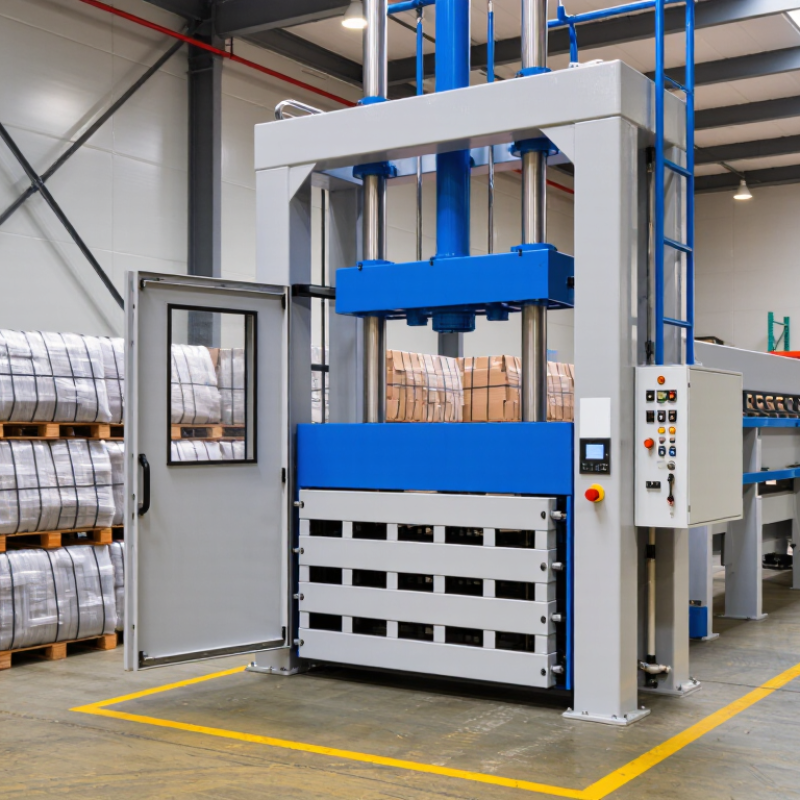
2026 Best Recycling Baler Machine for Global Buyers
How Global Buyers Can Select the Best Recycling Baler in 2026
In 2026, global buyers should select a recycling baler by operating conditions, not catalog claims. The right choice starts with material analysis. Measure cardboard, paper, plastics, or textile fiber by moisture, contamination, and daily volume. A warehouse producing six tonnes daily needs different capacity from a small sorting center. Ask for verified cycle times, bale weights, chamber dimensions, and power consumption. Request test bales using your own material. This exposes problems early.
Bale density affects transport cost and storage space. However, higher pressure is not always better. Fragile material may need gentler compression, while loose film requires reliable tying and controlled expansion.
Check hydraulic protection, emergency stops, guards, noise levels, and operator access before purchase. Controls should be clear for workers wearing gloves. Electrical compatibility matters across regions. Confirm voltage, frequency, certifications, and installation requirements with qualified local professionals.
A dependable supplier should provide manuals, spare-parts lists, training, and documented service response times. Compare total ownership cost, including maintenance oil, tying wire, downtime, and technician travel.
Do not trust attractive output numbers alone. They may reflect ideal feedstock. In practice, wet cartons and uneven loading reduce performance. I would leave room for uncertainty and budget for adjustments after commissioning. That is not weakness. It is practical planning. Before signing, inspect reference installations and speak with operators who run similar shifts.