Blog

2026 Best Android Rugged Tablet PC for Global Buyers

Choosing the right Android Rugged Tablet PC in 2026 requires more than checking screen size and battery capacity. Global buyers need dependable performance in warehouses, construction sites, transport fleets, farms, and outdoor service operations. A tablet may look strong in product photos, yet daily use reveals more important details. Can workers read the display under direct sunlight? Does the charging port survive dust, vibration, and repeated handling? Will the battery last through a full shift?

This guide examines practical features that influence long-term value. These include Android version support, processor efficiency, glove-friendly touch control, camera quality, wireless connectivity, and repair access. Protection ratings also deserve careful attention. IP and MIL-STD claims should be verified through manufacturer documentation, not accepted as marketing language alone. Regional certifications, cellular bands, warranty terms, and software updates can differ by market. Small details matter.

We also consider real operating conditions. A delivery driver may need accurate positioning and quick scanning in heavy rain. A technician may depend on barcode tools while wearing protective gloves. A warehouse team may prefer a bright display and a replaceable battery. No device is perfect. Some models trade slim designs for stronger protection, while others sacrifice weight for larger batteries. That trade-off deserves honest review. Our comparison aims to help international buyers select a reliable Android Rugged Tablet PC based on evidence, workload, and total ownership cost. Expect useful strengths, visible limitations, and a few findings that may challenge common assumptions.
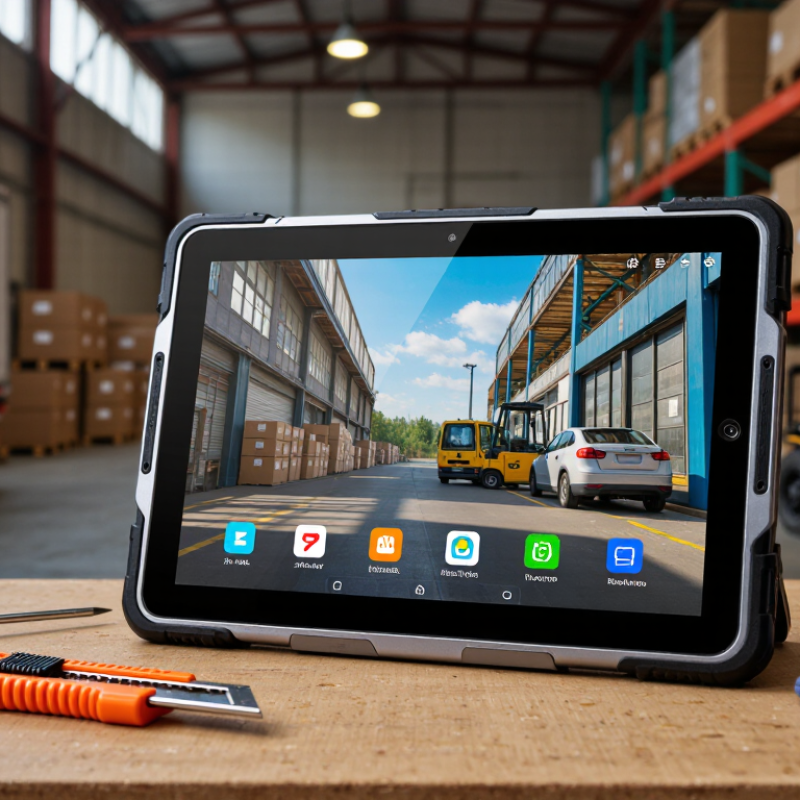
2026 Best Android Rugged Tablet PC for Global Buyers

What Defines an Android Rugged Tablet for Global Buyers in 2026

A RUGGED ANDROID TABLET for global buyers must survive real work, not just laboratory photos. Field teams may use it in dust, rain, heat, or freezing mornings. A strong enclosure, sealed ports, and a clear IP rating matter. Drop protection also deserves practical testing on concrete, not only soft surfaces.

Screen performance defines daily usability. High brightness helps drivers read maps under direct sunlight. Physical buttons support gloved hands and wet operations. A battery should last through a full shift, while replaceable options can reduce downtime. Global buyers should also check charging standards, cellular bands, Wi-Fi support, language settings, and local certification requirements. These details vary by market.

Android security and update policies are equally important. Buyers need a clear support period, controlled app installation, encryption, and remote device management. Enterprise tools should work without complicated regional restrictions. In practice, a powerful processor may increase heat and shorten battery life. That trade-off is easy to overlook. No tablet is perfect. A thicker shell adds weight, and some workers may reject it after long hours. Service access, spare parts, warranty response, and repair training should be tested before large orders. A useful evaluation includes glove operation, sunlight reading, charging speed, drop checks, and several days of actual workflow. Small failures often appear there.

Key Hardware and Protection Standards for Harsh Working Environments

In 2026, the best Android rugged tablet for harsh work starts with dependable hardware. A bright display should remain readable under direct sunlight. A 1,000-nit panel is useful, but measured outdoor performance matters more. Glove and wet-touch support can prevent delays on construction sites or loading docks.

Choose a modern processor with sufficient memory for mapping, inspection, and inventory applications. Eight gigabytes of RAM offers practical flexibility for several active tasks. A replaceable or high-capacity battery supports long shifts away from power outlets. Check charging temperature limits carefully. Heat reduces battery life faster than many buyers expect. Reliable Wi-Fi, global cellular bands, GPS, and physical ports also deserve attention. Ports need strong covers, not decorative flaps.

Protection ratings require careful reading. IP65 indicates dust protection and resistance to water jets. IP68 usually covers deeper immersion, but the test depth and duration vary by manufacturer. MIL-STD-810H refers to environmental testing methods, not automatic proof of ruggedness. Ask for drop height, vibration, humidity, and temperature test records. Rubber corner protection helps, though it cannot repair a weak screen or loose connector. I have seen devices pass basic drop checks and still fail after repeated vibration. That is an uncomfortable detail. Buyers should inspect service procedures, warranty limits, and available replacement batteries before ordering globally. A tablet that survives rain but cannot be repaired quickly may still disrupt field operations.

Android Software, Connectivity, and Compatibility Across Global Markets

2026 Best Android Rugged Tablet PC for Global Buyers

Android software and connectivity determine whether a rugged tablet works smoothly across markets. A durable shell is useful, but software compatibility often decides daily productivity. Check the Android version, security update policy, language support, and regional app availability before purchase. Enterprise tools should install without complicated workarounds. Offline access also matters when workers enter warehouses or remote sites.

Tips: Confirm supported LTE and 5G bands for each target country. Test Wi-Fi roaming, Bluetooth accessories, and GNSS accuracy in real working conditions. A removable SIM can be simpler than relying only on an eSIM. Keep one test unit for regional validation.

Global buyers should also inspect charging standards, USB-C behavior, and device management support. A tablet may support many languages but still show incomplete translations in specialist applications. Some software needs Google services, while other deployments use private application stores or controlled installation. Compatibility is rarely perfect. That is an uncomfortable but practical finding. Security patches should arrive through a clear, documented process, not vague promises. I also recommend checking screen response with gloves and moisture, because laboratory specifications cannot describe every jobsite. A stable connection, readable interface, and predictable updates usually matter more than impressive hardware figures.

How to Compare Performance, Battery Life, Cameras, and Expandability

Choosing the best Android rugged tablet requires more than reading processor names. In field testing, sustained performance matters more than a short benchmark burst. An octa-core chip, 8GB RAM, and fast storage should keep mapping, inspection apps, and video calls responsive. Check throttling after 30 minutes under sunlight. Heat changes everything. DataReportal’s Digital 2024 Global Overview Report recorded 6 hours and 40 minutes of daily internet use worldwide, so a tablet needs reliable endurance during long shifts, not just impressive launch speed.

Battery comparisons should use watt-hours, charging time, and replaceability. An 8,000mAh battery at 3.85V stores about 30.8Wh, but screen brightness, GPS, cellular radios, and cold weather reduce usable capacity. I once trusted a large mAh number and ignored charging downtime. That was a costly mistake. Ask for video playback and mixed-use test results, preferably from repeatable laboratory conditions. Independent safety testing aligned with IEC 62133 can also strengthen purchasing confidence.

Cameras deserve practical tests. A 13MP sensor may produce poor images in a dim warehouse. Test barcode focus, document edges, glare, stabilization, and microphone clarity. Expandability is equally concrete: verify microSD support, USB-C data speed, pogo-pin accessories, dual-SIM options, and serviceable batteries. IDC’s Worldwide Quarterly Mobile Device Tracker shows how mature mobile computing has become, but shipment data cannot reveal port durability. Inspect connector covers yourself. They often fail before the processor does. Surface scratches are not the real concern. Loose seals are.

2026 Best Android Rugged Tablet PC for Global Buyers — How to Compare Performance, Battery Life, Cameras, and Expandability
Comparison Profile Best-Fit Use Case Android Version Processor Class Memory / Storage Display Battery Capacity Typical Runtime Rear / Front Camera Rugged Protection Connectivity Expandability Approx. Weight Overall Rating
Compact Field Tablet Retail inspections, delivery workflows, inventory checks, and mobile forms Android 14 or later Entry-level octa-core processor; suitable for productivity apps and barcode tools 4 GB RAM / 64 GB storage 8.0 in, 1280 × 800, 500-nit sunlight-readable panel 5,000–6,000 mAh 8–10 hours of mixed business use 13 MP rear / 5 MP front IP65 or higher; drop resistance typically up to 1.2 m 4G LTE, Wi-Fi 5, Bluetooth 5.0, GPS MicroSD expansion; USB-C; optional replaceable battery on some configurations Approx. 650–800 g ★★★★☆
Balanced Industrial Tablet Construction documentation, warehouse management, transportation, and public safety Android 14 or later Mid-range octa-core processor; optimized for multitasking and enterprise applications 6–8 GB RAM / 128 GB storage 10.1 in, 1920 × 1200, 600–800-nit panel, glove and wet-touch support 8,000–10,000 mAh 10–14 hours of mixed business use 16 MP rear / 8 MP front IP67; MIL-STD-810H-style testing; drop resistance commonly up to 1.5 m 4G LTE or 5G, Wi-Fi 6, Bluetooth 5.2, dual-band GNSS MicroSD, USB-C, optional pogo-pin dock, NFC on selected configurations Approx. 900 g–1.2 kg ★★★★★
High-Performance 5G Tablet GIS mapping, remote diagnostics, video collaboration, and demanding field software Android 14 or later Upper mid-range octa-core processor with improved graphics and AI acceleration 8–12 GB RAM / 128–256 GB storage 10.1–11.0 in, 1920 × 1200 or higher, 700–1,000-nit panel 8,000–10,000 mAh 9–13 hours of mixed use; shorter under sustained 5G and GPS loads 20–50 MP rear / 8–16 MP front IP68; MIL-STD-810H-style testing; drop resistance commonly up to 1.5 m 5G, Wi-Fi 6E or Wi-Fi 6, Bluetooth 5.3, multi-constellation GNSS MicroSD, USB-C with video output on selected models, pogo-pin expansion Approx. 1.0–1.4 kg ★★★★★
Large-Screen Logistics Tablet Fleet control, warehouse dashboards, equipment maintenance, and digital work orders Android 13 or later Mid-range octa-core processor; prioritizes stable long-duration operation 6–8 GB RAM / 128 GB storage 12.0–12.2 in, 1920 × 1200, 500–700-nit panel 10,000–12,000 mAh 10–15 hours of mixed business use 13–16 MP rear / 5–8 MP front IP65–IP67; vibration and temperature testing recommended for vehicle use 4G LTE, Wi-Fi 5 or Wi-Fi 6, Bluetooth 5.0+, GPS MicroSD, USB-C, pogo-pin docking, optional serial or Ethernet accessories Approx. 1.3–1.8 kg ★★★★☆
Cold-Climate and Remote-Work Tablet Mining, oil and gas, utilities, forestry, and outdoor operations in harsh environments Android 14 or later Efficient mid-range processor with thermal management for extended field operation 8 GB RAM / 128 GB storage 10.1 in, 1920 × 1200, 800–1,200-nit display with glove operation 9,000–12,000 mAh 8–12 hours depending on temperature, brightness, and radio usage 16–20 MP rear / 8 MP front IP68 or higher; MIL-STD-810H-style testing; operating range commonly about −20°C to 55°C 4G LTE or 5G, Wi-Fi 6, Bluetooth 5.2, high-accuracy GNSS option Replaceable battery option, MicroSD, USB-C, charging dock, programmable keys Approx. 1.1–1.6 kg ★★★★★
Buying note: Battery runtime varies with screen brightness, cellular signal strength, GPS use, camera activity, temperature, and application workload. IP ratings and drop claims should be verified against the supplier’s official test documentation before purchase.

Selecting the Right Rugged Tablet for Industry, Region, and Budget

Selecting a rugged tablet requires more than checking screen size. Industry comes first. Warehouses need barcode scanning, glove-friendly touch, and strong Wi-Fi roaming. Construction teams need sunlight readability, drop protection, and reliable GPS. Field technicians may value hot-swappable batteries more than a high-resolution camera.

Regional conditions also change the choice. In humid Southeast Asia, seek sealed ports and an IP rating suited to heavy rain. In colder regions, confirm battery performance below freezing. North American buyers often require documented MIL-STD-810H testing, while European projects may prioritize data protection and repairability. IDC reported 147.6 million tablet shipments worldwide in 2024, up 9.2% year over year. That growth shows demand, but it does not prove every tablet fits industrial work. Grand View Research also identifies durability, connectivity, and application-specific design as major rugged-device market drivers.

Tips: Compare the tablet against real tasks, not showroom specifications. Test it with wet gloves, dust, vehicle vibration, and a weak signal. Check Android update support before purchase. Calculate total cost, including docks, spare batteries, cases, training, and repairs. A lower purchase price can become expensive after six months. My practical concern is often overlooked: some rugged tablets are too heavy for all-day handheld use. A perfect drop rating may still fail if workers leave it in a truck. Review service coverage in each operating region, and request written test evidence rather than accepting vague claims.